

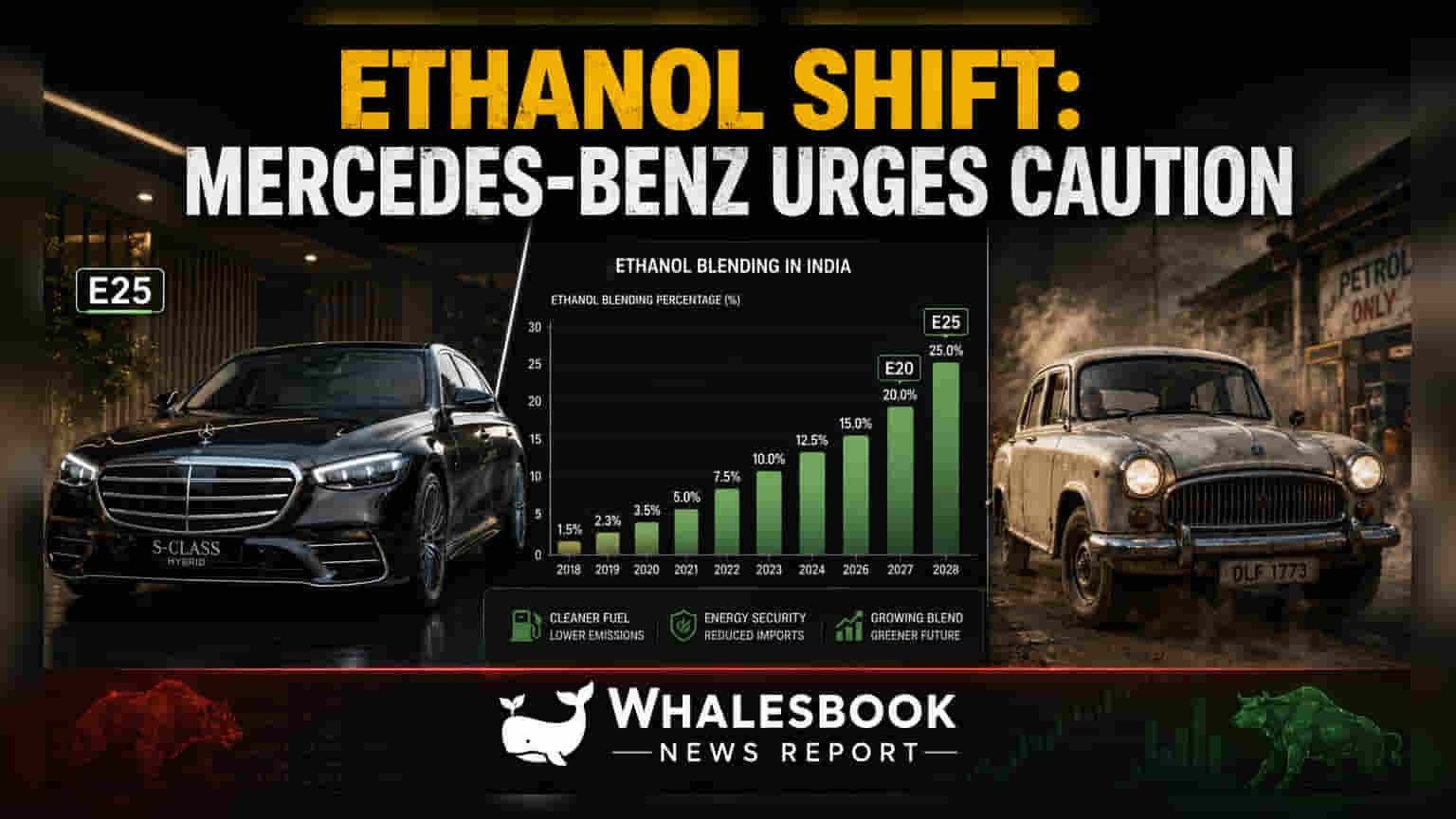
Mercedes-Benz India is urging the government to adopt a measured approach as India moves toward higher ethanol blending in petrol. The automaker highlights the need to protect older vehicle engines and suggests offering multiple fuel grades to ensure consumer confidence. This transition is critical as India aims to hit its 20% ethanol blending target by the 2025-26 supply year.
Mercedes-Benz India is calling for a phased transition as the Indian government continues its push to increase ethanol blending in petrol beyond the current 20% (E20) standard. While the luxury automaker remains supportive of the national objective to reduce oil import dependence and curb emissions, it has flagged technical and practical challenges associated with higher blends, such as E25.
Protecting Older Vehicle Fleets
A primary concern for the company is the existing base of millions of vehicles already on Indian roads. While the company's latest models are engineered to handle E20 and certain hybrid versions can support E25, older vehicle engines were not designed for these higher alcohol concentrations. The company noted that widespread adoption of higher ethanol blends would likely require significant modifications to vehicle components to prevent long-term durability issues. Santosh Iyer, Managing Director and CEO of Mercedes-Benz India, emphasized that automakers need sufficient lead time to test and implement these technical changes effectively.
Consumer Concerns and Fuel Availability
Beyond engine compatibility, the company suggests that fuel retailers should offer multiple grades of petrol during this transition period. Providing a choice at fuel stations would allow owners of older vehicles to select fuel that is compatible with their engine specifications, addressing widespread consumer anxiety regarding fuel efficiency and engine health. Currently, market data indicates that ethanol has a lower energy density than pure petrol, which can lead to a slight reduction in fuel efficiency. While Mercedes-Benz has reported no major technical issues with E20 among its current models, increased customer inquiries highlight a growing need for clarity and consistent fuel quality standards as the country accelerates its blending program.
The Path Toward 2025-26 Targets
The Indian government is moving rapidly to meet its target of 20% ethanol blending by the 2025-26 supply year. To support this, research institutions like the Automotive Research Association of India and the International Centre for Automotive Technology are conducting extensive trials on higher blends. For investors and stakeholders in the automotive sector, the critical next step will be to monitor the official guidelines regarding fuel availability and whether the government introduces a multi-grade fuel strategy. The industry will also watch for any potential regulatory shifts that might mandate hardware changes for future models or dictate how existing vehicles are managed as the fuel landscape evolves.