 Whalesbook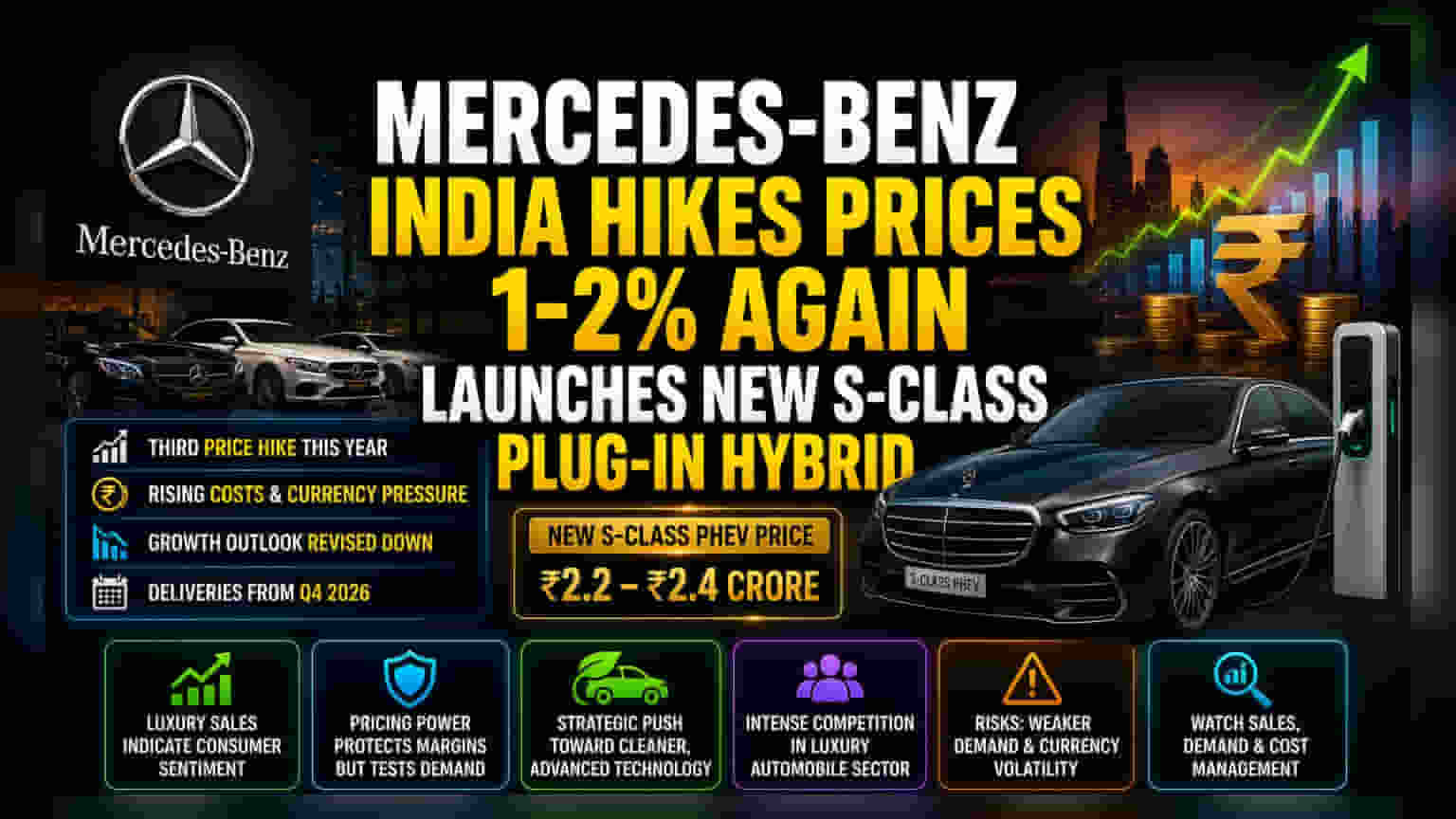


Mercedes-Benz India is raising vehicle prices by 1-2% due to rising input costs and exchange rate volatility. This follows two previous hikes totaling 4% this year, prompting the luxury carmaker to lower its annual growth outlook. The company also debuted a new plug-in hybrid S-Class model. The move highlights how global cost pressures are impacting even the premium auto segment in India.
What Happened
Luxury automaker Mercedes-Benz India has announced a price increase of 1-2% on its vehicle lineup. This adjustment comes as a result of rising operational costs and fluctuations in exchange rates. This marks the third price adjustment by the company this year, following two earlier hikes that totaled approximately 4%. Alongside this, the company introduced a new plug-in hybrid (PHEV) variant of its flagship S-Class sedan, priced between ₹2.2 crore and ₹2.4 crore, with deliveries scheduled to begin in the fourth quarter of 2026.
Why This Matters For Investors
For the broader automotive market, luxury car sales often act as an early indicator of consumer sentiment among the affluent segment. When a company like Mercedes-Benz, which typically commands strong brand loyalty and pricing power, has to repeatedly raise prices and simultaneously lower its growth outlook, it suggests that cost pressures—such as rising raw material costs or unfavourable currency movements—are difficult to manage even in the premium space.
Investors typically view repeated price hikes as a double-edged sword. While it helps protect profit margins from rising costs, it can also test the demand elasticity of buyers. If customers begin to delay purchases or opt for alternatives due to rising costs, sales volumes could face pressure, which is likely why the company has revised its growth forecast downward.
The Product Strategy
While the company is facing pricing challenges, the launch of the new S-Class plug-in hybrid shows a strategic push toward cleaner, more advanced technology. This segment targets high-net-worth individuals who may be looking for lower running costs or tax benefits associated with hybrid vehicles. However, the adoption of such high-end technology remains niche in India. The success of this launch will depend on whether the company can convince buyers that the hybrid technology justifies the premium price tag, especially when interest rates and vehicle ownership costs are rising.
Peer and Sector Context
The luxury automobile sector in India is highly competitive, with players like BMW, Audi, and Volvo fighting for market share. When one major player raises prices due to global cost pressures, competitors often face a similar dilemma: absorb the costs and risk lower margins, or raise prices and risk slower volume growth. The entire luxury sector in India is currently navigating the impact of global supply chain challenges and currency volatility. Investors tracking this space often watch these moves to see if competitors follow suit with their own price hikes, which would confirm a sector-wide cost problem.
What Could Go Wrong
The primary risk for the company is a slowdown in demand. If the luxury segment sees a sharper-than-expected cooling, the company might find it difficult to maintain its planned sales growth, even with new product launches. Additionally, if the exchange rate volatility persists or worsens, profit margins may continue to come under pressure, limiting the company's ability to invest in further market expansion or new technology.
What Investors Should Track
The most important monitorable for those tracking the auto sector is how sales volumes hold up after these repeated price hikes. Investors should look for updates on:
- Whether the company can maintain its volume growth despite the price increases.
- Whether the S-Class plug-in hybrid sees strong early demand or if buyers remain cautious.
- Updates on the broader luxury vehicle demand trend in India, as this reflects the spending power of the premium consumer segment.
- Future commentary from the company regarding how they plan to manage input costs in the coming quarters.