

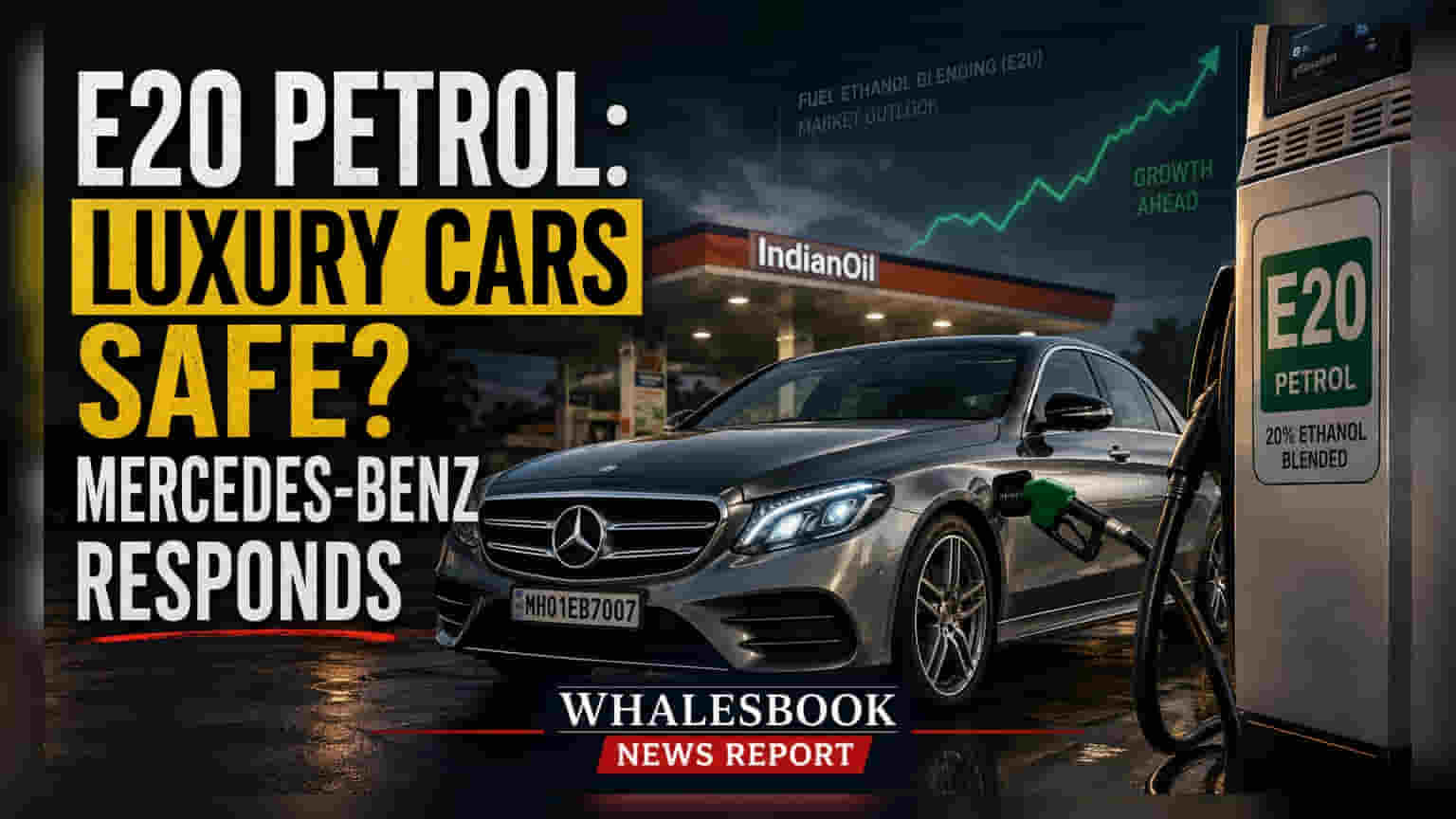
Mercedes-Benz India has confirmed that vehicles sold since 2020 are compatible with E20 petrol. While the company assures that older models can also run on the fuel, it highlights that fuel quality and adulteration at stations—rather than the ethanol blend itself—are the primary concerns for engine health.
As India continues its transition toward E20 petrol—a blend of 80% gasoline and 20% ethanol—luxury car owners have raised questions regarding the long-term impact on engine performance. Mercedes-Benz India, a major player in the luxury segment, has addressed these concerns by clarifying the technical compatibility of its fleet.
According to Santosh Iyer, Managing Director and CEO of Mercedes-Benz India, vehicles manufactured by the company from 2020 onwards are designed to be E20-compliant. Furthermore, models produced from 2023-24 are engineered to meet the latest standards for this higher ethanol blend. While owners of vehicles manufactured before 2020 may notice a marginal drop in fuel efficiency due to the lower energy density of ethanol compared to pure petrol, the company notes these vehicles are still capable of operating on the blend.
Quality Concerns vs Fuel Composition
The automaker emphasizes that the core issue for motorists is often not the 20% ethanol blend itself, but the inconsistency of fuel quality at various retail outlets. The company has pointed to instances of fuel adulteration—where the actual ethanol content exceeds the mandated 20%—as a significant risk factor. Such inconsistency can lead to performance issues, trigger warning lights, and affect sensitive fuel system components, especially in older cars where pre-existing corrosion in fuel tanks may be aggravated by higher alcohol content.
Future Roadmap and Industry Challenges
Mercedes-Benz has already demonstrated capabilities for even higher blends, with certain models like the plug-in hybrid S-Class being compatible with E25 fuel. However, the company advocates for a measured approach to future fuel transitions. It suggests that higher blends, such as E25, should initially be introduced as an option for new vehicle buyers. This phased strategy would allow manufacturers to better assess the impact on the existing vehicle population while ensuring that necessary fuel quality infrastructure is in place.
For investors and car owners, the primary monitorable remains the consistency of fuel quality across the national network. Mercedes-Benz has called for stricter random inspections at fuel stations to ensure compliance. Owners experiencing performance concerns are advised to utilize authorized service centers for diagnostic checks on their fuel systems. Moving forward, the industry is expected to track how the government balances the aggressive national transition to higher ethanol blends with the need for rigorous fuel quality monitoring to protect engine health across diverse vehicle age groups.