

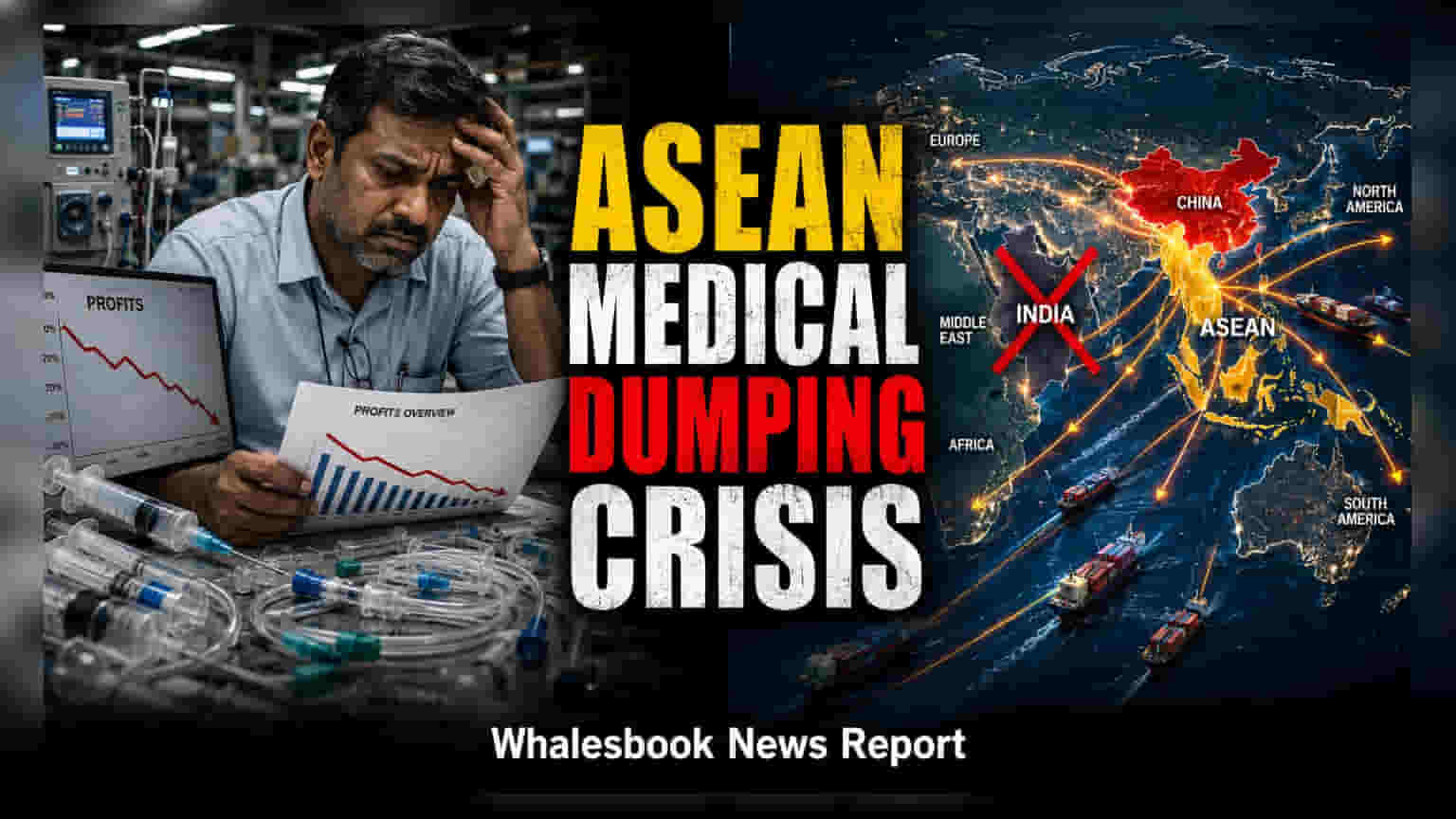
Medical device imports from ASEAN nations reached nearly ₹13,000 crore last year, creating intense price pressure for Indian manufacturers. This influx, often involving goods originating from China routed through zero-duty trade routes, threatens the financial viability of local production despite government incentives like the PLI scheme.
The Indian medical device industry is facing significant competitive pressure as low-priced imports continue to surge. Data shows that imports of medical devices from ASEAN countries rose by 14% to reach approximately ₹13,000 crore in the last fiscal year. This trend is particularly concerning for domestic firms that have scaled up their manufacturing capabilities under government-backed support programs like the Production Linked Incentive (PLI) scheme.
Impact on Dialysis and Imaging Segments
Specific segments, including dialysis equipment, syringes, and imaging devices, are reporting difficulties in maintaining competitive pricing. For instance, imports of dialysers from Malaysia and China have reportedly doubled to ₹256 crore over the last two years. Industry leaders, including representatives from Poly Medicure, have noted that domestic manufacturers possess the technical capacity to produce high-quality medical equipment. However, they struggle to compete with artificially depressed prices linked to products that may be rerouted to exploit free trade agreement benefits. This pricing imbalance makes it difficult for companies to recover capital spent on setting up local manufacturing plants.
Challenges for Domestic Manufacturers
Beyond price competition, manufacturers face structural hurdles in the supply chain for complex imaging equipment. Allengers Medical Systems has pointed out that critical components, such as X-ray tubes and flat-panel detectors, continue to rely heavily on imports, primarily from China. This dependence limits the ability of domestic firms to achieve full indigenous production, even as they attempt to scale operations. Similarly, manufacturers of consumables like surgical gloves report that the current import-heavy environment makes it difficult to win government tenders, which frequently prioritize the lowest bid regardless of the origin of the goods.
Regulatory and Trade Concerns
The Association of Indian Medical Device Industry (AiMeD) has raised concerns that the current structure of ASEAN free trade agreements, which allows for zero-tariff imports, is undermining the growth of local medtech manufacturing. The industry is currently advocating for stricter trade regulations and a revision of existing tariffs to provide a more level playing field. While anti-dumping investigations, such as the one recently initiated on dialysers from Malaysia, provide some relief, the industry remains concerned about the broader risk of rerouted imports from other regions.
The key monitorable for investors will be how the government responds to these calls for trade protection and whether current anti-dumping measures effectively curb the influx of low-priced goods. Furthermore, the financial performance of domestic manufacturers in upcoming quarters will be a crucial indicator of whether these companies can maintain their profit margins and continue their planned capital spending in the face of ongoing import pressure.