

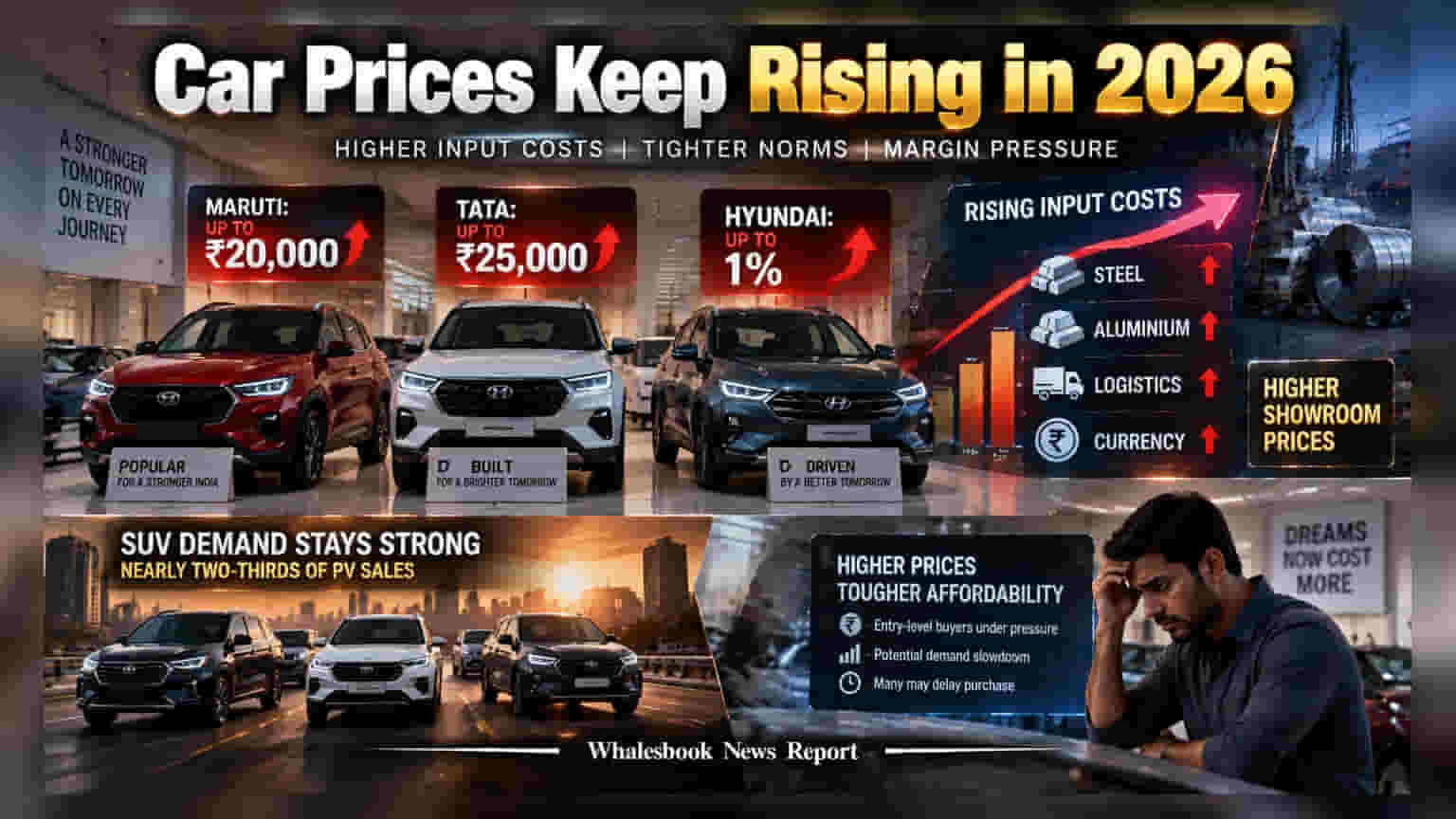
Major Indian automakers, including Maruti Suzuki, Tata Motors, and Hyundai, have raised vehicle prices this September due to persistent inflation in raw materials and logistics. While high demand for SUVs currently supports these hikes, investors are watching to see if frequent price increases will eventually impact sales volumes or pressure profit margins as the industry manages new regulatory costs.
Indian passenger vehicle manufacturers are implementing frequent price adjustments throughout 2026 to manage rising input costs, moving away from the traditional model of single annual revisions. This month, major players including Maruti Suzuki, Tata Motors, and Hyundai Motor India announced hikes, signaling that cost pressures on steel, aluminum, copper, and rubber remain persistent.
Maruti Suzuki has increased prices by up to ₹20,000 on select models, marking its third hike since May. Tata Motors Passenger Vehicles (TMPV) implemented an increase of up to ₹25,000 effective September 1, while Hyundai has raised prices by up to 1% this month. These revisions follow similar actions by Mahindra & Mahindra and Kia India earlier this year.
The cost pressure is not limited to raw materials. Automakers are also navigating structural expenses, such as the implementation of new safety and emissions compliance standards. Additionally, the industry faces potential financial implications related to End-of-Life Vehicle (ELV) regulations, which could impact profit margins for the fiscal year as companies align their operations with these requirements.
From an investor perspective, these frequent price hikes are a tool to defend operating margins. By passing on the increased costs of production, logistics, and currency volatility to the consumer, companies aim to protect their profitability. This strategy is currently aided by a shift in consumer preference toward SUVs, which now account for nearly two-thirds of passenger vehicle sales. Customers purchasing these premium vehicles have historically shown a higher willingness to absorb price increases compared to buyers in the entry-level segment.
However, there is a risk inherent in this strategy. While passenger vehicle retail sales grew by 16.14% year-on-year in August 2026, consistent price hikes could eventually lead to demand sensitivity. If the cumulative impact of these increases makes vehicle ownership significantly less affordable, manufacturers may face a slowdown in entry-level segment volumes, as potential buyers might choose to defer their purchases or opt for the used car market.
Moving forward, the primary factor for investors to track will be whether the sales momentum observed in August holds steady after this latest round of price increases. Future earnings reports will also be critical to determine if these price hikes are successfully offsetting the rise in raw material and regulatory expenses or if the cumulative burden is beginning to weigh on volume growth.