 Whalesbook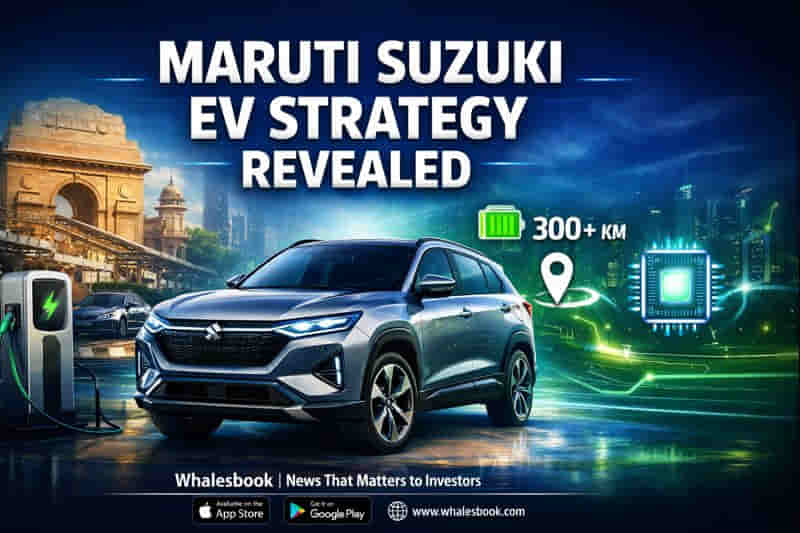
Maruti Suzuki Charts Cautious Path in India's Electric Vehicle Market
India's burgeoning electric vehicle (EV) market is seeing major players like Maruti Suzuki and Hyundai Motor India chart distinct paths. While Maruti Suzuki, the country's largest automaker, faces questions about its perceived late entry into EVs, it insists on a strategic approach focused on delivering a "complete solution" to consumers. This comes as Hyundai Motor India sharpens its own strategy, emphasizing aspirations, accessibility, and advanced, cleaner technologies to cater to evolving Indian car buyers.
Maruti Suzuki's Strategic Patience
Partho Banerjee, senior executive officer for sales and marketing at Maruti Suzuki, addressed the perception that the company is lagging in the EV race. He articulated Maruti's philosophy: "The question is not why Maruti is not coming with EVs, but whether you want to offer a part-solution or a total solution." This stance highlights a deliberate strategy to ensure customer readiness and satisfaction before a mass-market EV push.
Addressing Adoption Hurdles
Banerjee identified four critical barriers hindering the widespread adoption of electric vehicles in India. These include concerns over real-world driving range, the suitability of EVs as a primary family car, the availability and efficiency of after-sales service networks, and the long-term resale value of electric models. He stressed that achieving mass adoption requires not just early adopters but a broader base of loyal customers, which necessitates overcoming these fundamental challenges.
A Multi-Technology Approach
Maruti Suzuki's strategy to overcome these barriers involves offering multiple powertrain technologies across various vehicle segments. This includes battery electric vehicles (BEVs), hybrids, compressed natural gas (CNG) vehicles, and traditional internal combustion engine (ICE) vehicles. By providing a diverse portfolio, the company aims to empower customers to choose the technology that best suits their needs and preferences, thereby facilitating a smoother transition towards cleaner mobility.
Hyundai's Aspiration-Led EV Vision
In contrast, Hyundai Motor India is focusing on tapping into the aspirational nature of modern Indian car buyers. Tarun Garg, chief operating officer and whole-time director, noted that the automotive industry's evolution is increasingly driven by aspirations. He pointed to the success of models like the Creta in transforming India from a purely functional small-car market into one that values design, performance, and global appeal.
Global Standards for Indian Consumers
Garg emphasized that contemporary Indian consumers seek vehicles that offer global design aesthetics, advanced safety features, and cutting-edge technology comparable to international markets. Hyundai's EV strategy is aligned with this demand, aiming to provide cleaner mobility solutions that also satisfy these aspirational needs. This approach suggests a focus on premium features and performance within the accessible segments.
Product Developments and Market Entry
Maruti Suzuki has already given the world a glimpse of its future with the eVitara, its first electric SUV. Production of this model is currently underway at the company's Gujarat plant. Initial production is earmarked for exports, with domestic test drives and bookings anticipated to commence early in the next year, marking Maruti's concrete step into the EV space.
Market Context
Despite the growing interest and the presence of nearly 18 EV models from various manufacturers, electric vehicles currently constitute only about 4% of the total industry sales in India. This relatively low penetration underscores the challenges highlighted by Maruti Suzuki and the opportunity for companies like Hyundai to capture a growing segment of the market by aligning with consumer aspirations.
Impact
The distinct strategies of Maruti Suzuki and Hyundai Motor India could significantly shape the future of the EV market in India. Maruti's cautious, solution-oriented approach might lead to slower but more sustainable mass adoption if successful in addressing core consumer concerns. Hyundai's focus on aspiration could capture a faster-growing segment of the market initially. Investors will be watching how these strategies play out, influencing investment decisions in the automotive sector and its supply chain. The success of these approaches will also impact consumer choice and the overall pace of India's transition to electric mobility.
Impact Rating: 8/10
Difficult Terms Explained
- OEM (Original Equipment Manufacturer): A company that manufactures products based on a design or specification provided by another company. In this context, it refers to the car manufacturers themselves.
- EV (Electric Vehicle): A vehicle that is powered partially or wholly by electricity.
- ICE (Internal Combustion Engine): A type of engine that burns fossil fuels like petrol or diesel to generate power.
- Hybrid: A vehicle that uses both an internal combustion engine and an electric motor for propulsion.
- CNG (Compressed Natural Gas): A fuel gas that is a ready substitute for gasoline (petrol) or diesel fuel.
- eVitara: Maruti Suzuki's upcoming electric SUV model, named as a variation of their popular Vitara line.
- Aspiration-led: A market strategy focusing on fulfilling customers' desires and ambitions rather than just their functional needs.