 Whalesbook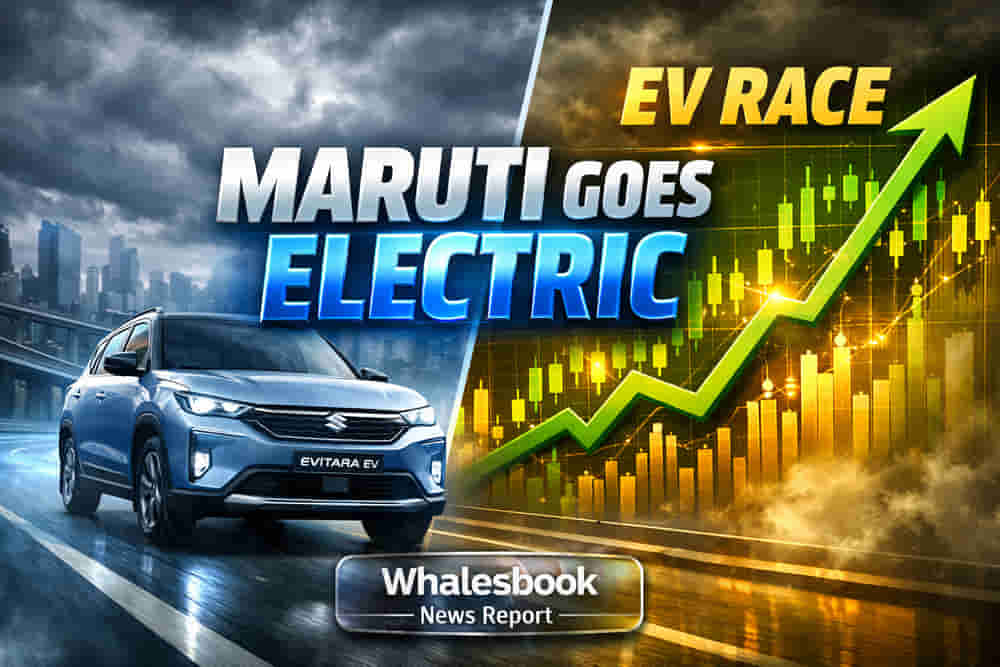
Maruti Suzuki India Enters Electric Vehicle Arena with e VITARA Launch
Maruti Suzuki India Limited, the nation's largest car manufacturer, has officially commenced sales for its much-anticipated Battery Electric Vehicle (BEV), the e VITARA. This strategic move signals the automotive giant's determined entry into India's burgeoning electric mobility market, a segment where competitors have already established a significant presence.
Financials & Offering
The e VITARA is available for booking with an initial payment of ₹21,000 at NEXA showrooms. The company is adopting an innovative Battery-as-a-Service (BaaS) model, with introductory pricing starting at ₹10.99 lakh. This model separates the cost of the battery from the vehicle, offering a different ownership proposition. Customers will pay an additional ₹3.99 per kilometer for battery usage, a structure designed to make EV ownership more accessible and predictable.
Strategic Significance & Backstory
For years, Maruti Suzuki, known for its dominance in the internal combustion engine (ICE) and CNG segments, was perceived as a latecomer to the EV race. Chairman RC Bhargava had previously expressed reservations about the high costs and niche nature of EVs, favouring hybrid technology as a more immediate solution for emission reduction. However, the rapidly growing Indian EV market, projected to reach 17 million units by 2030, necessitated a shift in strategy. The company has committed significant investments, including ₹7,000 crore for EV production and research, aiming to capture a substantial share of the market and lead in green car production and exports. The e VITARA is the first step in Maruti Suzuki's plan to launch four passenger EVs and two commercial EVs by 2030. This launch follows Maruti's 'e For Me' strategy, aimed at building a comprehensive ecosystem for EVs, including charging infrastructure.
Risks & Negative History
While Maruti Suzuki enjoys a strong reputation for reliability and market reach, its EV venture faces inherent challenges. Historically, Maruti Suzuki was fined ₹200 crore by the Competition Commission of India (CCI) in 2021 for resale price maintenance, specifically controlling dealer discounts. This demonstrates a past instance of regulatory scrutiny regarding its market practices. Furthermore, a dealer probe in Kerala uncovered allegations of fund diversion and corporate governance failures, although this pertains to a dealer and not the parent company directly. The company's initial hesitance towards EVs also posed a risk of losing ground to aggressive competitors.
Peer Comparison
The Indian electric vehicle market is currently dominated by Tata Motors, MG Motor India, and Mahindra & Mahindra, which collectively hold nearly 87-89% of the passenger EV market share as of late 2025. Tata Motors leads with around 43% share, followed by MG Motor India (around 25%) and Mahindra (around 20%). Hyundai, Kia, and BYD also have a presence. Competitors like Tata Motors have models like the Nexon EV and Punch EV in a similar price bracket or lower, while MG offers models like the Windsor EV, and Mahindra has options like the XUV400 and BE-series. The e VITARA's pricing strategy, particularly the BaaS model, aims to challenge the established players by offering a potentially lower upfront cost and predictable running expenses. Recent reports suggest pricing for the e VITARA could range from ₹17 lakh to ₹22.50 lakh for outright purchase, with top variants possibly reaching ₹24.79 lakh. The BaaS model at ₹10.99 lakh aims to offer a compelling alternative to this pricing range.
Outlook
Maruti Suzuki's entry into the EV space is a critical development for the Indian automotive industry. Its vast dealership network and manufacturing expertise provide a strong foundation. The success of the e VITARA will depend on its execution, customer acceptance of the BaaS model, and its ability to compete on price, range, and features against established players. Investors will be watching how Maruti Suzuki navigates the complexities of EV manufacturing, battery sourcing, charging infrastructure development, and evolving consumer preferences in this dynamic segment.