

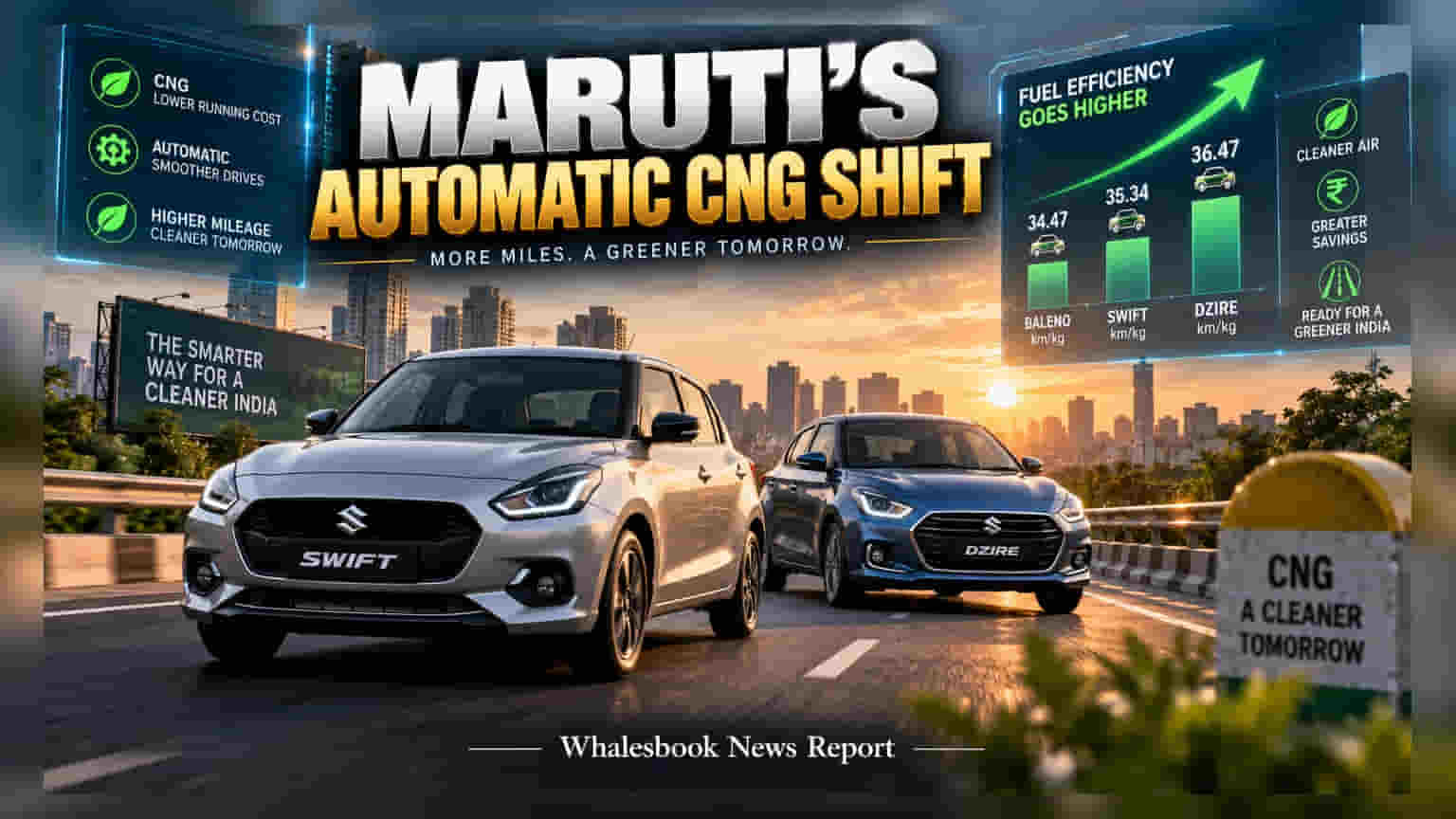
Maruti Suzuki has introduced automatic versions of its Swift, Dzire, and Baleno models with CNG options, starting at ₹7.92 lakh. The move aims to tap into urban demand for fuel-efficient, easy-to-drive vehicles. Investors may track how this new product strategy affects the company's CNG segment growth and profit margins.
Maruti Suzuki India Limited has introduced automatic versions of the Swift, Dzire, and Baleno, expanding its CNG lineup to include vehicles with an automated manual transmission. These new models, starting at ₹7.92 lakh, combine the fuel efficiency of CNG with the convenience of automatic driving, a feature previously missing from the company's CNG offerings. This launch is aimed at urban drivers who face heavy traffic and want a balance between lower operating costs and driving ease.
Strategic Shift in CNG Portfolio
Historically, CNG vehicles in India were primarily limited to manual transmissions. By integrating an automated manual transmission with its factory-fitted CNG systems, Maruti Suzuki is trying to reduce the barrier for customers who prefer the convenience of automatic vehicles but still want the cost advantage of compressed natural gas. This strategy follows a period of strong growth for the company's CNG segment. In its recent reports, the company noted a 58% year-on-year increase in S-CNG sales. The momentum remains high, with the company recording 83,000 units sold in July, which the firm identified as a record for monthly CNG sales.
Technical Efficiency and Performance
Each of the three new models is powered by a 1,197cc Z12E engine. The manufacturer has focused on maintaining fuel economy despite the addition of automatic technology. The Dzire S-CNG AMT is reported to offer 36.47 km/kg, while the Swift and Baleno variants deliver 35.34 km/kg and 34.47 km/kg respectively. The engines utilize dual variable valve timing and idle start-stop technology to manage performance and consumption. Safety remains a focus area for these models, with the inclusion of specific stainless-steel plumbing and microswitches designed to prevent the vehicle from starting during the refueling process.
Investor Context and Risks
While the expansion of the CNG portfolio supports the company's strategy of offering a wide range of fuel-efficient choices, there are factors investors typically track. The inclusion of automatic transmission technology increases the complexity of the vehicle, which may lead to higher price points compared to manual alternatives. The long-term success of this segment depends on consumer demand remaining resilient despite these price differences. Furthermore, the overall benefit for customers is tied to the price spread between CNG and petrol. If CNG prices become less competitive, it could influence the adoption rate of these vehicles. Monitoring the sales volume of these specific automatic variants in the coming quarters will provide more clarity on how customers respond to this new product mix. Investors also look at how these initiatives influence the company's overall profit margins and ability to maintain its market position against other fuel types.