

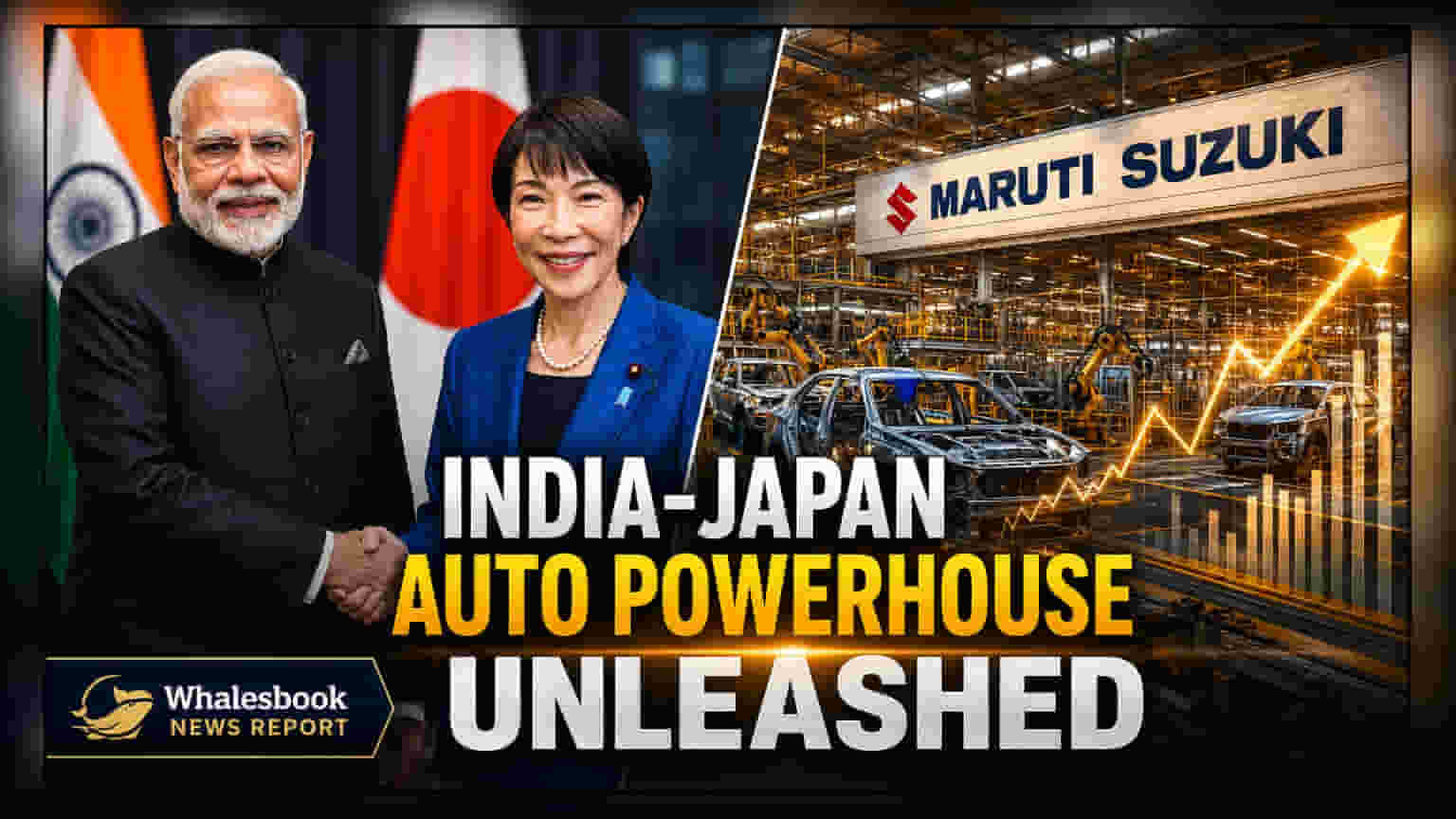
Prime Minister Narendra Modi and Japanese PM Sanae Takaichi have inaugurated Maruti Suzuki's new manufacturing plant in Kharkhoda, Haryana. With a ₹35,000 crore investment, this facility aims to add 1 million units to the company's annual production capacity. Investors will be watching how this significant capital spending impacts future margins and the company's ability to meet rising demand.
What Happened
Prime Minister Narendra Modi and Japanese Prime Minister Sanae Takaichi have officially inaugurated Maruti Suzuki India's latest manufacturing plant in Kharkhoda, Haryana. This project represents a massive capital investment of ₹35,000 crore. The new facility is designed to support an annual production capacity of 1 million vehicles once it reaches full operational status. The inauguration marks a major milestone in the company’s efforts to increase its footprint in the Indian automotive market and aligns with the ‘Make in India’ initiative.
Strategic Importance for Capacity
For Maruti Suzuki, the primary driver for this investment is the need for more production space. The company has historically faced capacity constraints, with existing facilities in Gurugram and Manesar often operating near peak utilization levels to meet domestic and export orders. By adding 1 million units of annual capacity, the Kharkhoda plant gives the company the necessary headroom to scale up production, particularly for its growing SUV portfolio, which has become a key battleground for market share against competitors like Tata Motors, Hyundai, and Mahindra & Mahindra.
The Financial and Cash Flow Picture
While the expansion is a positive signal for long-term growth, the size of this investment brings specific financial considerations. A ₹35,000 crore project is substantial for any auto manufacturer. Investors often monitor how such heavy spending impacts free cash flow. In the initial phases, the high depreciation costs from such a large plant can weigh on the company's reported net profit margins. Furthermore, the company's management will need to balance this heavy capital spending with the need to maintain strong returns on capital employed (ROCE) over the next few years.
Execution and Demand Risks
The automotive sector is highly cyclical, meaning it moves in line with economic growth. One risk for investors is the pace of demand. If the Indian passenger vehicle market does not grow as fast as expected, the company could face a situation where it has high fixed costs for new capacity but cannot utilize it fully. Additionally, any unforeseen delays in the full commissioning or technical ramp-up of the plant could lead to cost overruns, which is a standard risk for large-scale infrastructure projects.
What Investors Should Track
Moving forward, shareholders will likely look for updates on the actual production ramp-up schedule at Kharkhoda. The key monitorable will be how quickly the company can transition from the construction phase to full capacity utilization. Investors may also track management commentary regarding the impact of this new plant on operating margins, as the auto industry is currently facing pressure from fluctuating commodity prices and intense competition. Finally, sustained growth in the passenger vehicle segment will be essential to justify this massive capital allocation.