

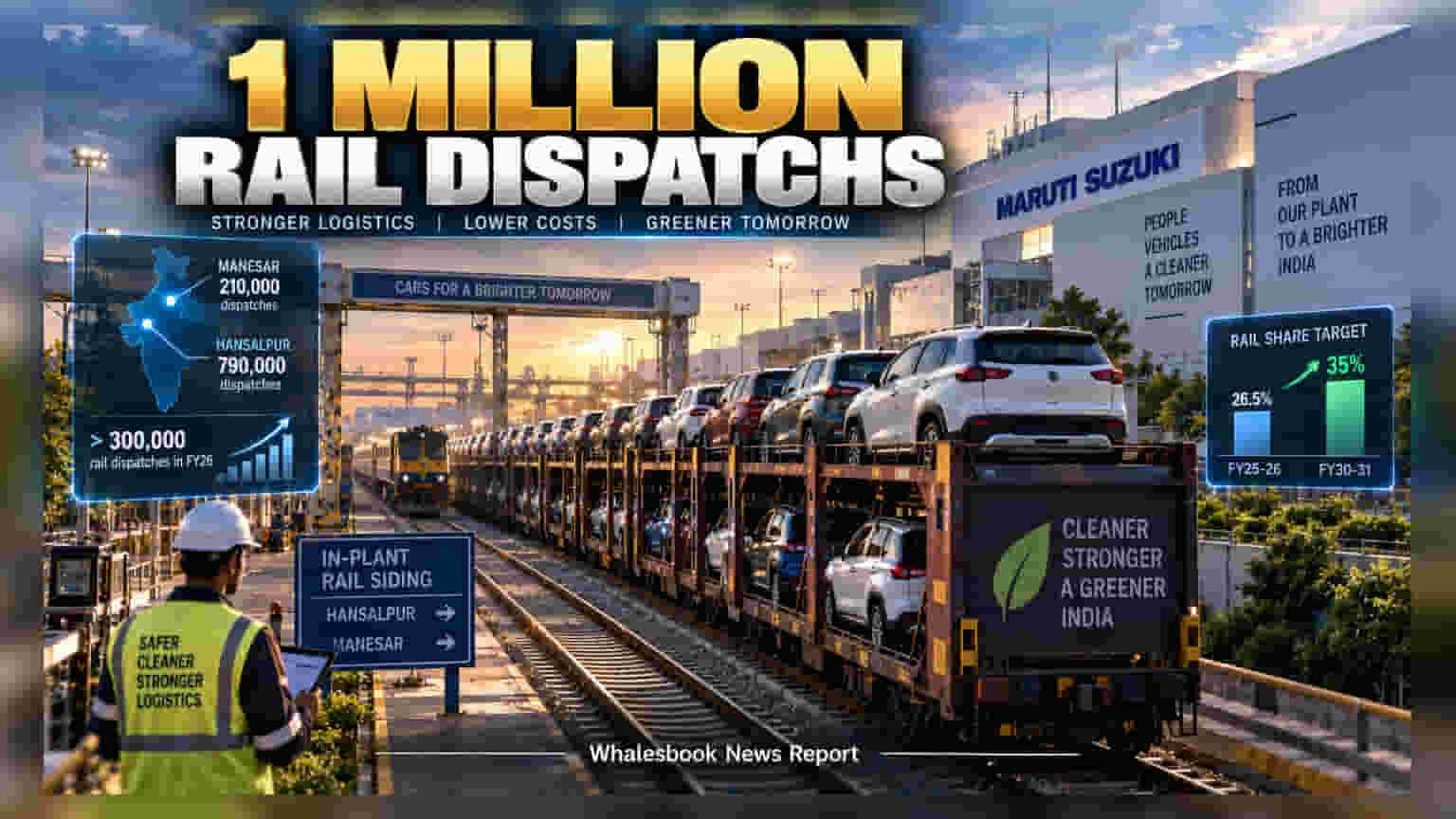
Maruti Suzuki has achieved a cumulative milestone of one million vehicle dispatches through its in-plant railway sidings. The shift from road to rail logistics aims to improve cost efficiency and reduce carbon emissions. The company now plans to scale this model, targeting a 35% rail dispatch share by FY2030-31 as it expands manufacturing capacity.
Maruti Suzuki India has reached a cumulative milestone of one million vehicle dispatches through its in-plant railway sidings located at Hansalpur in Gujarat and Manesar in Haryana. This operational update reflects the company’s ongoing strategy to transition outbound logistics from road transport to rail networks to improve long-term cost efficiency and environmental sustainability.
The company’s rail infrastructure contributed significantly to this total, with the Hansalpur facility accounting for roughly 790,000 dispatches and the Manesar siding adding approximately 210,000 vehicles. These two sites combined handled nearly 70% of the company's total rail-based vehicle dispatches in the current financial year up to August 31, 2026. In the same period, total rail dispatches across the company exceeded 300,000 units.
Strategic Shift in Logistics
For an automobile manufacturer, logistics management is a core operational lever. Moving finished vehicles via rail over long distances is often more efficient than relying solely on road transport, which can face challenges such as highway congestion, higher fuel costs, and potential delivery delays. By using in-plant sidings, Maruti Suzuki can load vehicles directly onto rakes, reducing the need for intermediate handling.
Maruti Suzuki has been consistently raising the share of rail in its total outbound logistics. The share stood at 26.5% in FY2025-26, and the management has set a target to increase this to 35% by FY2030-31. To achieve this, the company plans to build additional rail infrastructure, including a new siding at its upcoming manufacturing plant in Kharkhoda, Haryana.
Investor Perspective
While this milestone does not have an immediate, direct impact on quarterly vehicle sales or production volumes, it serves as a key indicator of the company’s focus on long-term margin improvement. By optimising supply chain costs, the company aims to protect its profit margins, which can often be pressured by rising fuel and transport expenses.
Investors may monitor the execution of these logistics projects as the company scales its manufacturing capacity. The primary risk associated with this strategy is the heavy reliance on the availability and efficiency of third-party railway infrastructure, such as the network managed by Indian Railways. Any delays in rail rake availability or infrastructure bottlenecks could temporarily affect delivery timelines. Moving forward, the company's ability to maintain high utilisation levels at these new sidings while managing the cost of rail-based transport will be a factor to watch.