

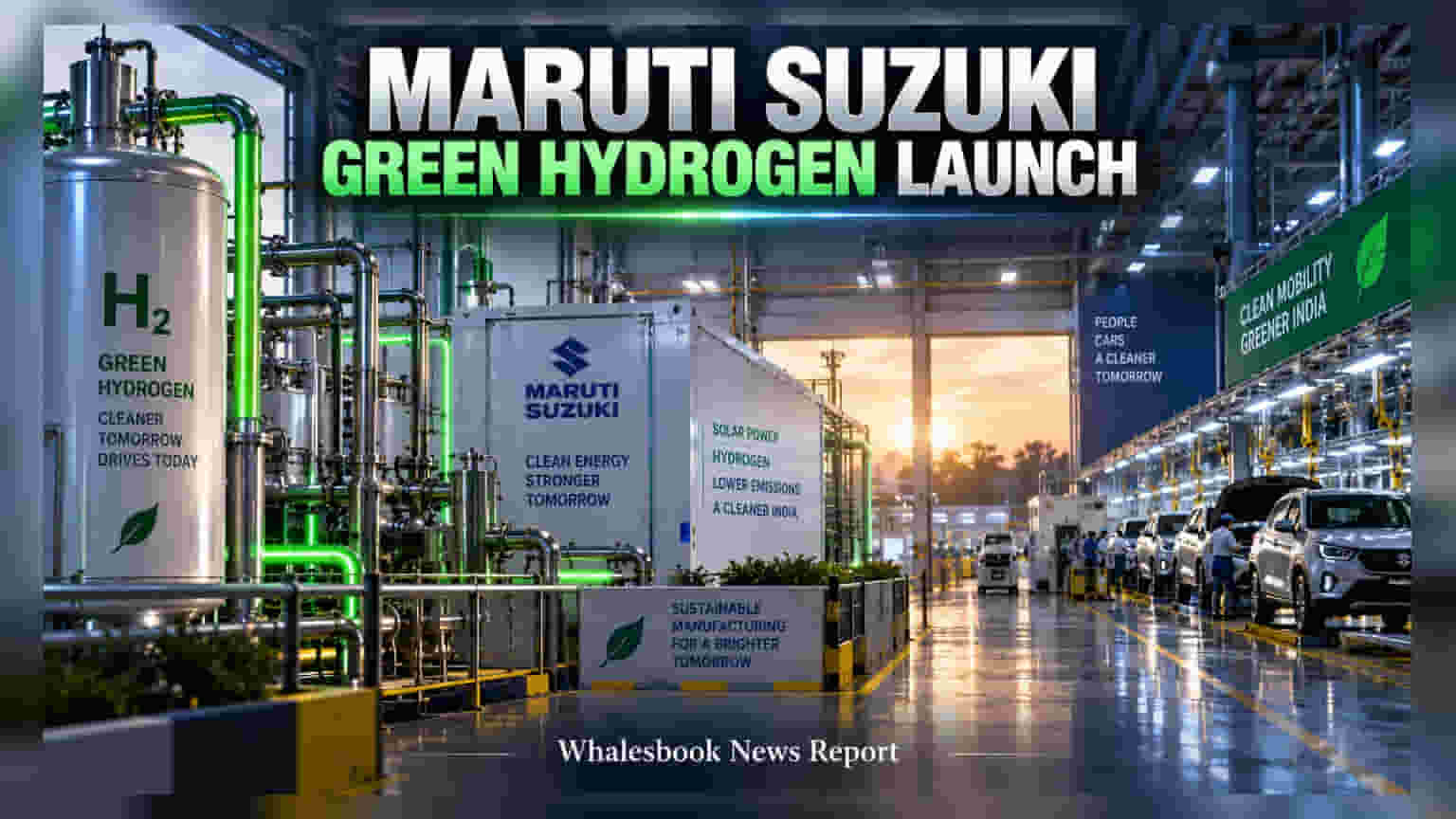
Maruti Suzuki has launched a 300 kW green hydrogen electrolyzer plant at its Manesar facility, aimed at lowering carbon emissions by over 50% by 2031. This pilot project uses surplus solar energy to power operations, reflecting the automaker's push toward sustainable manufacturing. Investors are monitoring these energy initiatives as they form part of a broader strategy to manage long-term power costs and meet global environmental standards.
Maruti Suzuki India Limited has officially started operations at its 300 kW green hydrogen electrolyzer plant located at its Manesar manufacturing hub. This facility is a small but strategic part of the company's long-term plan to reduce its carbon footprint. The automaker has set a goal to cut manufacturing carbon emissions from 615,000 tonnes to 266,000 tonnes by the fiscal year 2030-31.
From an operational standpoint, the facility uses a smart energy management approach. It captures surplus solar energy generated during plant holidays—time when the factory would normally not consume that power—and uses it to produce hydrogen. This allows the company to store energy that would otherwise go to waste and use it later in the production process. For investors, this reflects a move to improve operational efficiency and potentially hedge against fluctuations in grid electricity costs.
This hydrogen project is one piece of a larger energy transition strategy. The company has already earmarked ₹561 crore for four significant compressed biogas (CBG) projects. These efforts are not just about environmental targets; they are about preparing for a future where carbon intensity is a critical metric for long-term manufacturing viability and compliance with global ESG standards. The company's parent firm, Suzuki Motor Corporation, is also supporting this transition through collaboration with the National Dairy Development Board to set up ten additional biogas plants across India.
While these investments represent a clear move toward a more sustainable business model, investors may keep in mind that these are currently pilot-scale or infrastructure-building initiatives. The impact on the company’s bottom line will depend on the successful scaling of these technologies and the actual reduction in energy costs over the next few years. Maruti Suzuki maintains a robust balance sheet with significant cash reserves, meaning that the capital spending for these green projects is unlikely to strain the company's financial health, even if they remain experimental in the short term.
Looking ahead, the next key monitorable for investors will be the commissioning of the 10-tonnes-per-day biogas plant at the Kharkhoda facility, which is expected by fiscal year 2026-27. Along with this, the performance of the 1-MWh battery storage system at the same location will provide further insight into the company's ability to create a resilient, low-carbon manufacturing ecosystem that can operate independently of high-emission power grids.