 Whalesbook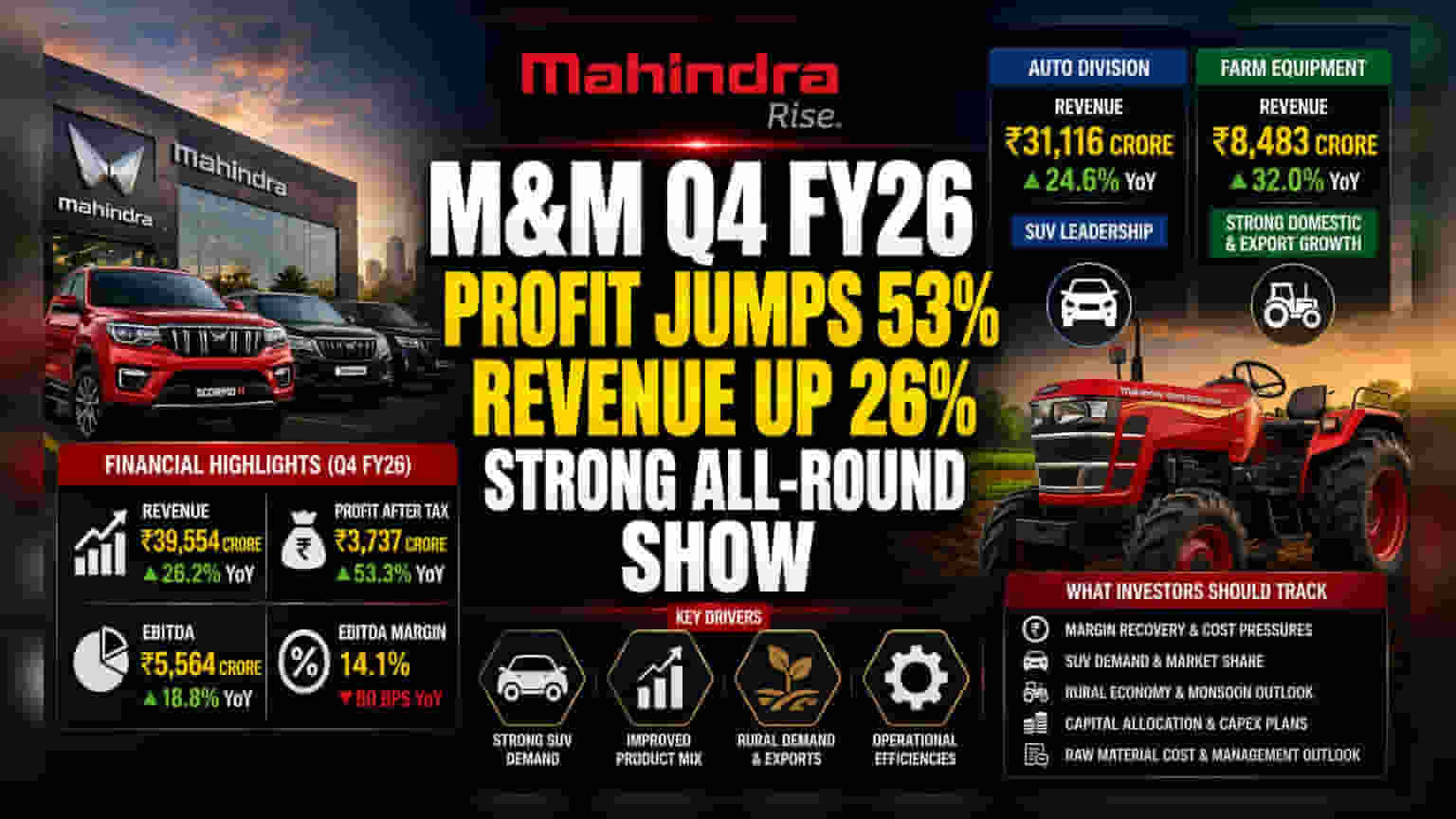


Mahindra & Mahindra posted strong fourth-quarter fiscal 2026 results, with revenue rising 26% to Rs 39,554 crore. Profit growth was robust at 53%, driven by higher SUV sales and farm equipment performance. Investors are watching the 80 basis point dip in operating margins and the sustainability of demand in the competitive auto sector.
What Happened
Mahindra & Mahindra (M&M) reported strong financial performance for the fourth quarter of the 2026 fiscal year. The company recorded a 26.2% year-on-year increase in standalone revenue, reaching Rs 39,554 crore. Profit after tax saw a significant jump of 53.3% to Rs 3,737 crore compared to the same period last year. Earnings before interest, taxes, depreciation, and amortization (EBITDA) rose by 18.8% to Rs 5,564 crore.
Growth Drivers: Auto and Farm
The revenue growth was fueled by two primary pillars: the automotive division and the farm equipment business. The automotive segment saw revenue climb by 24.6% to Rs 31,116 crore. This performance was supported by high sales volumes in the SUV category, which remains a key revenue driver for the company, and an improved product mix. Simultaneously, the farm equipment division grew by 32.0% to Rs 8,483 crore, benefiting from a mix of strong domestic demand and an expansion in export markets.
The Margin Performance
While the company delivered strong revenue and profit growth, operating margins experienced some pressure. The EBITDA margin, which measures core operational profitability, declined by 80 basis points to 14.1%. A dip in margins during a period of high revenue growth often suggests that the company is facing cost pressures, such as higher input expenses, or that the mix of products sold has shifted toward lower-margin items. Maintaining healthy margins while scaling up production is a critical area investors typically monitor in the auto sector.
The Bigger Business Context
Mahindra & Mahindra operates a unique business model compared to pure-play passenger vehicle manufacturers. Because it has significant exposure to the tractor and farm equipment sector, its performance is often linked to rural economic cycles and monsoon patterns. In addition, the SUV market in India has become highly competitive, with multiple domestic and global players launching new models. M&M’s ability to defend its market share in this crowded space is essential for long-term growth.
Sector Risks and Challenges
Investors tracking the auto and farm equipment sectors should remain aware of potential headwinds. The tractor industry is inherently cyclical, meaning sales can fluctuate significantly depending on agricultural income and seasonal factors. In the automotive space, raw material price volatility remains a constant risk that can impact profit margins. Furthermore, as the industry moves toward higher-value products and new technologies, the need for continued investment in research and development and capital spending on new capacity can affect cash flow.
What Investors Should Track
Moving forward, market participants will likely watch the trajectory of profit margins to see if the company can offset cost pressures through better pricing or efficiency. Key monitorables include the sustainment of SUV demand against rising competition, rural market health affecting tractor sales, and any updates on capital allocation plans. Additionally, management commentary on raw material costs and production capacity utilization will be important for assessing the company’s profitability in the coming quarters.