 Whalesbook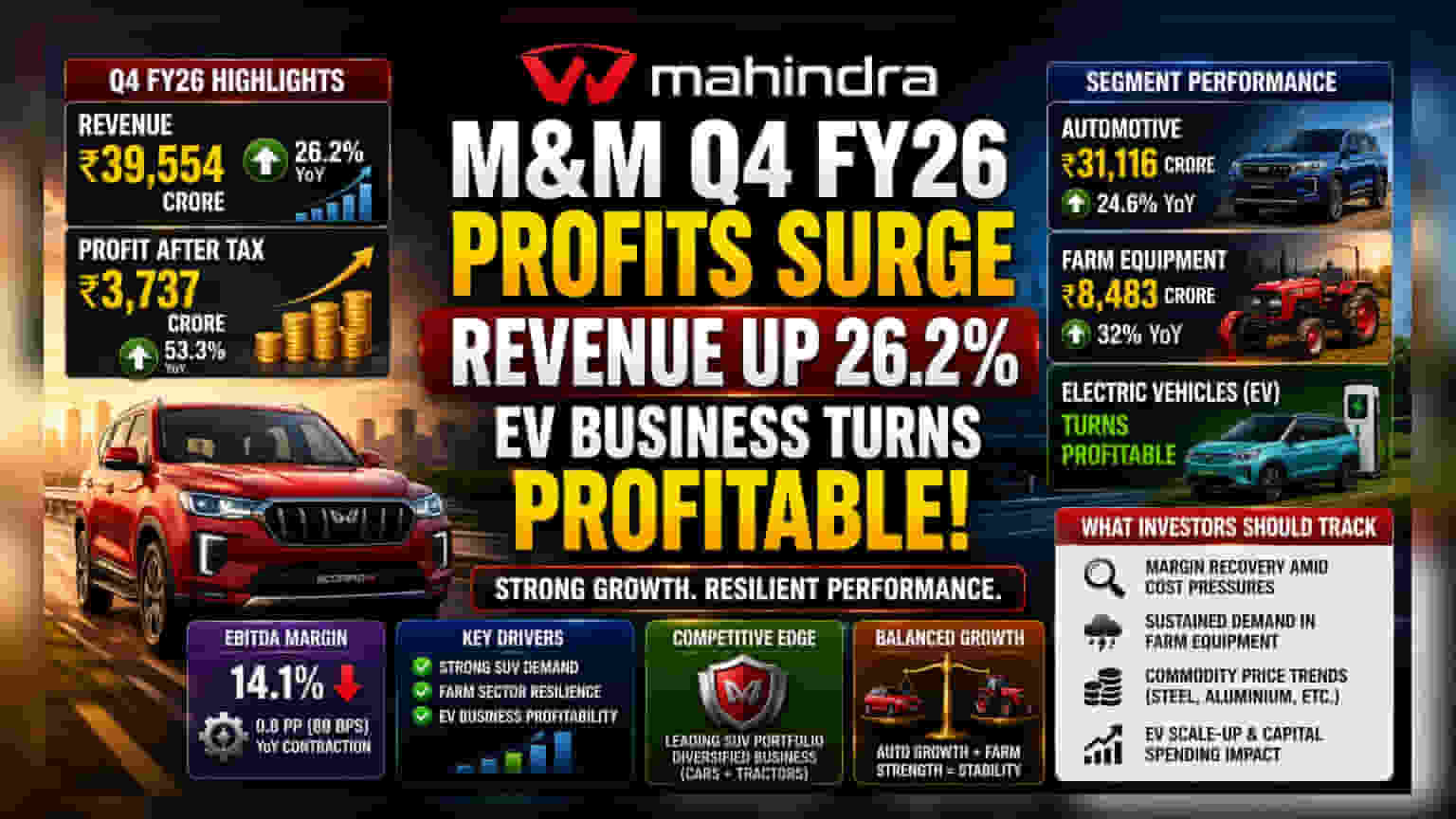


Mahindra & Mahindra (M&M) reported a 26% revenue increase in Q4FY26, supported by strong SUV and farm equipment sales. While the company achieved a major milestone with operational profit in its electric vehicle business, slight margin contraction remains a point to watch.
What Happened
Mahindra & Mahindra (M&M) delivered a strong set of financial numbers for the quarter ending March 2026. The company’s standalone revenue grew by 26.2% compared to the same period last year, reaching ₹39,554 crore. Profit after tax saw an even sharper increase, rising 53.3% to ₹3,737 crore. This performance was underpinned by high demand in both the automotive and farm equipment divisions, which continue to be the primary pillars of the company’s revenue stream.
Business Performance and Segment Growth
The automotive segment, which includes the popular SUV range, remained the biggest growth driver with a revenue increase of 24.6% to ₹31,116 crore. The farm equipment division, often considered a stable cash generator for the company, also performed well, recording a 32% revenue jump to ₹8,483 crore. A notable highlight for the quarter was the electric vehicle (EV) business, which reached operational profitability. This is a significant development, as it reduces the financial burden on the company’s core business as it continues to invest in new mobility solutions.
The Profitability Picture
While the bottom-line growth was strong, investors should note the company’s core operating margins. The earnings before interest, taxes, depreciation, and amortization (EBITDA) margin stood at 14.1%, which is a contraction of 0.8 percentage points (80 basis points) compared to previous levels. This indicates that while the company is selling more, the cost of doing business—likely due to higher raw material or operational expenses—has risen slightly, preventing margins from expanding alongside revenue.
Competitive Landscape and Sector Context
The automotive sector in India remains highly competitive, with players like Maruti Suzuki and Tata Motors vying for dominance in the SUV space. M&M has successfully gained market share through its focus on premium product offerings and SUVs. However, the company operates in a sector sensitive to commodity prices and consumer demand cycles. Changes in raw material costs, such as steel or aluminum, directly impact the operating margins of auto manufacturers. Unlike some peers, M&M’s dual focus on tractors and cars helps balance the risks, as the farm segment acts as a hedge against a potential slowdown in urban consumer vehicle demand.
Risks and Concerns
Investors should be aware of the inherent risks in the automotive and farm sectors. The slight dip in EBITDA margins suggests that the company is facing some cost pressure, which is common in the auto industry during periods of high expansion and product launches. Furthermore, the SUV segment is becoming increasingly crowded, and maintaining market share while keeping margins steady requires constant innovation and effective cost management. The EV space, while showing early signs of success, requires high capital spending, which could impact free cash flow in the coming quarters.
What Investors Should Track
Moving forward, the focus will be on whether M&M can improve its operating margins as it scales its EV business. Investors may also track the sustainability of demand in the farm equipment sector, as this is often linked to the monsoon season and rural economic conditions. Management commentary on commodity price trends and future capital spending will be key indicators of how the company plans to balance growth with profitability in the coming fiscal year.