

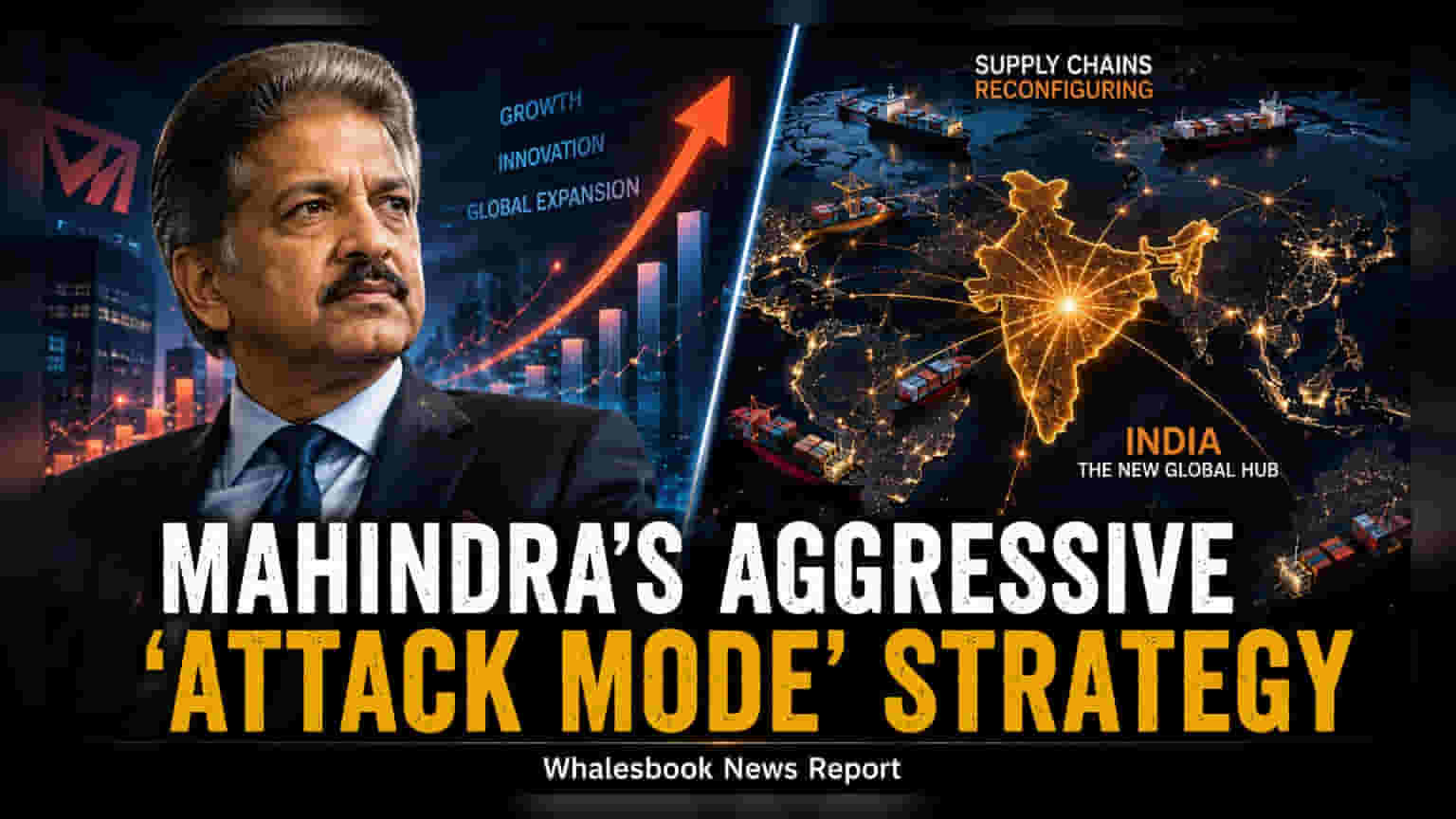
Mahindra & Mahindra has announced a ₹15,000 crore investment in Nagpur over the next decade as part of a new growth strategy dubbed 'Attack Mode.' This plan focuses on expanding manufacturing capabilities to benefit from shifting global supply chains. Investors are tracking how this capital spending will impact the company's long-term balance sheet and margins.
Mahindra & Mahindra, a leading Indian auto and farm equipment manufacturer, has unveiled an aggressive growth strategy to expand its footprint. Chairman Anand Mahindra described this shift as 'Attack Mode,' signaling a move toward faster capital spending and operational expansion despite global economic uncertainties. A core pillar of this plan is a committed investment of ₹15,000 crore in Nagpur, scheduled to be deployed over the next ten years.
Strategic Expansion and Capital Allocation
The decision to invest ₹15,000 crore represents one of the largest capital outlays in the group's recent history. For investors, the primary monitorable will be the company's ability to maintain its profit margins while managing this significant spending. Historically, Mahindra & Mahindra has maintained a disciplined approach to its balance sheet, but large-scale projects often bring risks related to execution delays and the need for consistent free cash flow. The company’s success will depend on how efficiently it can translate this capital spending into revenue growth and expanded production capacity.
Innovation and Manufacturing Capability
The company has been focusing on research and development to maintain a competitive advantage. Exchange filings and annual reports indicate a notable increase in intellectual property, with patents granted to the group rising significantly over the last decade. This focus on technology is intended to help the company secure a larger share of the manufacturing market as global supply chains shift toward India. However, the company operates in a sector that is highly sensitive to raw material prices, such as steel and aluminum, and global demand fluctuations.
Sector Context and Competition
Mahindra & Mahindra competes in a crowded market against major players like Tata Motors, Maruti Suzuki, and various global entrants. The auto sector is currently navigating transitions toward electric vehicles and smarter manufacturing processes. While India's role as a manufacturing hub provides a supporting factor, the company must also manage intense competition. Unlike some peers that rely heavily on a single product segment, Mahindra & Mahindra maintains a diversified business model spanning utility vehicles, tractors, and financial services. This diversification historically helps in cushioning the impact of cyclical downturns in any one specific segment.
Investor Monitorables
As the company moves forward with its 'Attack Mode' strategy, investors may track several metrics beyond just headline announcements. The most important updates will include the actual cash flow impact, the specific project commissioning timelines in Nagpur, and the debt-to-equity ratio as these funds are utilized. Additionally, monitoring the return on capital employed will be essential to see how effectively this new money is creating value for shareholders. The company’s management has signaled confidence in navigating current geopolitical and economic risks, but the ultimate success will be determined by execution performance in the coming quarters.