

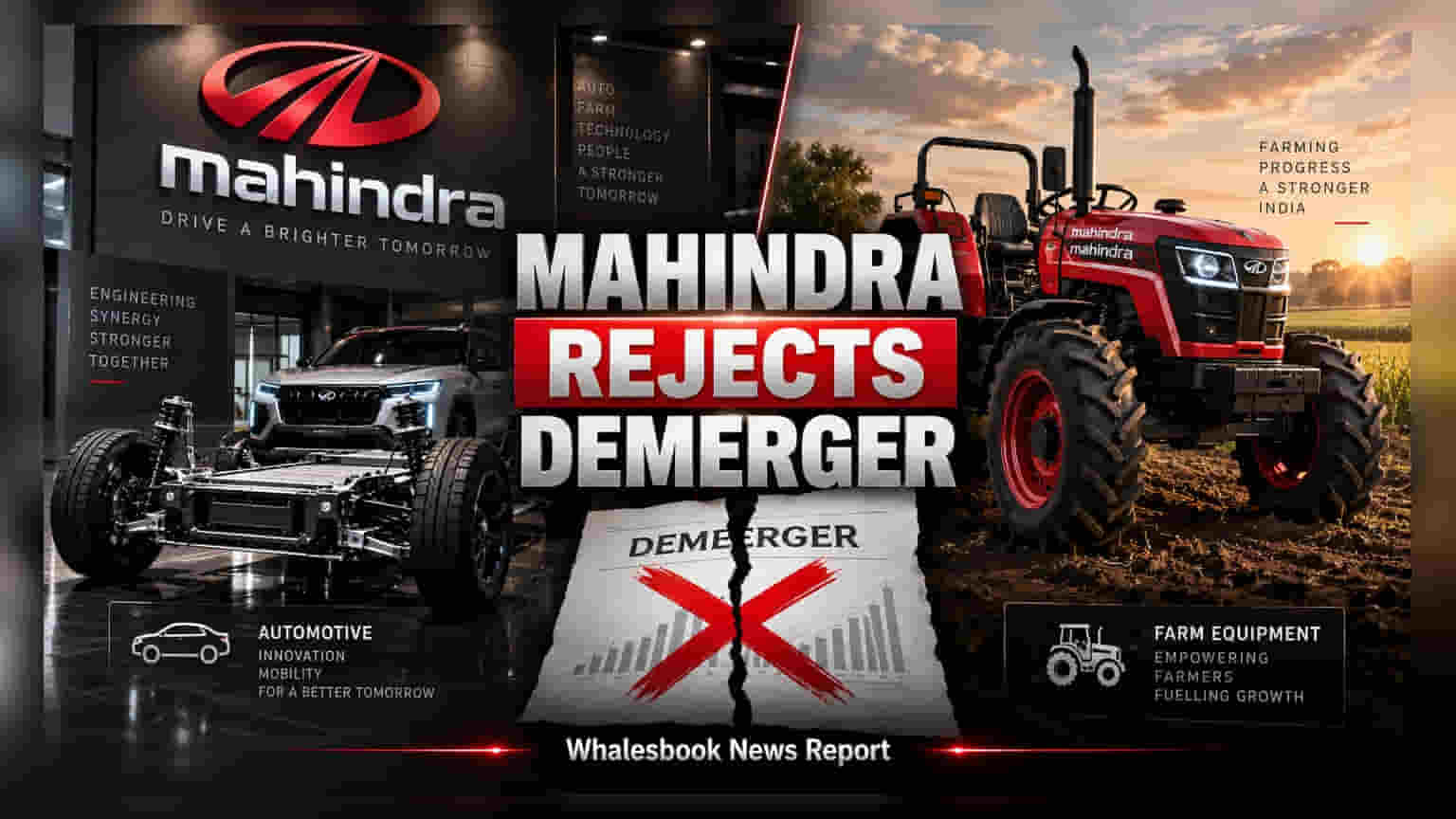
Mahindra & Mahindra has clarified that it will keep its automotive and farm equipment businesses under a single entity, dismissing talk of a demerger. The group believes an integrated model offers better value than splitting these divisions. Investors can track how this unified approach supports the company’s capital allocation and long-term growth plans.
Mahindra & Mahindra (M&M) has reaffirmed its commitment to keeping its core automotive and farm equipment sectors under a single corporate umbrella. The company’s leadership has firmly addressed market speculation regarding a potential demerger, stating that management sees significant strategic and financial advantages in operating these businesses together rather than splitting them into separate entities.
Synergy Over Separation
While some major players in the Indian automotive industry, such as Tata Motors, have successfully pursued demergers to create independent units for passenger and commercial vehicles, M&M has chosen a different path. The company’s management believes that the current integrated model—where auto and farm operations share resources, engineering talent, and capital—provides a stronger business advantage than a separation would. By keeping these divisions under one roof, M&M aims to leverage shared manufacturing platforms and supply chain efficiencies that could be harder to maintain if the businesses were split.
Targeted Restructuring Still in Play
Although M&M has rejected a broad demerger of its core divisions, the company is not against restructuring when it sees a specific strategic benefit. The group has actively pursued a more nuanced approach for other parts of its portfolio. A notable example is the recent transfer of its trucks and buses business to SML Mahindra. By consolidating these operations, M&M aims to focus on market share expansion and operational clarity in that specific segment, rather than a blanket overhaul of its primary revenue drivers.
Strong Financial Foundation
Financial stability remains a key factor in the company’s decision to maintain its current structure. With a strong track record of returns and a very low debt-to-equity ratio, M&M is not under the same pressure to unlock value through spin-offs that some other corporations might face. This financial health allows the company to fund its ambitious product development cycles—which include both traditional internal-combustion engines and electric vehicle programs—without needing to separate its businesses to raise capital.
What Investors Should Track
For investors, the key monitorable remains how effectively M&M can execute its growth strategy within the existing structure. While the company has ruled out a core demerger for now, its ability to manage resource allocation across eight concurrent product programs will be a major factor in maintaining its current profit margins. Additionally, investors may continue to watch for broader macroeconomic risks, such as interest rate volatility and monsoon trends, which can directly influence the demand for tractors and passenger vehicles, regardless of the company’s corporate structure.