 Whalesbook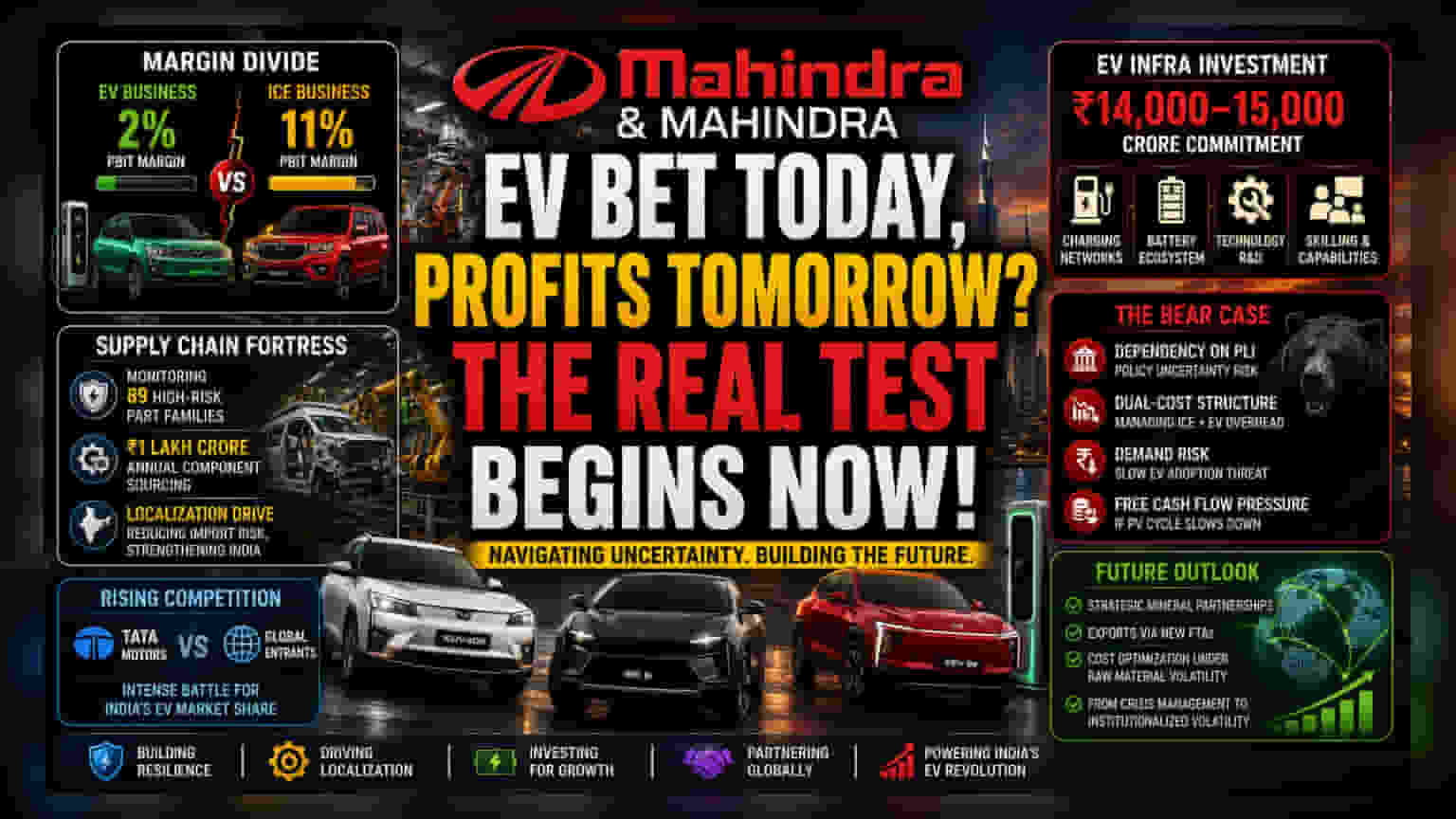


The Valuation and Margin Gap
Mahindra & Mahindra’s electric vehicle trajectory is defined by a sharp divergence between its mature internal combustion engine (ICE) business and its emerging EV segment. The reported 2% PBIT margin in the EV division reflects the heavy upfront capital expenditure required for electrification, standing in stark contrast to the robust 11% margins delivered by the legacy portfolio. This profitability chasm persists despite the company’s efforts to leverage economies of scale. Investors are increasingly focused on whether this margin compression is a transitory phase of early-stage growth or a structural challenge as competition intensifies from domestic peers like Tata Motors and international entrants vying for share in the Indian market.
Strategic Localization and Supply Chain Hardening
The transition toward "accelerate in uncertainty" represents a move toward operational fortress-building. Given that the company oversees an annual component sourcing requirement of approximately ₹1 lakh crore, the focus on monitoring 89 high-risk part families is an essential defensive measure. By forcing a shift toward domestic localization, Mahindra aims to insulate its production lines from the concentration risks associated with East Asian battery material supply chains. This shift is critical as the automotive sector contends with shifting trade policy and the ongoing scarcity of specialized electronic components that remain susceptible to geopolitical friction.
The Forensic Bear Case
Despite the bullish narrative surrounding electrification, the company faces substantial execution risks. Mahindra’s reliance on the Production Linked Incentive scheme introduces a dependency on government policy consistency, which can be fickle during economic downturns. Furthermore, the commitment of an additional ₹14,000-15,000 crore toward EV infrastructure places a heavy burden on the balance sheet if consumer demand fails to materialize at predicted rates. Unlike pure-play EV manufacturers that have avoided the legacy baggage of ICE portfolios, Mahindra must manage the complex overhead of two parallel manufacturing systems, creating a dual-cost structure that could weigh on free cash flow in the event of a cyclical slowdown in the broader passenger vehicle sector.
Future Outlook and Sector Dynamics
Long-term viability hinges on the successful execution of India’s critical mineral partnerships and the broadening of export markets through new free trade agreements. Analysts remain cautious about the timeline for EV margin parity, as raw material price volatility continues to threaten cost-optimization goals. While Mahindra has successfully hedged against immediate supply shocks through inventory buffers, the transition from crisis management to institutionalized volatility requires sustained operational excellence, an unproven metric in the high-stakes, capital-intensive race for EV dominance in the Indian subcontinent.