 Whalesbook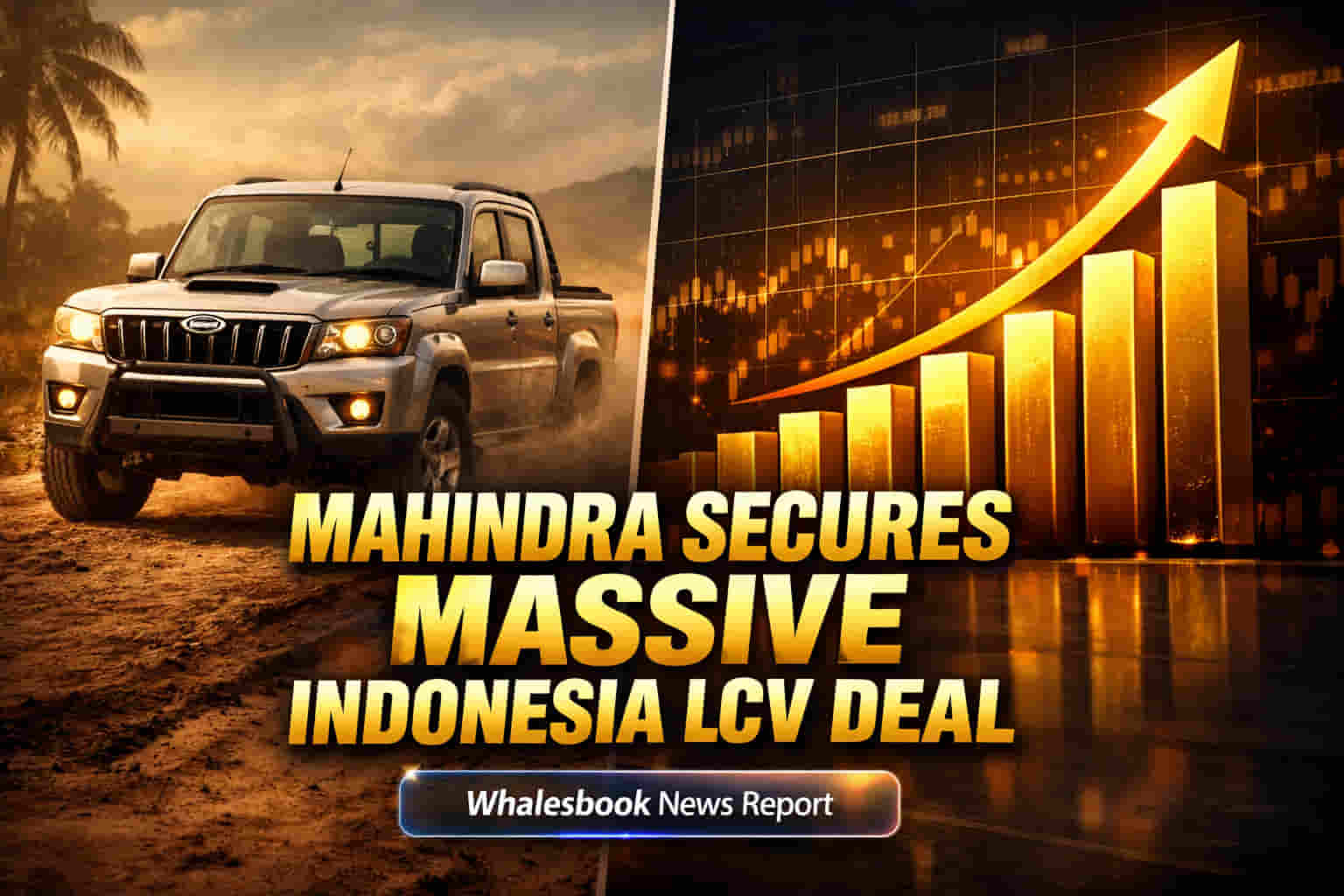
The Confirmed Deal
Mahindra & Mahindra issued a clarification to address market speculation stemming from media reports concerning a potential halt on vehicle imports into Indonesia. While reports cited an Indonesian minister on February 26 regarding the suspension of 105,000 vehicles, Mahindra confirmed its distinct and significant export order for 35,000 Light Commercial Vehicles (LCVs) from Agrinas Pangan Nusantara, an Indonesian state-owned enterprise. The company emphasized it has not received any official communication indicating a suspension of its specific deal and has already secured an advance payment, signaling the order's continued progression. This order is tied to the Koperasi Desa/Kelurahan Merah Putih (KDKMP) Project, designed to enhance rural logistics by equipping local cooperatives with robust vehicles for direct farmer-to-market supply chains. The stock saw a muted reaction, trading flat to marginally up on the clarification, with volume exceeding average levels, suggesting investor relief over the confirmed order's status.
Strategic Export Foothold
The 35,000-unit order for Scorpio pick-up vehicles represents Mahindra's largest export commitment to date. Nalinikanth Gollagunta, CEO of M&M's Automotive Division, stated that the volume committed is substantial enough to significantly boost the company's international operations, potentially matching its entire export volume from fiscal year 2025. Manufactured at Mahindra's Nashik plant, the Scorpio Pik Ups are recognized globally for their durability and cost-efficiency in demanding conditions. This deal diversifies Mahindra's export base beyond traditional markets and leverages the growing demand for logistical solutions in emerging economies. While competitors like Tata Motors also engage in exports, the specifics of their order status in Indonesia remain less clear, positioning Mahindra's confirmed large-scale order as a strategic win. The company's overall market capitalization stands around $50 billion with a P/E ratio of approximately 25x, reflecting market confidence in its growth strategies.
⚠️ The Sovereign Risk & Policy Flux
The ambiguity surrounding broader Indonesian import policies presents a residual risk for all foreign automakers. The reported halt, potentially driven by domestic policy considerations or pushback from local policymakers, highlights the volatile regulatory environment in some emerging markets. While Mahindra's specific contract appears secure due to its nature as a state-enterprise deal and the receipt of advance payment, future policy shifts or broader economic downturns could impact the LCV export segment. Unlike some peers facing higher leverage, Mahindra's financial structure offers a degree of resilience. Past instances of similar policy uncertainty in other developing nations have led to temporary stock corrections for Indian exporters, although the long-term impact typically aligns with the scale of the disruption.
Outlook
Mahindra's confirmed export order is expected to contribute significantly to its international revenue streams throughout the current fiscal year. Analysts view this large-scale deal positively, seeing it as a validation of Mahindra's LCV product strength and its ability to secure substantial contracts with state-backed entities. The increased export volume is anticipated to improve capacity utilization at the Nashik plant and potentially offer higher margins compared to domestic sales, although currency fluctuations remain a factor to monitor. The company's focus on expanding its global footprint through such strategic partnerships is a key element of its long-term growth strategy, with continued efforts expected to secure similar opportunities in other developing markets.