 Whalesbook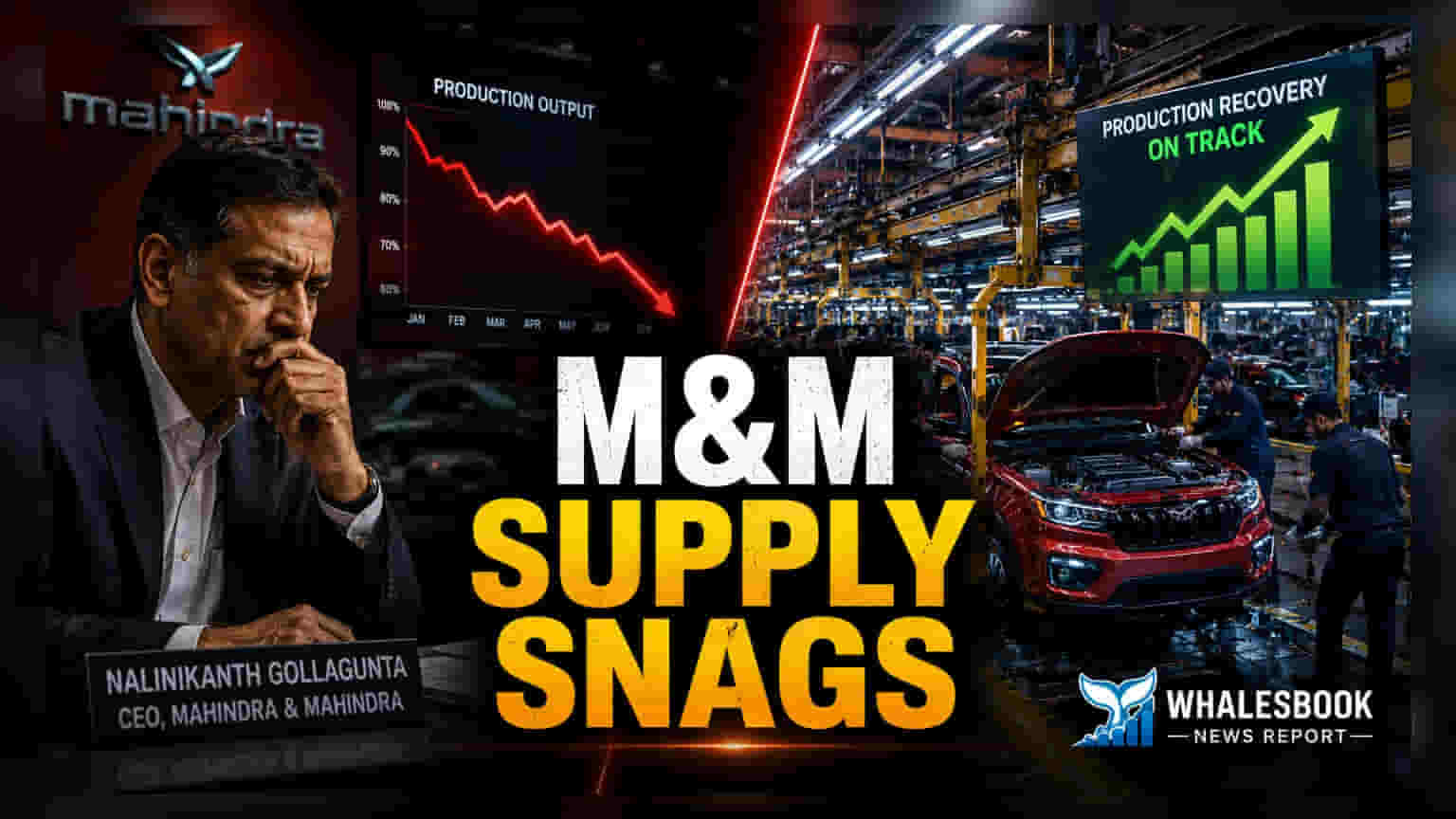


The Margin-Production Paradox
While the headline figures project an image of unstoppable momentum, the underlying reality reveals a fragile operational structure. Total sales reaching 99,636 units represent significant volume growth, yet the reliance on tier-2 suppliers for critical components creates a precarious dependency. When labor shortages at smaller, less capitalized vendors force production delays, the resulting inventory gaps can lead to elevated holding costs or, worse, lost market share if competitors with more resilient supply chains absorb that demand. This dichotomy—strong consumer appetite matched against inconsistent manufacturing output—suggests that M&M is currently paying a premium for operational agility that may not be sustainable if labor volatility persists throughout the fiscal year.
Competitive Benchmarking and Sector Context
Comparing M&M’s 23% growth in domestic tractor sales to the broader automotive index shows that the company is effectively leveraging its rural footprint to hedge against urban volatility. However, the stock’s valuation must be viewed through the lens of current sector-wide margin compression. Unlike competitors who have largely offshored or diversified their supplier base to mitigate geopolitical risks in West Asia, M&M’s concentration of suppliers within specific regions exposes the company to localized disruptions that are difficult to forecast. With a P/E ratio that reflects high expectations, the inability to maintain full production capacity could lead to institutional re-rating if analysts begin to factor in recurring supply-side risk premiums.
Structural Weaknesses and Operational Risk
The optimism surrounding an imminent production rebound often discounts the difficulty of scaling operations after labor-induced stoppages. History suggests that bringing tier-2 suppliers back to full efficiency is not instantaneous, particularly when competition for specialized labor remains fierce. Furthermore, the company’s exposure to domestic election cycles and the associated regulatory uncertainty provides an unpredictable layer of administrative friction. Management’s ability to navigate these specific bottlenecks will be the primary indicator of performance in the coming quarters, as any failure to meet the projected recovery timeline will likely lead to analyst downward revisions on growth forecasts.
The Outlook for Fiscal Discipline
Looking forward, the dividend payout of ₹33 per share signals significant confidence in cash flow, yet this must be balanced against the capital expenditure required to secure and diversify the supply chain. If management continues to prioritize dividends over aggressive investment in supplier stability, the firm risks future earnings volatility. Market participants are now closely monitoring whether the reported 53% surge in net profit can be maintained as input costs fluctuate and supply chain inefficiencies bleed into the bottom line.