

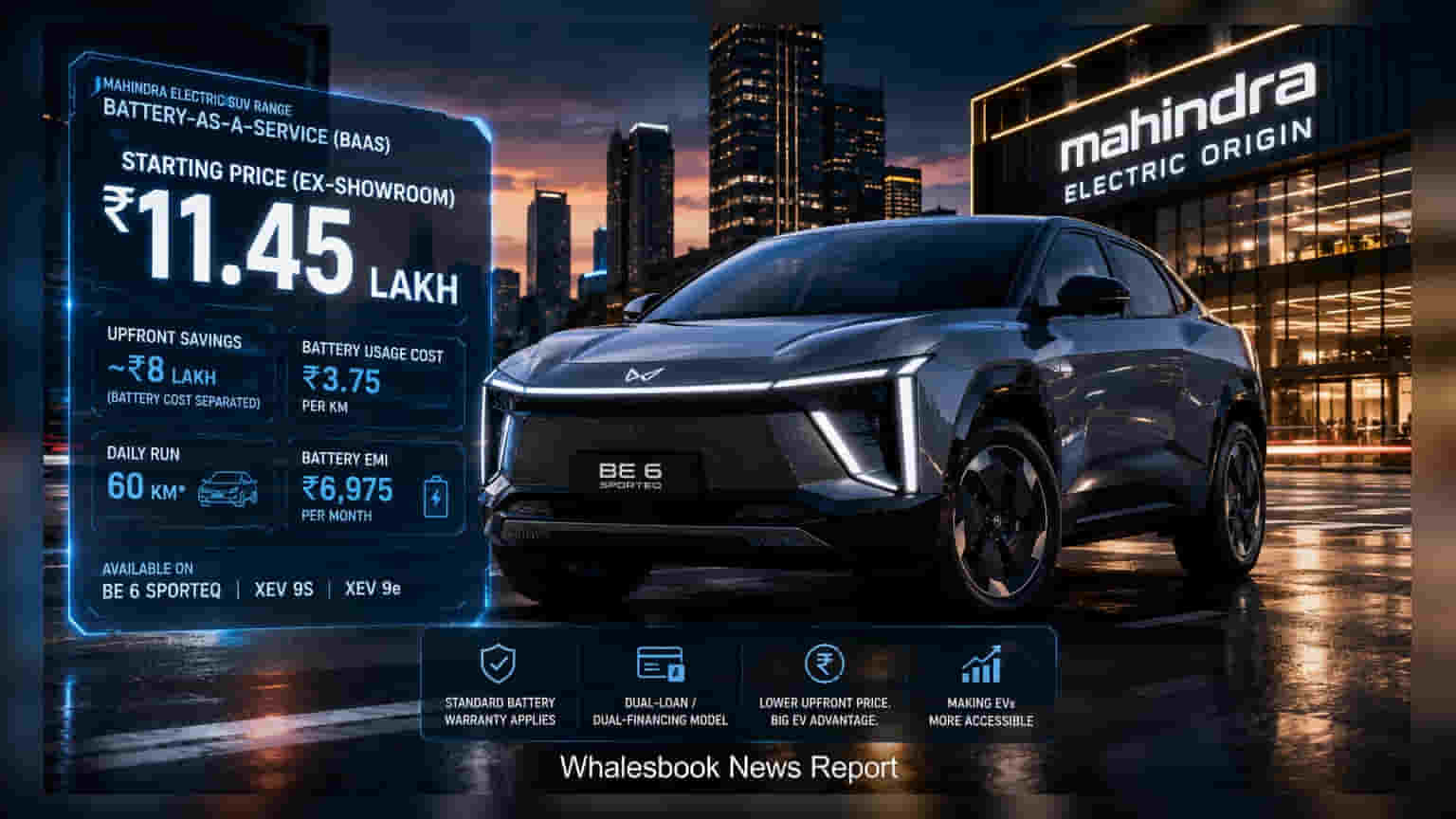
Mahindra & Mahindra has introduced a battery financing model for its electric SUV lineup, effectively lowering upfront showroom prices by ₹8 lakh. This strategy aims to bridge the price gap between electric vehicles and traditional petrol or diesel SUVs to attract more buyers, though it involves a dual-loan structure that customers should carefully evaluate.
Mahindra & Mahindra has launched a Battery-as-a-Service (BaaS) financing structure across its Electric Origin SUV portfolio, including the BE 6 SPORTEQ, XEV 9S, and XEV 9e. By separating the battery cost from the vehicle price, the company has effectively reduced the upfront ex-showroom cost by approximately ₹8 lakh. This change positions the starting price of the BE 6 SPORTEQ at ₹11.45 lakh, bringing it closer to the price bracket of popular internal combustion engine (ICE) SUVs.
Under this new financing arrangement, the customer does not pay for the battery upfront. Instead, the battery is financed separately. The company has set the effective battery usage cost at ₹3.75 per kilometre. For a customer driving roughly 60 kilometres daily, the battery EMI starts at ₹6,975 per month. This model functions as a dual-loan or dual-financing product offered through financiers, rather than a pay-per-use rental scheme. Importantly, choosing this financing option does not change the standard battery warranty coverage.
From a strategic perspective, the move is designed to make electric vehicles appear more affordable at the point of sale. Many consumers primarily filter their SUV search by the total purchase price. By lowering this headline number, Mahindra is attempting to force a direct comparison between their large-format, long-range electric SUVs and standard petrol or diesel models, which have historically been cheaper to purchase upfront. This creates a psychological shift, making the electric option seem accessible to a wider segment of buyers who were previously deterred by the higher initial cost of electric vehicles.
However, investors should be aware of the complexities and risks associated with this financing model. Because it is a dual-loan structure, customers must clear credit checks for both loans, which could complicate the buying process for some. Additionally, the customer does not own the battery outright; the battery is effectively financed, creating a long-term payment obligation that differs from a traditional vehicle purchase. Historical adoption rates for battery subscription or financing models in the Indian automotive sector have generally remained in the low single digits, suggesting that consumer comfort with these arrangements is still developing.
Another point to monitor is the impact on vehicle resale and transfer. With an active dual-loan or battery-financing arrangement attached to the vehicle, selling the car or transferring the financing to a new owner may involve more paperwork and hurdles than a standard car loan. The success of this strategy will depend on whether potential buyers prioritize the lower upfront cost enough to accept the complexity of a dual-financing structure. The key monitorable for the coming quarters will be whether this pricing strategy translates into higher sales volumes and if it successfully helps the company capture market share from traditional combustion engine vehicles.