

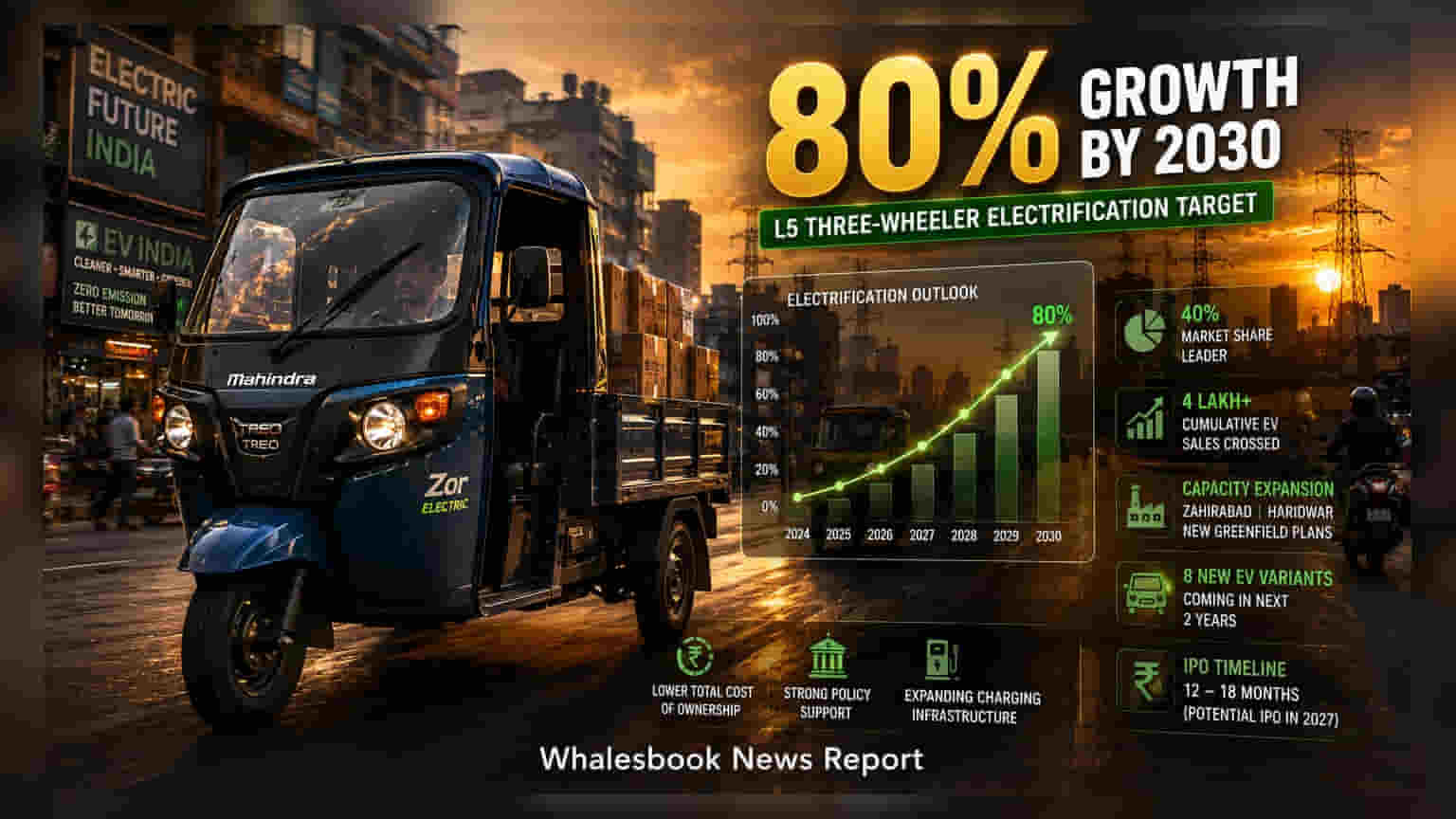
Mahindra Last Mile Mobility aims to reach 80% electrification in its three-wheeler category by 2030, driven by shifting demand and policy support. The company, which currently holds a 40% market share, is also working toward an IPO timeline for 2027.
Mahindra Last Mile Mobility (MLMML), the electric vehicle arm of Mahindra & Mahindra, is setting ambitious targets for the transition of the commercial transport sector to electric power. The company projects that the L5 three-wheeler category—which includes both passenger and heavy-duty cargo vehicles—will reach 80% electrification by 2030. This shift is being supported by lower total cost of ownership for buyers and sustained government policy incentives.
With a leading 40% market share in the electric three-wheeler segment, MLMML has already crossed the milestone of 4 lakh cumulative sales for its electric vehicles. To sustain this growth, the company is focusing on capacity expansion. Plans are underway to scale manufacturing at facilities in Zaheerabad and Haridwar, alongside potential new greenfield projects. The firm also plans to introduce eight new electric vehicle variants over the next two years to capture different segments of the market.
Alongside its operational goals, the company is preparing for a public listing. CEO Suman Mishra has indicated that the firm is working on an IPO timeline within the next 12 to 18 months, pointing to a potential entry into the public markets in 2027. This move follows the company’s recent fundraising efforts, which valued the business at approximately ₹10,822 crore. Management has noted that the final decision on the listing will depend on prevailing market conditions and the company's internal readiness.
While the growth outlook is positive, investors should consider the risks inherent in the sector. The electric three-wheeler industry remains dependent on government policies and subsidy structures, such as the PM E-DRIVE initiative. Any changes in these support mechanisms could impact demand patterns or profit margins. Additionally, the company faces increasing competition from both traditional automakers and new entrants expanding their electric portfolios. Success will depend on the company's ability to execute its capacity expansion projects on time and maintain its market leadership while navigating these competitive and regulatory pressures.