

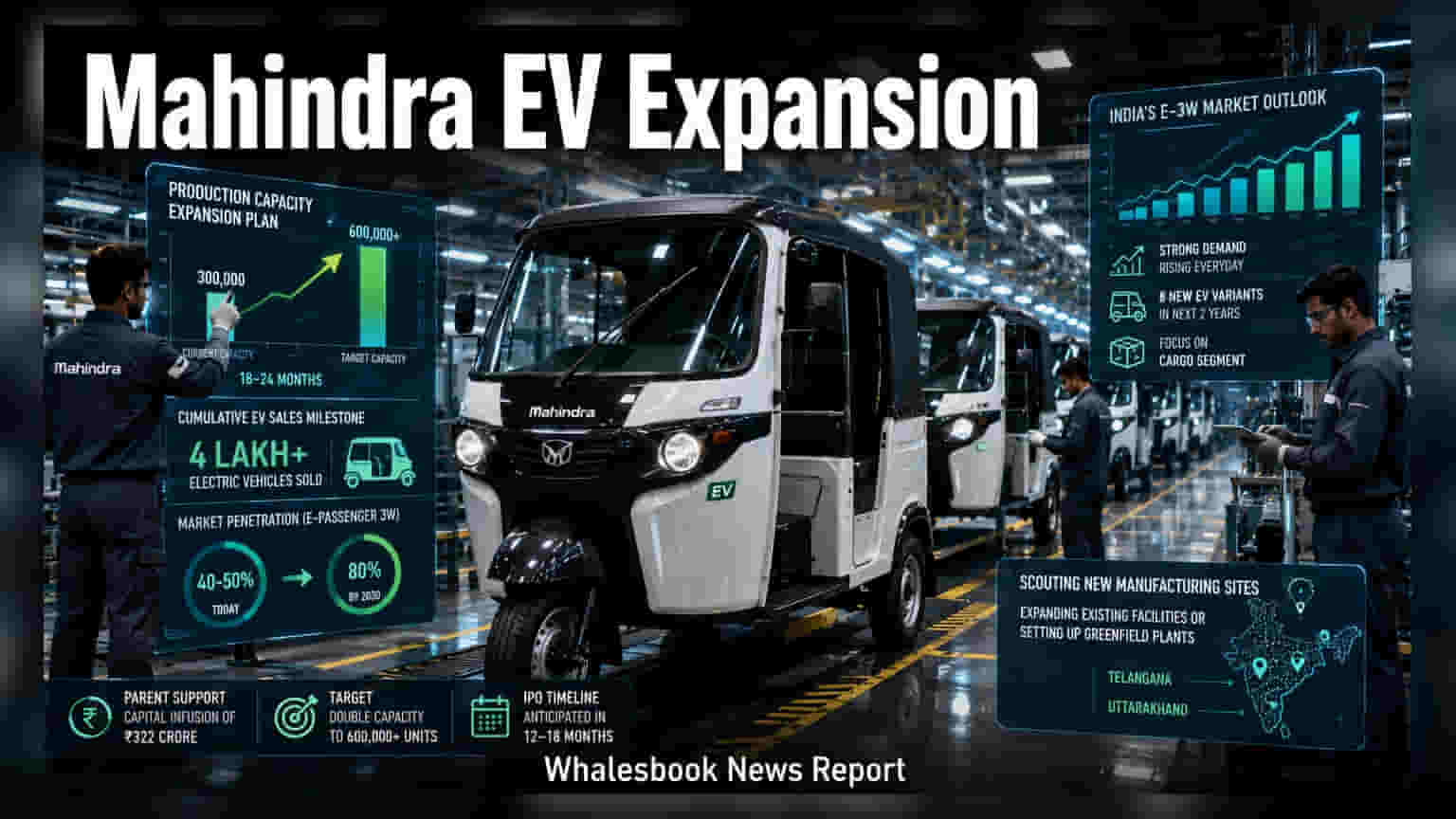
Mahindra Last Mile Mobility is scouting new locations to double its annual manufacturing capacity from 300,000 units, aiming to capitalize on the rapid shift toward electric three-wheelers. The expansion supports its strategy to capture a larger market share as EV adoption rises. Investors may track the company’s progress on these plans, especially as it prepares for a potential public listing in the coming 12 to 18 months.
Mahindra Last Mile Mobility Limited (MLMML), the electric vehicle subsidiary of Mahindra & Mahindra, is initiating plans to significantly increase its production footprint. The company is actively scouting new manufacturing sites with the goal of doubling its current annual capacity of 300,000 units. This move is driven by the rising demand for electric three-wheelers, which are increasingly replacing traditional fuel-powered vehicles in India’s commercial last-mile connectivity sector.
The company recently reached a milestone of 4 lakh cumulative electric vehicle sales, solidifying its position in the Indian commercial EV market. With electric passenger three-wheeler penetration currently estimated at approximately 40% to 50% and projections suggesting this could reach 80% by 2030, the firm is positioning itself to capture a larger share of the market. To support this, MLMML has announced plans to introduce eight new electric vehicle variants over the next two years, with a specific focus on expanding its cargo offerings.
To achieve this production increase, the company is evaluating a strategy that includes a mix of expanding existing facilities in states like Telangana and Uttarakhand, or establishing entirely new greenfield plants. While no final locations or specific total investment figures have been officially confirmed, the parent company, Mahindra & Mahindra, has been providing capital to support these growth initiatives, including a recent infusion of Rs 322 crore.
For investors, this phase of expansion brings both potential for growth and specific operational risks. Successfully doubling capacity within an 18 to 24-month window requires precise execution to avoid delays and cost overruns. Furthermore, the company faces stiff competition in the rapidly evolving electric vehicle space, where technology and pricing are constantly shifting. Macroeconomic factors, such as interest rate volatility and rural demand cycles, could also influence the pace at which the company achieves its targets.
Looking ahead, the company is preparing for a potential initial public offering (IPO), which management anticipates could take place within the next 12 to 18 months. The success of this listing will likely depend on the company's ability to demonstrate consistent growth, efficient capital allocation, and successful expansion of its manufacturing scale. Investors may watch for future announcements regarding final site selection, regulatory approvals, and updates on the IPO timeline.