

New SIAM data for Q1 FY27 shows Maharashtra leading in passenger and commercial vehicle sales, while Uttar Pradesh dominates the two-wheeler and three-wheeler market. Investors are tracking how these regional demand patterns affect company inventory planning and potential pressure on profit margins due to rising costs.
Data from the Society of Indian Automobile Manufacturers (SIAM) for the first quarter of the 2027 fiscal year highlights shifting consumer demand across Indian states. The report shows a clear divide in regional preference, with western states driving demand for four-wheelers and northern states leading in the smaller, high-volume vehicle categories.
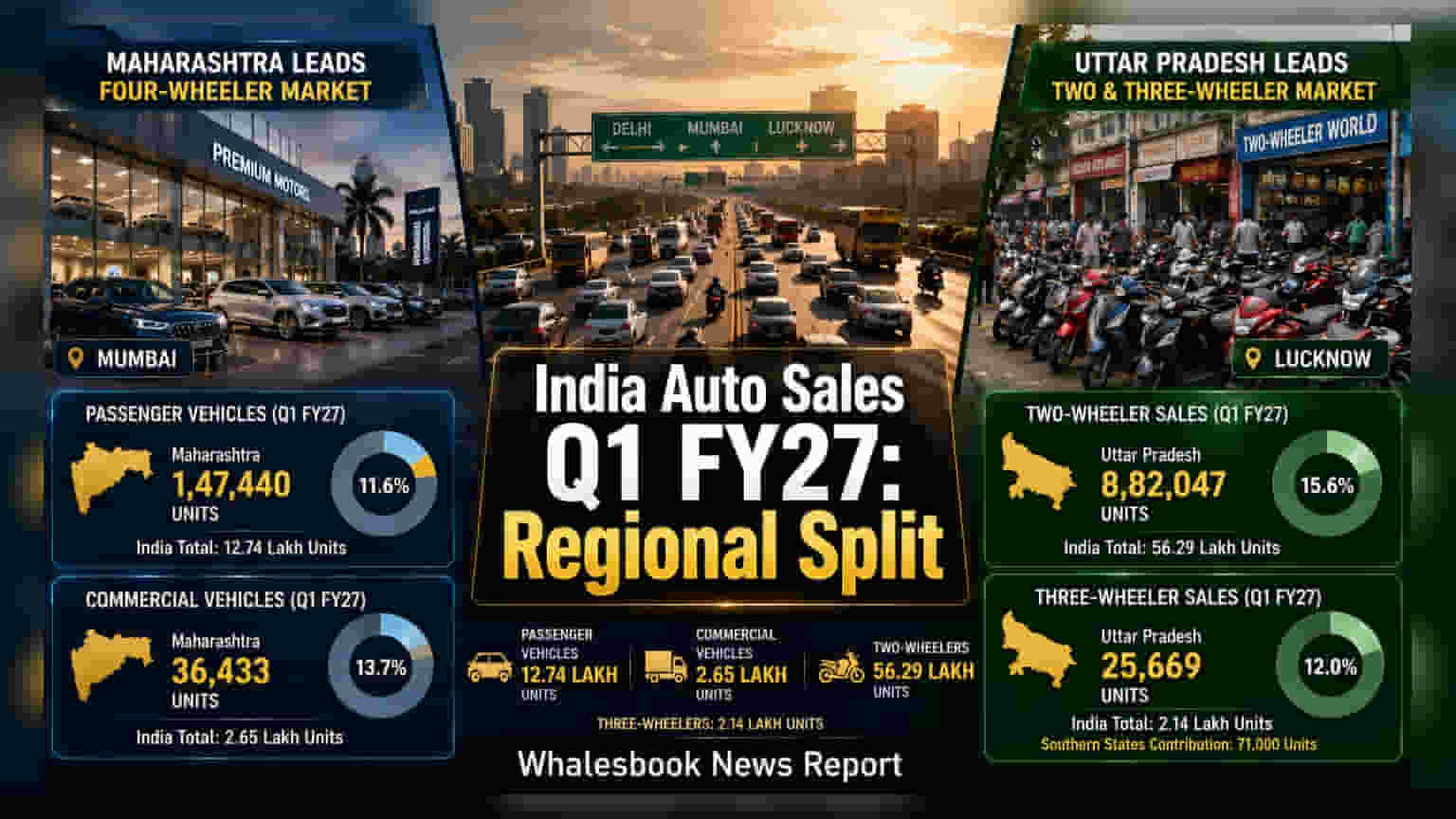
Maharashtra has solidified its position as the primary market for four-wheeled vehicles. In the passenger vehicle segment, the state recorded sales of 1,47,440 units, contributing significantly to the national total of 12.74 lakh. Similarly, in the commercial vehicle segment, Maharashtra led with 36,433 units sold out of a national total of 2.65 lakh. The western region as a whole remains the country's central hub for these larger vehicle types.
Conversely, Uttar Pradesh has emerged as the clear leader for high-volume vehicles. The state recorded 8,82,047 two-wheeler sales during the quarter, leading the national total of 56.29 lakh units. Uttar Pradesh also topped the three-wheeler segment with 25,669 units sold. While the western region leads in cars, southern states have shown strong performance in the three-wheeler category, collectively contributing 71,000 units to the national volume of 2.14 lakh.
For automakers and investors, these figures are critical for operational planning. Companies must align their distribution and inventory strategies to match these specific regional trends. Sending the wrong product mix to a region can lead to excess inventory or lost sales, which can tie up cash and affect operational efficiency. Efficient inventory management is crucial when balancing sales across diverse states.
However, the sector faces challenges that go beyond regional demand. Analyst reports, including those from Kotak Neo Research, have flagged potential pressure on profit margins. Automakers are currently dealing with rising commodity costs, which can make it harder to maintain profit levels even when sales volumes are steady. Investors are watching to see if companies can pass these costs on to consumers through price hikes or if they will have to absorb the impact, which could lower their net profitability.
Looking ahead, market participants will monitor whether these regional trends continue into the coming quarters. The key monitorables for investors will be the trend in raw material prices, the ability of companies to manage inventory levels across different states, and whether rural demand in northern states can sustain the current strong two-wheeler volume during the upcoming festival season.