

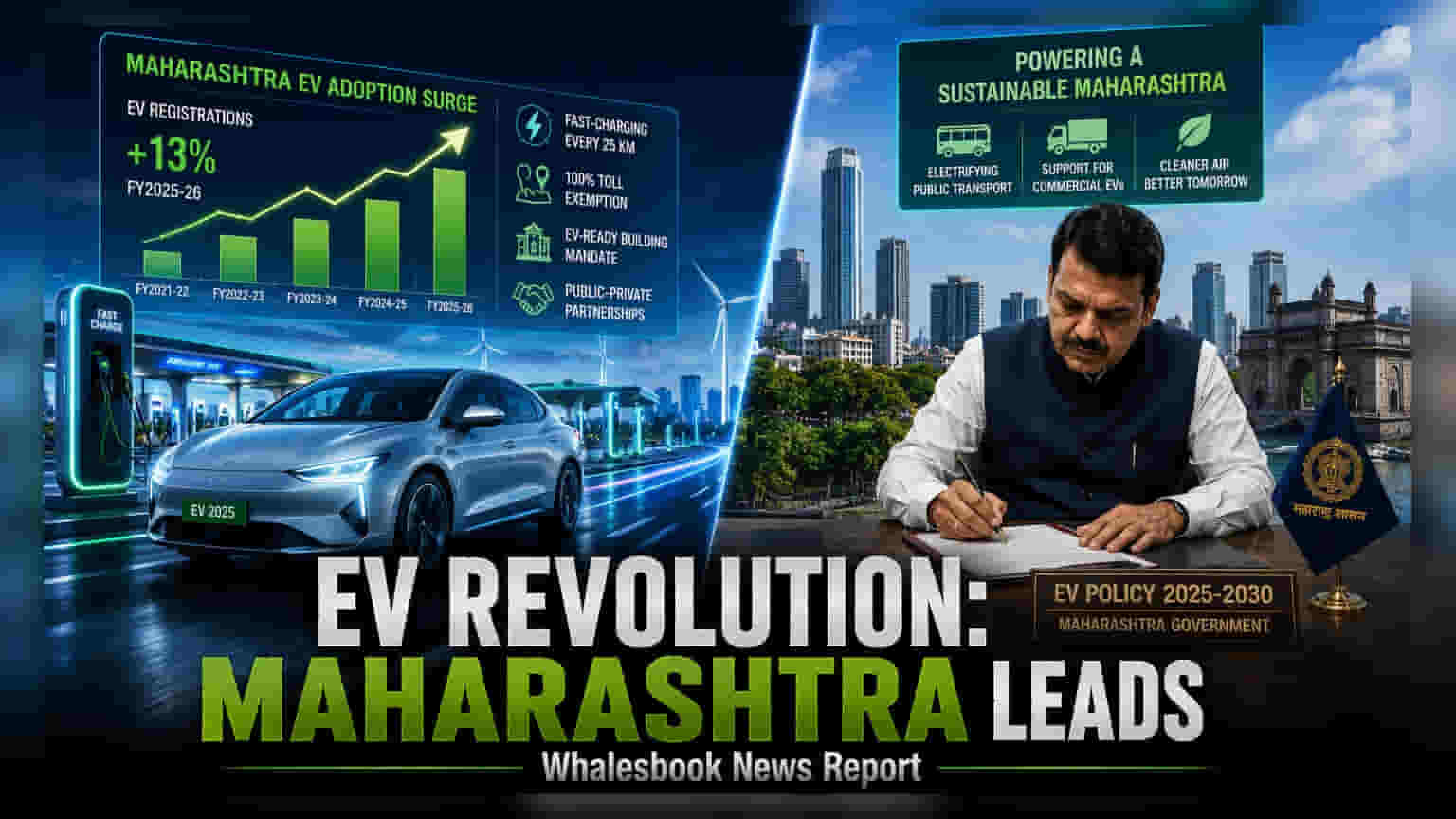
Maharashtra's EV Policy 2025-2030, active since April 2025, has shifted focus from private car purchase subsidies to charging infrastructure and commercial vehicle support. With an outlay of ₹1,993 crore, the state now mandates charging stations along highways and offers toll exemptions on major expressways to drive adoption.
Maharashtra’s Electric Vehicle Policy 2025–2030, which became effective on April 1, 2025, continues to reshape the state's automotive landscape as it moves past the initial implementation phase. With a total policy outlay of ₹1,993 crore, the state government has significantly adjusted its strategy compared to previous years, prioritizing the expansion of public charging networks and the electrification of commercial fleets over direct purchase subsidies for private electric cars.
Infrastructure and Toll Incentives
A central feature of the current framework is the focus on addressing range anxiety through infrastructure development. The state government now mandates the installation of fast-charging stations at least every 25 kilometers along state and national highways. To support this, charging facilities are being integrated into new residential and commercial building codes, requiring developers to ensure a portion of parking space is EV-ready. Additionally, the state is leveraging a public-private partnership model to set up charging stations at Maharashtra State Road Transport Corporation (MSRTC) depots and Regional Transport Offices (RTOs).
For EV owners, the policy provides a 100% toll exemption on key corridors, including the Mumbai–Pune Expressway, Samruddhi Mahamarg, and the Atal Setu. While these exemptions aim to lower the total cost of ownership, the operational success of this incentive depends on the seamless integration between vehicle records and the electronic toll collection system. There have been instances where technical mismatches between the VAHAN database and FASTag systems led to incorrect deductions, a point of friction that authorities are currently addressing to ensure smooth transit for EV users.
Shift in Subsidy Strategy
The most significant change in the 2025 policy is the discontinuation of purchase subsidies for private electric cars. Instead, the government is directing funds toward Viability Gap Funding (VGF) for charging infrastructure and support for commercial vehicle segments. This shift reflects a strategic move to encourage the mass adoption of electric public transport and commercial fleets rather than individual vehicle ownership. This change is notable for auto manufacturers, as the market demand profile for EVs in the state may tilt more toward commercial logistics and public transit solutions.
Execution and Market Outlook
Despite the incentives, the state faces challenges in scaling the infrastructure to keep pace with the growing number of EVs. Although there was a 13% increase in EV registrations in FY2025-26, the overall adoption rate remains sensitive to both upfront vehicle pricing and the availability of reliable charging points. The heavy reliance on private players to build and operate charging stations presents a execution risk; without consistent government financial support or high utilization rates, some projects may face delays or financial viability concerns.
The next major milestone for the policy will be the pace of commissioning charging stations at bus depots and the stabilization of the automated toll waiver system. The performance of these projects will likely influence the broader adoption of electric vehicles in the state, as reliable charging and hassle-free travel remain the primary requirements for prospective buyers.