 Whalesbook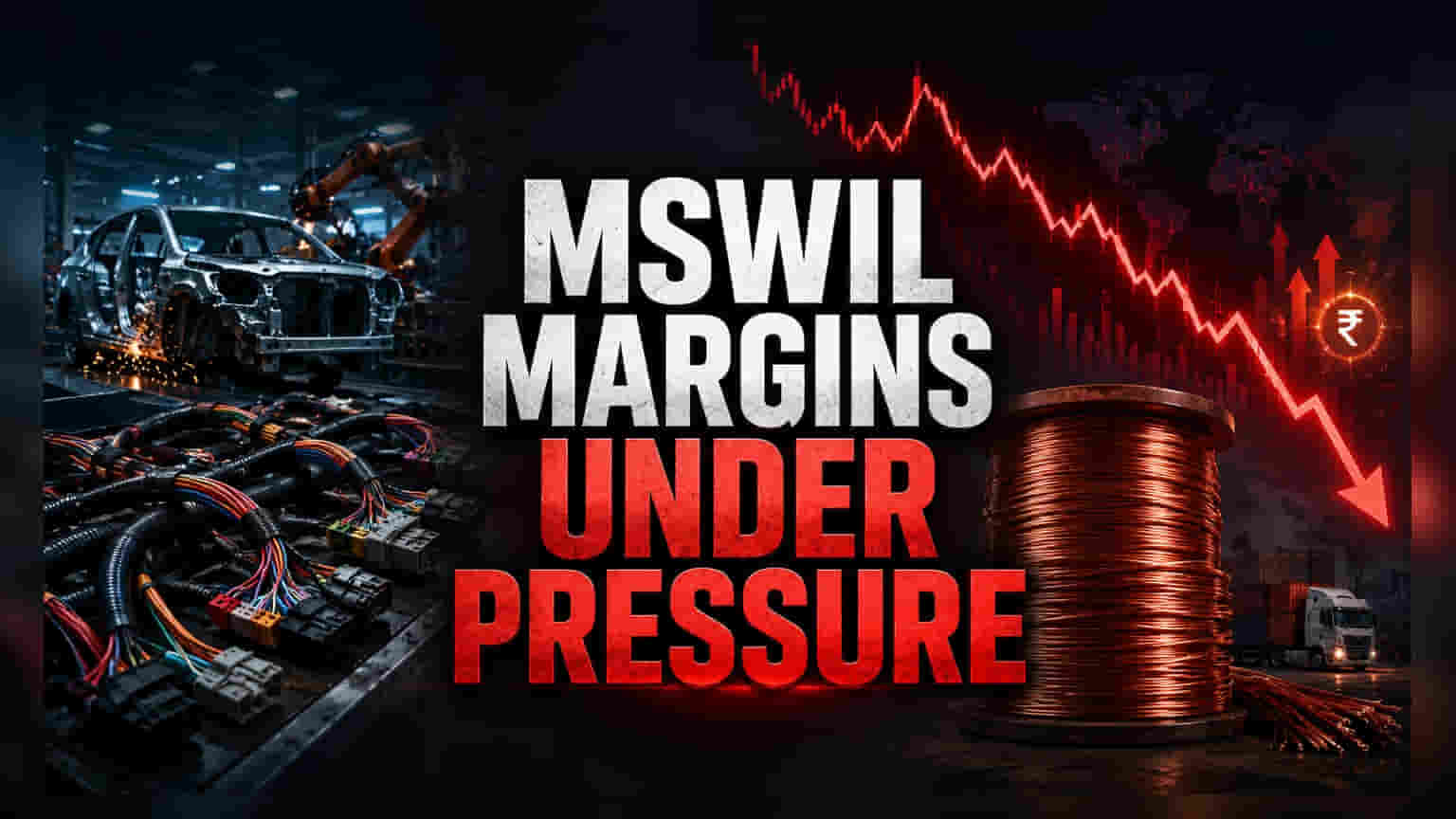


The Margin-Volume Paradox
Motherson Sumi Wiring India (MSWIL) currently finds itself in a precarious position, caught between impressive top-line expansion and significant operational headwinds. Despite reporting a robust 33% year-on-year revenue increase to Rs 3,335 crore in Q4 FY26, the company’s bottom line remains sensitive to external shocks. The firm’s reliance on copper—a primary input for its wiring harness systems—has become a structural liability. With global copper prices hovering near historical highs throughout early 2026, the company’s ability to defend its EBITDA margins is being severely tested.
The Valuation Gap
The stock is currently trading at a P/E multiple of approximately 40.5x, a premium valuation that assumes consistent earnings acceleration. However, this pricing leaves little room for error. When compared to peers like Minda Corporation or broader auto-ancillary indices, MSWIL’s valuation appears stretched, particularly given the volatility in input costs. While the company maintains a debt-free balance sheet and strong OEM ties, the market is signaling caution, with the stock recently retreating over 20% year-to-date, reflecting a clear disconnect between historical growth narratives and the current inflationary reality.
The Forensic Bear Case
The primary risk for MSWIL is the lag in pass-through pricing. While management has historically navigated commodity cycles well, the current spike in base metals—exacerbated by logistical bottlenecks and supply chain tremors in the West Asian corridor—is more acute than in previous years. Furthermore, the company faces intense competitive pressure from global and domestic heavyweights such as Yazaki, Aptiv, and Uno Minda. Unlike smaller suppliers, MSWIL must balance its aggressive capex on greenfield plants in Pune and Gujarat with the need to maintain cash flows. Should the automotive sector’s current volume growth decelerate, the high depreciation costs from these new facilities could lead to a deeper-than-expected compression in return on capital employed (ROCE).
The Path Forward
Management’s focus on achieving EBITDA margins of 12-13% by Q2 FY27 is contingent on commodity stabilization and the successful, full-scale ramp-up of its recent greenfield investments. While brokerage sentiment remains constructive, the medium-term trajectory of MSWIL will likely depend on the company's ability to localize components further and secure favorable index-linked pricing with OEMs. Investors should monitor quarterly filings for signs of margin recovery versus the continued impact of raw material inflation, as the current environment favors suppliers with the highest pricing power and the most resilient supply chains.