 Whalesbook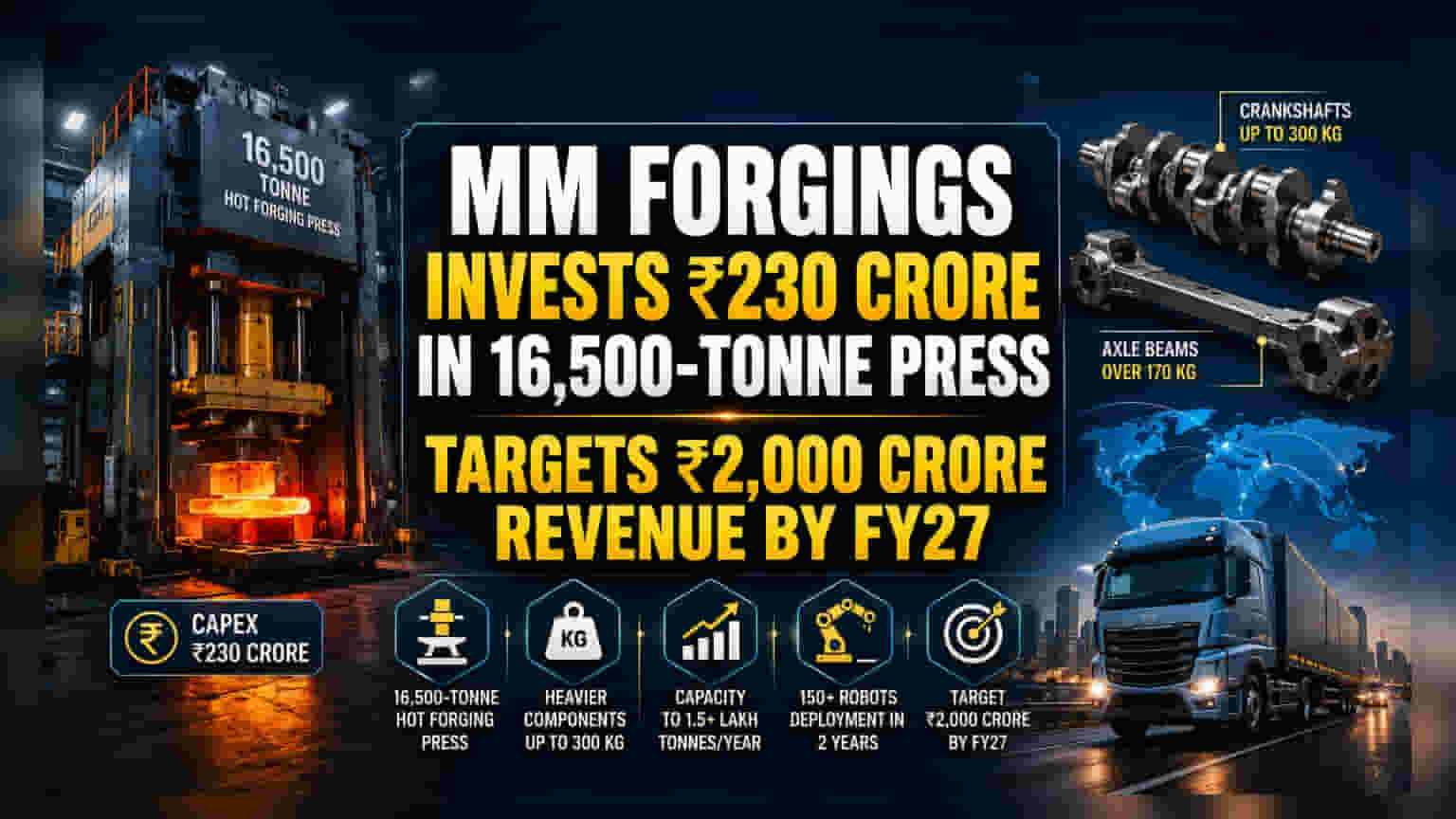


MM Forgings is investing ₹230 crore to install a 16,500-tonne hot forging press, aiming to increase capacity and hit ₹2,000 crore in revenue by FY27. The expansion focuses on manufacturing heavier, high-value components for the global commercial vehicle market.
What Happened
Chennai-based auto component maker MM Forgings has announced a significant capital investment of ₹230 crore to acquire and install a 16,500-tonne hot forging press. The company claims this new equipment will be among the largest of its kind in the industry. The press is expected to be commissioned by the end of this year.
This expansion is part of a larger plan to increase the company’s total manufacturing capacity from 1.2 lakh tonnes to over 1.5 lakh tonnes per year. By installing this larger machinery, the company intends to manufacture heavier forged components, such as axle beams weighing over 170 kg and crankshafts up to 300 kg, to cater to global heavy-truck manufacturers.
The Growth Strategy
MM Forgings has set a revenue target of ₹2,000 crore for the 2027 fiscal year. This growth plan relies on tapping into the demand for heavier commercial vehicle parts. In the fiscal year 2026, the company reported a standalone revenue of approximately ₹1,570 crore. Achieving the ₹2,000 crore milestone will require sustained demand, particularly in the commercial vehicle segments of both the domestic and international markets.
Alongside this hardware investment, the company is doubling down on factory automation. It plans to deploy over 150 industrial robots within the next two years, with a long-term goal of increasing this to 600–800 robots in three to four years. The company states this initiative is designed to address labor requirements and improve operational efficiency through digital manufacturing.
Peer and Sector Context
In the forging industry, scale is a critical competitive advantage. MM Forgings operates in a sector dominated by much larger entities such as Bharat Forge, which has a significantly higher total forging capacity. While MM Forgings is strengthening its ability to produce heavy components, investors often look at how smaller or mid-sized players compete with industry leaders on margins and order execution.
Recently, the company has seen a shift in its sales mix, with domestic sales contributing a larger share of its total revenue during the last fiscal year, reaching around 71% in the final quarter. This change reflects a strategic recalibration, as global automotive demand has faced volatility due to geopolitical uncertainties and fluctuating commodity markets. Reliance on domestic infrastructure spending and stable local auto demand has provided some support, helping the company navigate the mixed global conditions.
The Margin and Capex Test
For investors, the key area of focus remains the execution of this capital-intensive expansion. Large investments in machinery and automation typically increase depreciation and interest costs, which can put pressure on profit margins in the short term. The success of this strategy will depend on the company's ability to:
- Efficiently utilize the new capacity.
- Maintain or improve EBITDA margins despite the higher spending.
- Secure consistent orders for the larger, heavier components the new press is designed to produce.
What Investors Should Track
Looking ahead, the primary monitorables for the company include the commissioning timeline of the new 16,500-tonne press and its impact on the order book. Investors may also track management commentary on how the ongoing automation initiative affects operational costs and labor productivity. Additionally, monitoring debt levels is important, as the company continues to spend significantly on capital projects, which can influence cash flow and interest obligations. Finally, tracking the demand trends in both the domestic commercial vehicle segment and key export markets will be essential to gauge if the revenue growth targets remain achievable.