

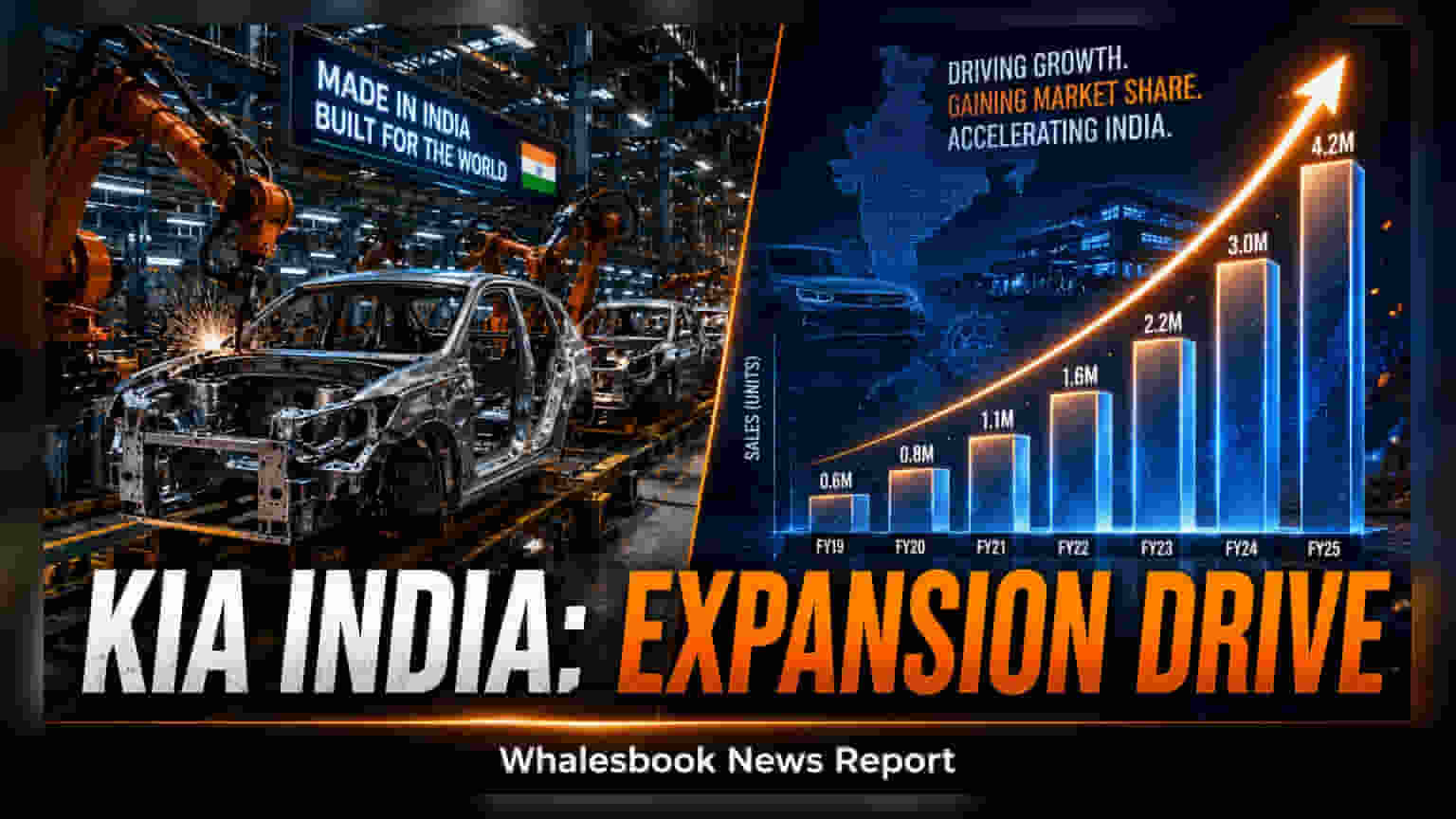
Kia India is preparing to expand its production capacity to meet a sales target of 410,000 vehicles by 2030. The company plans to launch 10 new models, with a heavy focus on electric and hybrid vehicles. Indian investors should note that Kia India is a private subsidiary and is not listed on domestic stock exchanges, though its parent company trades in South Korea.
Kia India has announced a strategic plan to ramp up its manufacturing operations to support a target of selling 410,000 vehicles annually by 2030. This expansion is designed to capture a 7.6% market share, a significant jump from its current position. With the existing facility in Anantapur, Andhra Pradesh, already operating near its 430,000-unit capacity, the company is evaluating further investments to meet both local demand and export requirements.
A Shift Toward Electrified Mobility
To achieve this growth, the automaker plans to introduce 10 new vehicle models over the coming years. A major part of this strategy is a pivot toward cleaner technology, with eight of these new models featuring electrified powertrains, including electric vehicles and strong hybrids. Additionally, the company is incorporating factory-fitted CNG options into its portfolio, aiming to serve a wider range of customers beyond those looking for standard petrol or diesel engines.
Investor Context and Entity Status
For investors monitoring the Indian automotive sector, it is important to clarify that Kia India operates as a private subsidiary of the South Korean Kia Corporation. It is not listed on the Indian stock exchanges like the National Stock Exchange (NSE) or the Bombay Stock Exchange (BSE). Therefore, there is no direct way to invest in Kia India shares on local markets. Investors interested in the group’s financial health may track its parent entity, Kia Corporation (000270.KS), which is publicly traded in South Korea. The parent company reported a strong operating profit of KRW 2.63 trillion in the second quarter of 2026, indicating a stable financial position to support global expansion efforts.
Sector Dynamics and Risks
While the expansion plan signals confidence in the Indian market, the company faces stiff competition. The Indian auto sector is witnessing intense rivalry, which often leads to heavy discounting and pressure on profit margins. Like other manufacturers, Kia has also had to manage rising operational costs, implementing a price hike of up to 2% in July 2026 to offset these expenses.
Beyond domestic competition, the company must navigate broader industry risks. These include potential volatility in foreign exchange rates, shifts in global demand, and the risk of supply chain disruptions. The success of the electrification strategy will also depend on consumer sentiment toward electric vehicles, which is still evolving in India. Investors tracking the automotive sector should keep an eye on how these expansion plans translate into actual market share gains and whether the company can maintain profitability amid aggressive competition from rivals like Hyundai, Tata Motors, and Maruti Suzuki.