

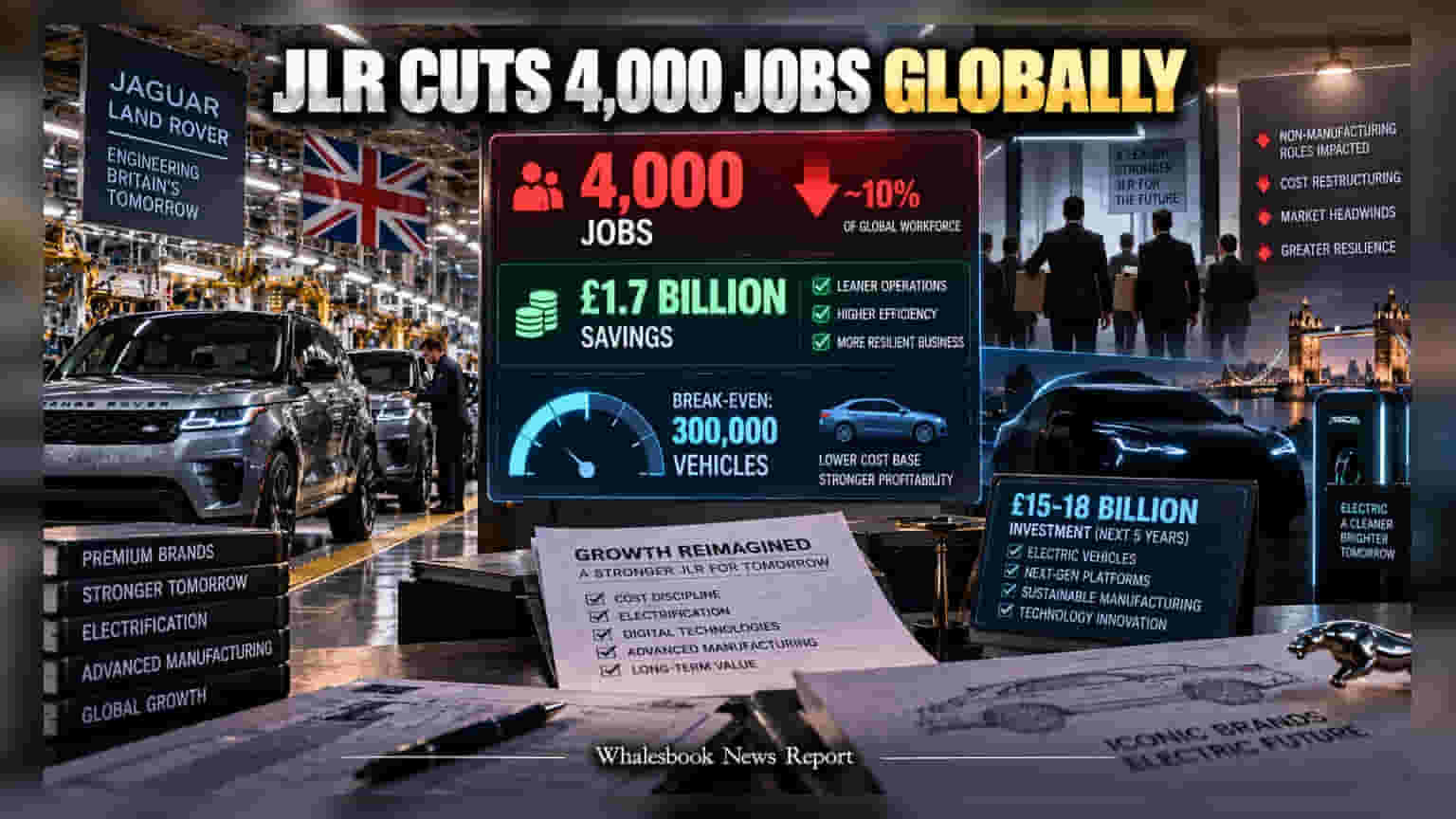
Jaguar Land Rover (JLR) plans to cut 4,000 jobs globally over the next two years to save £1.7 billion. The move aims to lower the company's break-even point to 300,000 vehicles as it faces stiff competition and trade barriers. For Tata Motors investors, the update highlights management's focus on profitability amid recent revenue pressures.
Jaguar Land Rover (JLR) has announced a significant restructuring plan as part of its "Growth Reimagined" strategy. The luxury carmaker, owned by Tata Motors, intends to reduce its global workforce by approximately 4,000 roles over the next two years. This represents nearly 10% of its roughly 43,000-strong staff. The company aims to achieve £1.7 billion in cost savings through this initiative.
Targeting A Lower Break-Even Point
The primary financial goal of this restructuring is to lower the company's break-even point to 300,000 vehicles per year. In simple terms, this means reducing the number of cars the company must sell to cover its costs and start making a profit. By lowering this threshold, management aims to make the business more resilient against fluctuations in global demand.
The reductions are expected to focus on salaried and management positions rather than direct manufacturing roles. The company has stated that it prefers using voluntary measures to achieve these headcount changes.
Navigating Sector Headwinds
This move comes after a period of operational difficulty. In the quarter ended June 2026, JLR saw its revenue fall by nearly 10% compared to the previous year. The automotive sector is currently facing multiple pressures that are impacting profitability across the board.
These challenges include intense competition from Chinese manufacturers, particularly in the electric vehicle segment, and exposure to trade barriers such as US tariffs. Additionally, the company is still navigating the operational aftermath of a cyberattack that occurred in 2025, which disrupted production schedules. These factors have forced management to rethink its cost structure to protect margins in a volatile market.
Continued Investment Despite Cost Cuts
Despite the push to reduce costs, JLR has confirmed it will maintain its long-term investment plans. The company continues to commit £15-18 billion of spending over the next five years. This money is earmarked for critical areas including electrification, digital technologies, and advanced manufacturing processes.
This creates a complex financial scenario for the company. It must successfully reduce its fixed costs while simultaneously funding the expensive transition to new vehicle technologies. Investors will be watching closely to see if these cost savings can be achieved without slowing down product development or hurting brand strength.
What Investors Should Monitor
For shareholders, the key concern will be how effectively JLR executes this plan. The immediate monitorables include the pace at which the £1.7 billion in savings is realised and whether the company can successfully bring its break-even point down to the 300,000-unit target.
As JLR is a major contributor to the financial performance of Tata Motors, the success of this restructuring could have a direct impact on the parent company's profitability. Moving forward, shareholders will likely look for updates in upcoming quarterly results to see if these cost-cutting measures are improving margins despite the ongoing pressures from global competition and tariffs.