

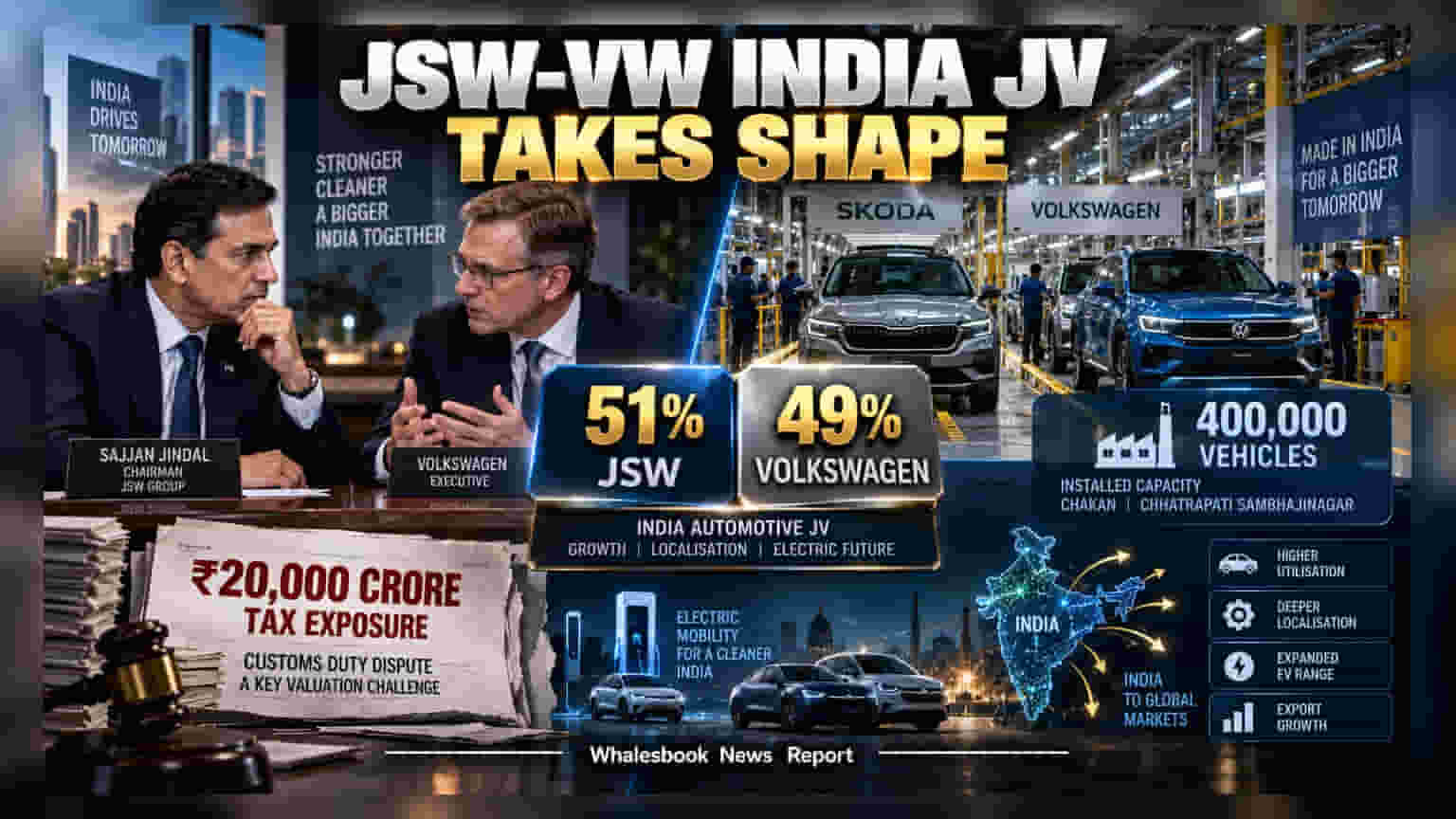
JSW Group and Volkswagen Group have signed a non-binding agreement to form a joint venture in India, with JSW holding a 51% majority stake. While the partnership aims to expand EV production and market share, a contested ₹20,000 crore customs tax dispute remains a key hurdle in valuation talks.
JSW Group and Volkswagen Group have taken a significant step toward a new partnership in the Indian automotive sector. The two companies have signed a non-binding Memorandum of Understanding to pursue a 51:49 joint venture that would cover Volkswagen's passenger vehicle operations in India, specifically those under Skoda Auto Volkswagen India.
Under the proposed structure, JSW would hold a 51% majority stake, giving it control over the entity’s direction. This new venture would be separate from JSW's existing partnership with SAIC Motor, which currently manages the MG brand in India. The deal is still in the early stages, with both companies currently in exclusive valuation discussions and aiming to reach a final, binding agreement by the end of 2026.
The ₹20,000 Crore Tax Dispute
While the collaboration targets long-term growth, a major financial challenge sits at the center of the current negotiations. Indian customs authorities have alleged that Volkswagen previously imported vehicles in nearly complete form while declaring them as separate components to lower duty payments. The authorities contend this resulted in a significant underpayment of customs duties, with a contested claim amounting to approximately ₹20,000 crore.
This liability is currently a primary factor in valuation discussions. Reports indicate that JSW is unlikely to take responsibility for this potential tax exposure. How the companies decide to manage, ring-fence, or resolve this issue will likely determine the final terms and valuation of the deal. Volkswagen is reportedly preparing to present a concrete proposal to its board by December, which will be a key signal for the progress of the negotiations.
Strategic Objectives for the JV
Volkswagen has struggled to gain significant scale in India, holding roughly 2.5% of the passenger vehicle market despite two decades of presence. The group’s manufacturing facilities in Chakan and Chhatrapati Sambhajinagar currently have a combined production capacity of about 400,000 units, significantly higher than its domestic sales of around 100,000 units.
Through this venture, the partners aim to bridge this gap by increasing factory utilisation, deepening localisation, and expanding the product range. A central focus is the development of electric vehicles based on the 'India Main Platform.' The partnership intends to share platforms and manufacturing capabilities to improve cost efficiency and scale in an increasingly competitive market.
For investors, the key monitorables moving forward will be the status of the customs tax dispute, the final valuation agreed upon, and how the companies plan to manage the structural separation from the existing MG Motor India operations. As the deal remains non-binding, the ultimate success of the partnership will depend on whether the companies can navigate the tax liability while successfully executing a new product strategy for the Indian market.