

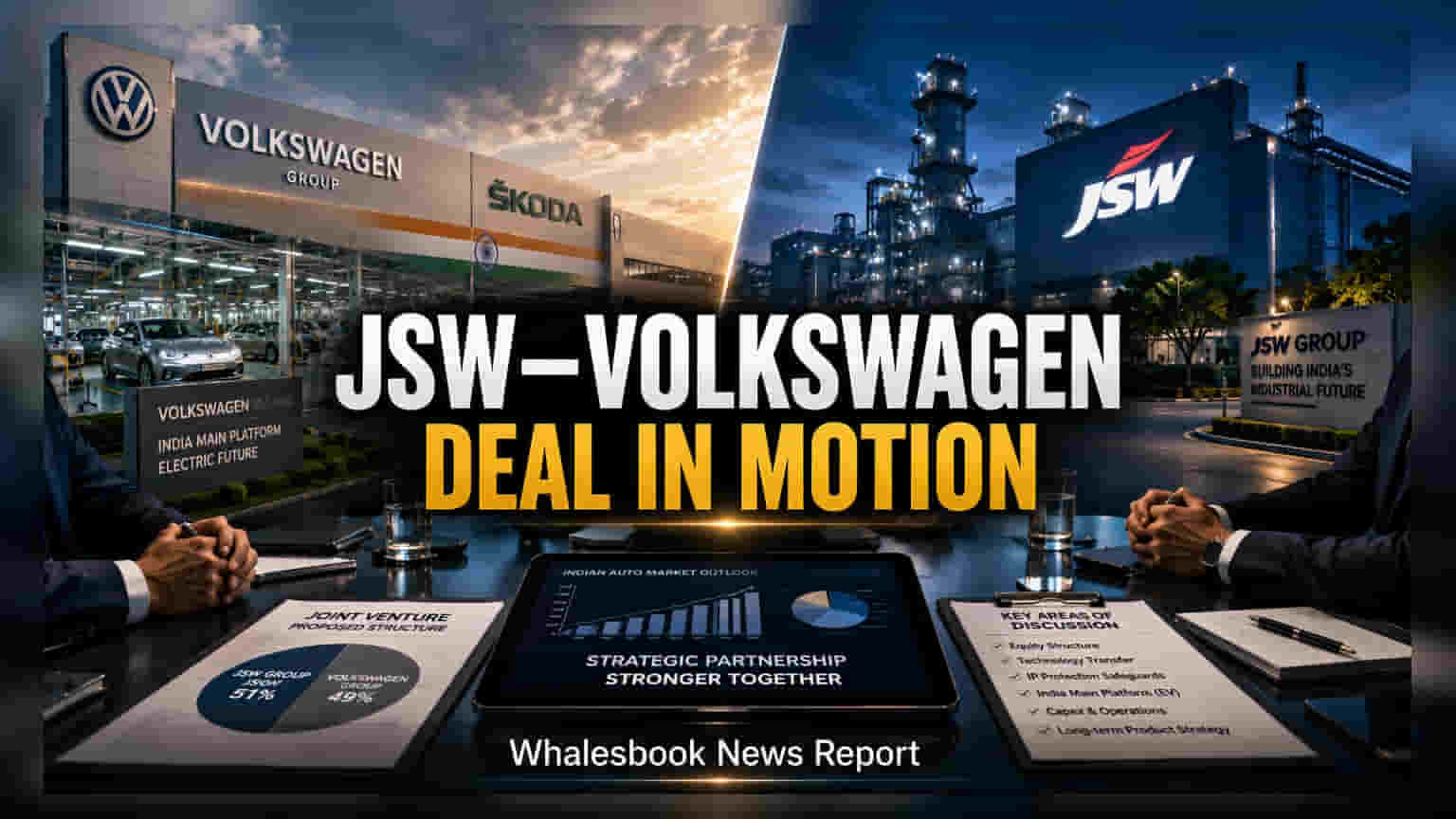
JSW Group and Volkswagen Group are in advanced discussions for a 51:49 joint venture in India to scale electric vehicle development. While negotiations involve complex technology transfer agreements, the partnership aims to leverage the India Main Platform to localize production and compete in the local market by the end of 2026.
The strategic negotiations between JSW Group and Volkswagen Group are actively progressing, with both parties focused on establishing a joint venture for the Indian market. Contrary to concerns regarding a potential deadlock, discussions remain ongoing, with the companies aiming to finalize a memorandum of understanding in the coming weeks. The proposed structure entails JSW Group holding a 51 percent majority stake in Skoda Auto Volkswagen India, while Volkswagen Group would retain a 49 percent interest.
This partnership is part of a larger push by Volkswagen to strengthen its footprint in India's competitive passenger vehicle market. By aligning with a local conglomerate like JSW, the German automaker intends to scale its operations and accelerate the rollout of the India Main Platform, which is critical for localizing electric vehicle technology. For JSW, which has already established a footprint in the auto sector through its investment in JSW MG Motor India, this deal represents a faster path to expanding manufacturing capabilities without needing to build greenfield infrastructure from scratch.
At the core of the ongoing discussions is the delicate balance of technology transfer and intellectual property protection. Because JSW Group already holds a significant stake in JSW MG Motor India—which operates in partnership with China’s SAIC Motor—Volkswagen has sought detailed safeguards to protect its proprietary technology. Ensuring that technical data and R&D regarding the India Main Platform remain insulated is a primary condition for the German automaker. The ability of both parties to find a middle ground on these safeguards is critical for moving beyond the memorandum stage to a final agreement.
Market experts note that the complexity of the deal lies not just in the equity structure but in operational control. Transitioning Skoda Auto Volkswagen India from a wholly-owned subsidiary model to a joint venture requires significant alignment on capital expenditure, management decisions, and long-term product strategy. The company’s success in this market will depend on how effectively it can integrate these processes while navigating India’s evolving emission standards and the government’s local manufacturing schemes.
The timeline for the final deal is currently targeted for the end of 2026. Investors and industry analysts are looking toward the upcoming, formal memorandum of understanding, which is expected to clarify the valuation of the assets involved and the specific roadmap for future EV models. The management of both groups remains under pressure to secure a deal that balances JSW’s operational agility with Volkswagen’s stringent requirements for global technology security.