

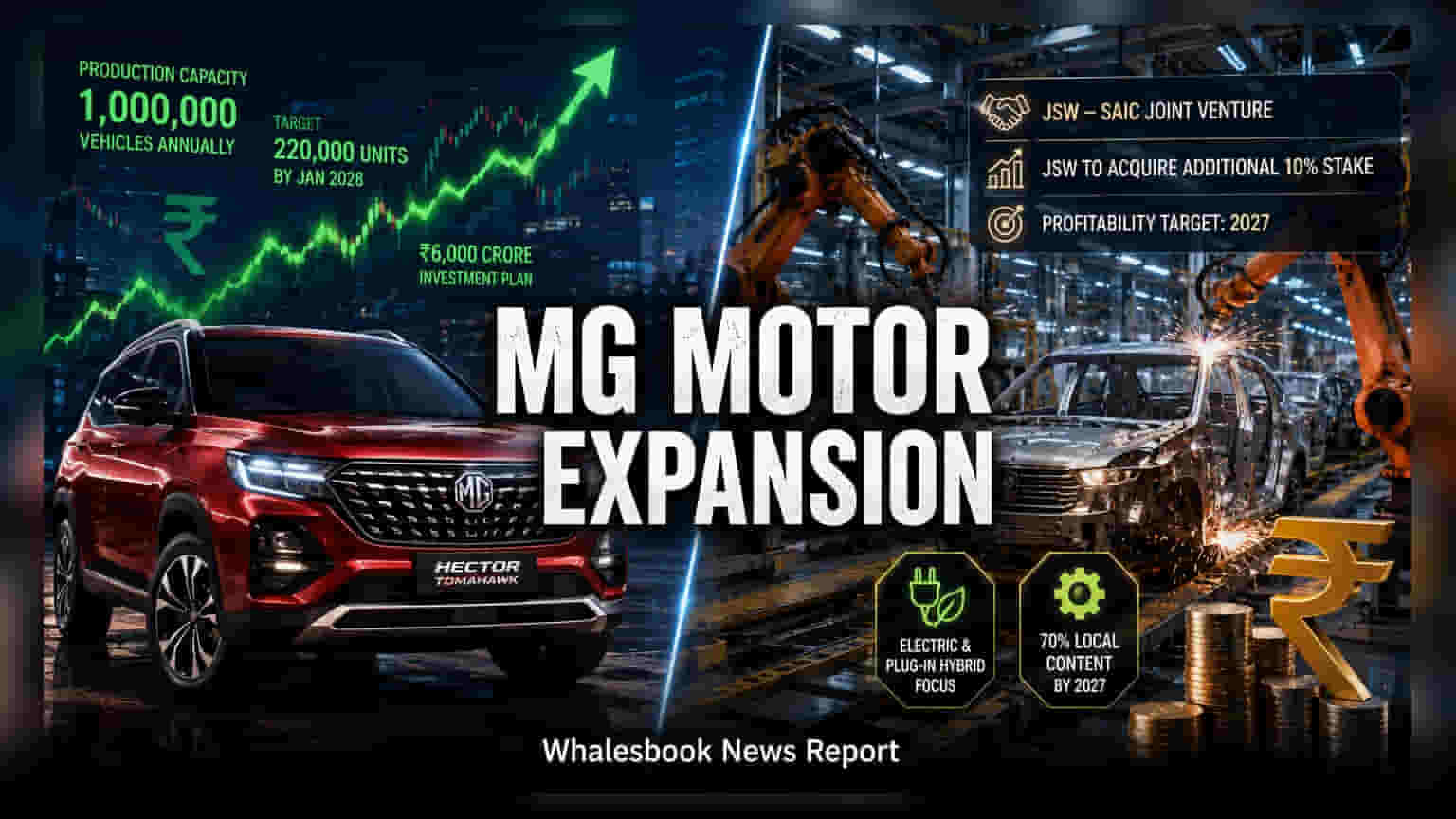
JSW Group and SAIC Motor are planning a major expansion to scale MG Motor India’s production to 1 million units annually. The venture is currently investing ₹6,000 crore to reach 220,000 units by 2028, with potential changes to ownership stakes. Investors should monitor regulatory approvals and the impact of high hybrid vehicle taxes on the company’s profitability plans.
JSW Group and China’s SAIC Motor are actively negotiating the next phase of capital infusion for their joint venture, MG Motor India. The partners have set an ambitious long-term goal to scale production capacity to one million vehicles annually. This plan follows a current expansion phase that aims to reach 220,000 units per year by January 2028, supported by a ₹6,000 crore investment package. This package includes ₹3,500 crore from the joint venture itself and ₹2,500 crore in investments from supporting vendors.
The venture is also discussing a shift in ownership structure, with reports indicating that JSW Group, which currently holds a 35% stake, is in talks to acquire an additional 10% from SAIC. If successful, this move would position JSW as the largest shareholder, a significant development for investors tracking the JSW group’s strategic footprint in the automotive sector. The company is aiming to achieve profitability by 2027 as these economies of scale and localized production take hold.
Product Strategy and Hybrid Challenges
The company recently launched the Hector Tomahawk, which comes in both electric and plug-in hybrid variants. This launch is part of a broader strategy to hit 70% local content by 2027. While the focus on new energy vehicles is clear, the company faces pricing challenges due to regulatory tax structures. Plug-in hybrid electric vehicles currently attract a high GST rate of 40% in India, which can significantly impact the final price of the vehicles and could pressure margins if demand does not offset the higher cost for buyers.
Regulatory and Market Risks
Investors monitoring this development should be aware of several material risks. A primary concern is the regulatory environment surrounding Chinese investment in India. Under the existing investment rules, often referred to as Press Note 3, funding from bordering nations requires strict government approval. Any delay or hurdle in obtaining these clearances could affect the speed of capital infusion and project execution.
Additionally, the automotive sector remains highly competitive. MG Motor India is operating in a crowded space, requiring consistent capital and high-quality execution to gain market share. Geopolitical tensions and supply chain volatility also remain factors that could disrupt the planned expansion timeline or logistics for critical components.
The next major updates for investors to track include the official confirmation of the stake transfer, progress on the 220,000-unit capacity target by 2028, and any changes to the government’s policy on hybrid vehicle taxation, which would directly impact the commercial viability of the company's new product lineup.