

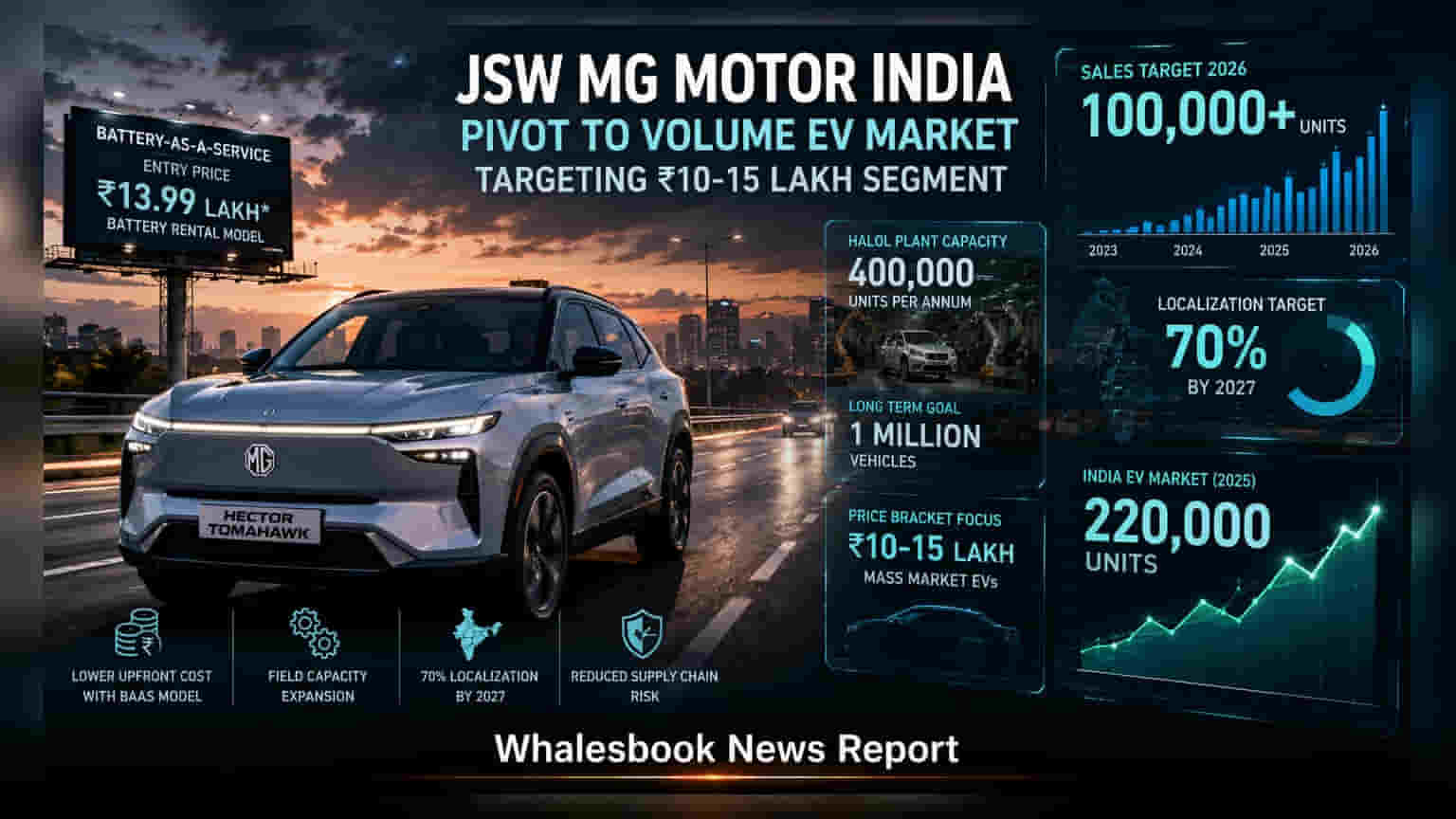
JSW MG Motor India is pushing into the budget-friendly electric vehicle segment using a 'Battery-as-a-Service' model to lower upfront costs. With the launch of the Hector Tomahawk EV, the company aims to capture mass-market demand while scaling production at its Halol facility toward a long-term goal of 400,000 units.
JSW MG Motor India is making a strategic pivot to capture the high-volume electric vehicle market in India, specifically targeting the Rs 10-15 lakh price bracket. The company, a joint venture between the JSW Group and China’s SAIC Motor, has introduced the Hector Tomahawk, utilizing a 'Battery-as-a-Service' (BaaS) model to bring its entry price down to ₹13.99 lakh for customers opting for battery rental.
This pricing strategy is designed to make the company's electric models more competitive against existing mass-market offerings, such as those from Tata Motors. By separating the cost of the battery from the vehicle, the company aims to reduce the immediate financial barrier for buyers, a common hurdle in the adoption of electric vehicles in India.
Scaling Infrastructure and Production
To support this shift toward high-volume sales, the company is aggressively expanding its manufacturing capabilities. The Halol facility in Gujarat, which serves as the production hub, is being upgraded with a goal to reach an annual capacity of 400,000 units. This is part of a larger roadmap that envisions a long-term capacity of 1 million vehicles. The company has publicly shared an ambitious target of exceeding 100,000 unit sales in 2026, which would represent significant year-on-year growth.
Funding for these expansion plans, including a reported ₹3,500 crore investment program, is currently a subject of ongoing discussions between the joint venture partners. As the production scale increases, the company is pushing to reach 70% localization of vehicle components by 2027. This initiative is critical, as it aims to reduce reliance on imported high-tech parts like battery cells and magnets, thereby shielding the business from potential supply chain volatility and reducing costs over time.
Investor Context and Risks
It is important for market observers to note that JSW MG Motor India is not a publicly listed company; it operates as a private joint venture. While the JSW Group is a significant participant in the Indian stock market through various listed entities, investors should not confuse this private vehicle unit with those listed stocks.
Business risks remain a factor as the company enters this price-sensitive segment. Selling vehicles at lower price points often puts pressure on profit margins compared to premium SUV segments. Furthermore, the partnership with SAIC Motor brings historical regulatory scrutiny regarding Chinese investments in India, which remains a factor to monitor. Success in this new segment will depend on the company’s ability to maintain these margins while managing capital requirements for capacity expansion. The key monitorable for the business will be its actual sales volume in the coming quarters and the progress made on the 70% localization target to ensure long-term cost efficiency.