

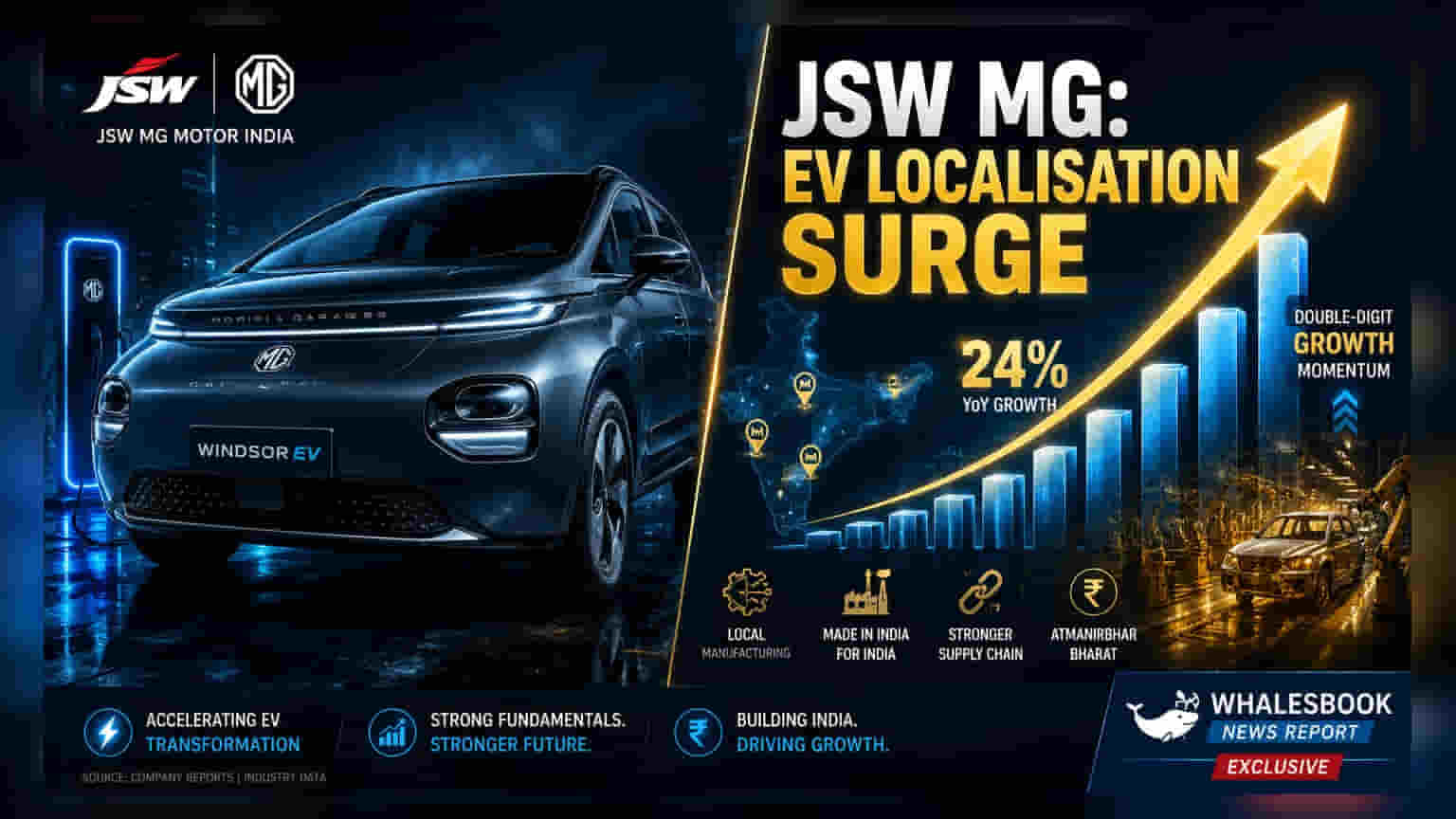
JSW MG Motor India is raising the local parts content in its Windsor EV to over 70% to improve supply chain reliability. The company is aiming for double-digit sales growth this year, following the model's strong performance with over 75,000 units sold since its late 2024 launch.
What Happened
JSW MG Motor India has announced plans to scale up the localisation of its Windsor electric vehicle (EV) to more than 70 percent. By manufacturing and sourcing a higher share of components within India, the company aims to reduce its reliance on imported parts and protect its production lines from global supply chain shocks. The company’s Managing Director, Anurag Mehrotra, confirmed this shift as part of a broader goal to achieve double-digit sales growth for the calendar year 2026.
Sales Performance and Market Reach
The Windsor EV has become a significant contributor to the company’s volume since its market entry in October 2024. According to company data, the model has reached cumulative wholesale sales of over 75,000 units. The vehicle recorded 4,056 units in sales during June 2026, maintaining a steady monthly average of roughly 3,700 units. This performance helped the company reach a total sales volume of 70,554 units across its entire portfolio during the 2025 calendar year.
The Business Logic Behind Localisation
For automotive manufacturers, increasing the share of locally sourced components is a common strategy to lower production costs and reduce exposure to currency fluctuations. Because electric vehicles rely heavily on complex components like battery packs and power electronics—which are often imported—achieving a 70 percent localisation level is a major technical and operational target. If successful, this can lead to more stable profit margins by reducing import duties and logistics costs. The Windsor EV is currently positioned in the mid-range segment, with ex-showroom prices spanning ₹14.09 lakh to ₹18.60 lakh.
Broadening the Customer Base
A noteworthy trend highlighted by the company is the geographic spread of its sales. JSW MG Motor reported that 70 percent of Windsor EV customers are located in non-metro cities. This indicates that the company is successfully tapping into demand beyond major urban centers, which is a key requirement for the mass adoption of electric mobility in India. As competition in the EV segment intensifies from established players like Tata Motors and Mahindra & Mahindra, reaching these smaller markets is critical for maintaining market share.
What Investors Should Track
Investors looking at the broader automotive and EV sector should watch whether this increased localisation leads to an improvement in operating margins over the coming quarters. Key monitorables include the company's ability to maintain these sales volumes as it expands its charging infrastructure, the raw material cost trend for EV batteries, and how it manages competition as more manufacturers enter the mid-range EV space. Additionally, investors will be observing whether the company's 2026 growth targets remain on track amid fluctuating demand in the broader passenger vehicle segment.