

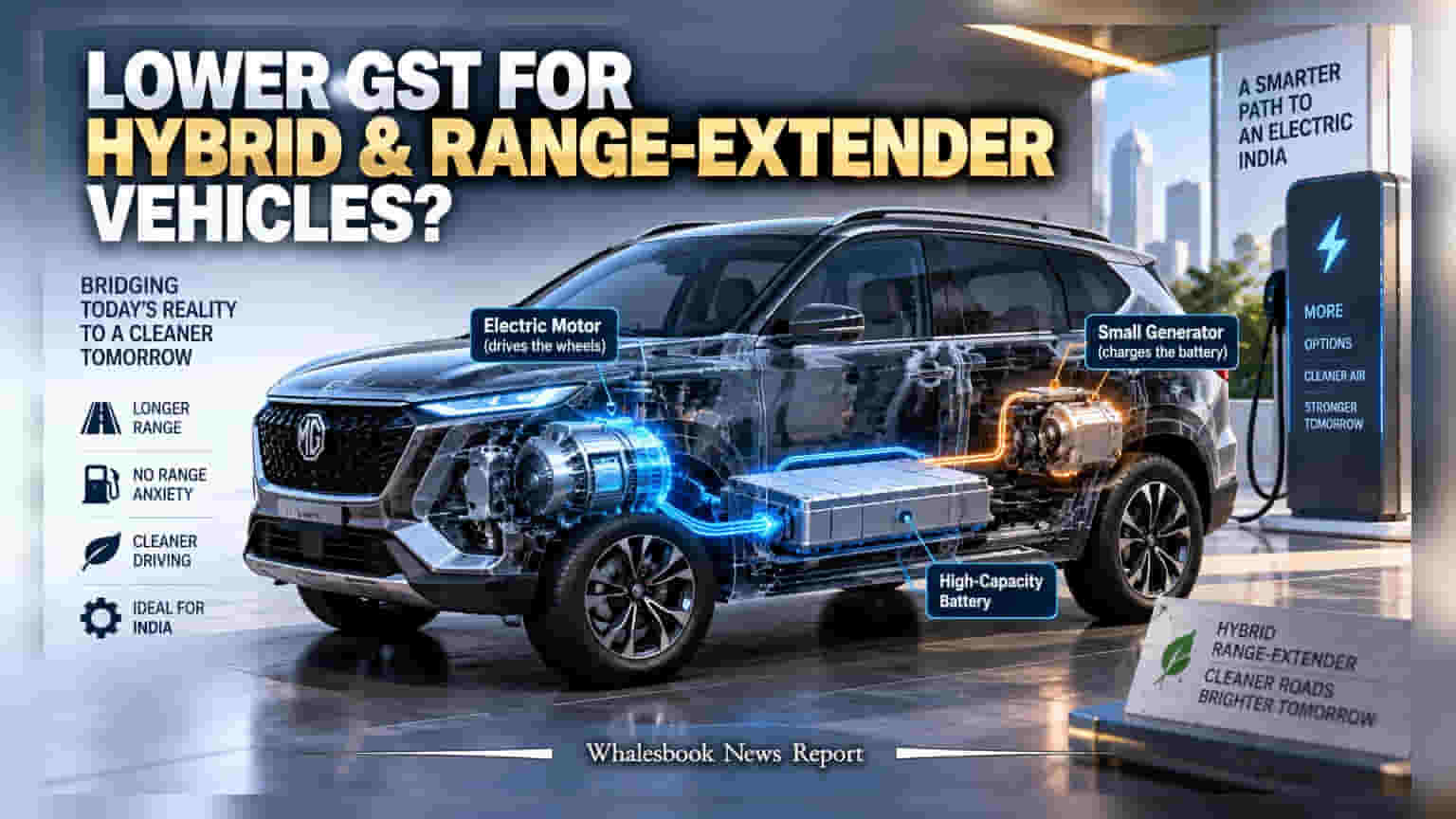
JSW MG Motor India is urging the government to lower the 40% GST on Range Extender Electric Vehicles (REEVs) to match the 5% tax applied to pure EVs. The company aims to position this technology as a practical bridge for intercity travel, though the plan relies heavily on future policy changes regarding hybrid vehicle taxation.
JSW MG Motor India has initiated a push to reform the tax structure for hybrid and range-extender vehicles. The company is lobbying the government to reconsider the 40% GST rate currently applied to these models, arguing that a lower tax structure is needed to make them price-competitive against pure battery electric vehicles, which enjoy a significantly lower 5% tax rate. By categorizing Range Extender Electric Vehicles (REEVs) differently, the company hopes to encourage adoption in regions where charging infrastructure remains limited.
The core of the company's argument centers on the unique powertrain of REEVs. Unlike traditional hybrids where a combustion engine drives the wheels, an REEV uses a small internal combustion engine solely as a power generator to charge the battery while driving. This design allows for a pure electric driving experience while eliminating range anxiety for long-distance travel. The company believes this technology is a necessary step to overcome the current hurdles in India's EV transition, where long-distance travel is restricted by the limited range and high cost of large battery packs.
Business Strategy and Recent Launch
The company’s focus on this technology is visible in its recent product lineup. In August 2026, JSW MG Motor India launched the MG Hector Tomahawk, its first vehicle based on the new ADAPT multi-NEV platform. This launch serves as a test for market appetite, as the firm aims to demonstrate that consumers value the convenience of a generator-backed electric drive. To support this growth, the company is actively expanding its manufacturing footprint. It plans to scale production capacity at its Halol facility to 220,000 units by January 2028 and has set a goal to achieve 70% localization by 2027.
Operational Growth and Regulatory Challenges
Operational data shows that the company is currently seeing growth in demand. JSW MG Motor India reported 7,508 units in wholesale sales for August 2026, marking a 14% increase compared to the same period in the previous year. While these sales numbers indicate a positive reception for the company's vehicles, the long-term success of the REEV strategy remains tethered to government policy. The joint venture, which is owned by JSW Group with a 35% stake and SAIC Motor with a 49% stake, faces the risk of regulatory uncertainty. If the government decides to keep the 40% tax rate for hybrid and extender technologies, the resulting price gap could limit mass-market adoption and pressure profit margins. Investors and industry observers will be monitoring upcoming government policy decisions, as any change to the tax classification for REEVs will be a significant indicator of the company’s future product viability.