

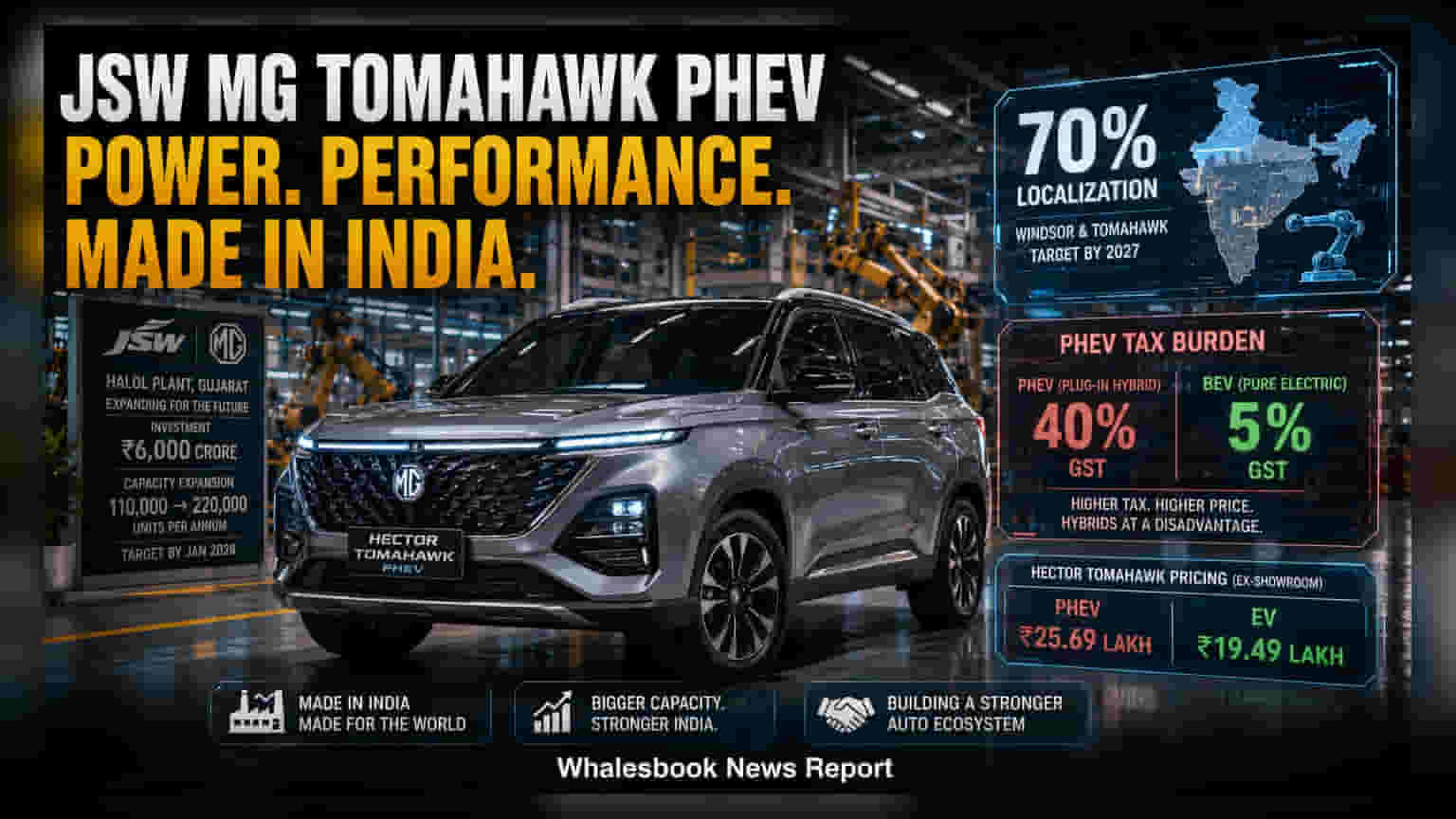
JSW MG Motor India has launched its new Hector Tomahawk series, with hybrid variants priced at ₹25.69 lakh. The company is now actively lobbying for a reduction in the 40% GST on plug-in hybrids to compete with pure electric vehicles. This tax disparity remains a key hurdle for the automaker as it expands its manufacturing capacity and localization efforts.
JSW MG Motor India has entered a new phase of its growth strategy with the launch of the Hector Tomahawk series, which includes both battery-electric and plug-in hybrid electric vehicle (PHEV) options. While the launch marks a significant addition to the company's product portfolio, management has highlighted a major regulatory challenge: the high tax burden on hybrid technology.
Currently, plug-in hybrids face a GST rate of 40%, which is significantly higher than the 5% rate applied to pure battery electric vehicles. JSW MG Motor India has argued that this tax structure puts hybrid vehicles at a competitive disadvantage, making them more expensive for consumers to adopt. For instance, the Hector Tomahawk PHEV is priced at an ex-showroom rate of ₹25.69 lakh, whereas its pure electric counterpart is priced lower at ₹19.49 lakh. The company is now in discussions with policymakers, seeking tax relief to help bridge this pricing gap and encourage broader adoption of hybrid technology in India.
Alongside the launch, the company is continuing a major expansion of its manufacturing footprint. JSW MG Motor India, in partnership with its suppliers, is investing approximately ₹6,000 crore to expand the capacity of its Halol facility in Gujarat. The goal is to scale production to 220,000 units per annum by January 2028, up from the current 110,000 units. To support this growth and reduce costs, the company is pushing for a 70% localization rate for its Windsor and Hector Tomahawk models by 2027.
For investors following the JSW Group, these developments provide insight into the group’s capital allocation strategy. Although JSW MG Motor India is a private joint venture between the JSW Group and China’s SAIC Motor and is not a publicly listed entity, its operational success is important to the broader group’s diversification. The joint venture is currently navigating the need for substantial ongoing capital infusion to fund its expansion plans, with discussions underway between JSW and SAIC regarding the next phase of investment.
The automotive sector in India is currently witnessing a intense debate over the government's approach to green mobility. While the government has provided strong incentives for pure electric vehicles, hybrids often fall into a higher tax bracket, which complicates the growth plans for automakers like MG that are betting on a mix of technologies. The success of the current expansion and the move toward 70% localization will depend heavily on the company's ability to manage its supply chain and scale production without cost overruns. Furthermore, the company faces stiff competition from established players like Tata Motors and Mahindra, who are also aggressively expanding their electric and SUV portfolios. Investors may track future updates on government policy regarding hybrid taxation, the company's progress on its capacity expansion timeline at the Halol plant, and management commentary regarding future capital requirements.