 Whalesbook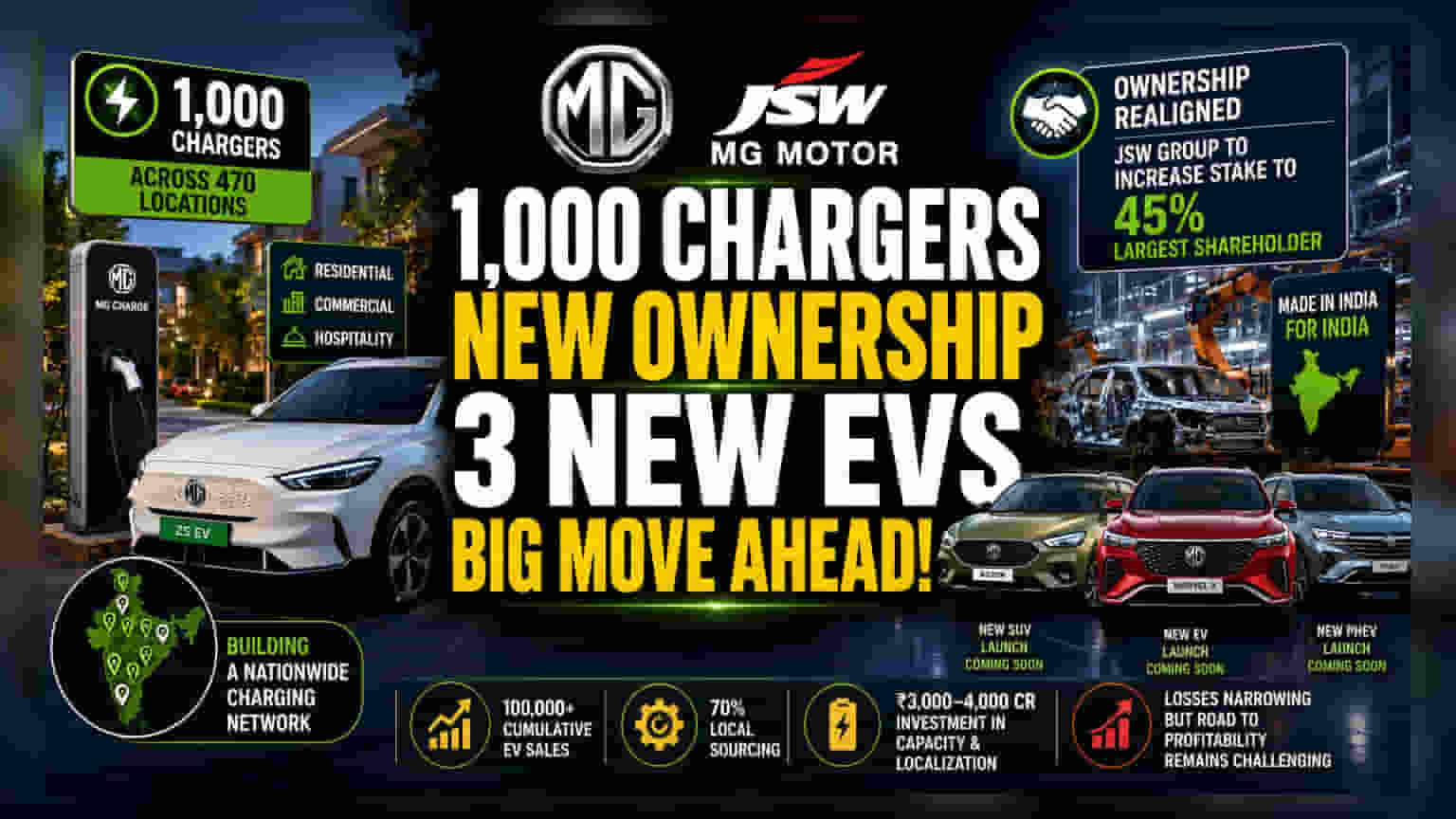


The Infrastructure Pivot
JSW MG Motor India has reached a milestone by deploying 1,000 community electric vehicle chargers across 470 locations. This rollout, under the company’s ‘MG Charge’ initiative, addresses the critical consumer hurdle of charging accessibility in residential, commercial, and hospitality sectors. By moving beyond traditional dealership-based charging, the company is attempting to lower the barrier to entry for prospective EV buyers who lack private charging facilities. This expansion is essential for the company to maintain its competitive stance in an industry where infrastructure is often the primary bottleneck for mass adoption.
Strategic Ownership Reconfiguration
The infrastructure milestone occurs against a backdrop of significant corporate restructuring. As of mid-2026, JSW Group is finalizing a transaction to increase its stake in the joint venture to 45%, effectively making it the largest shareholder. This strategic transition serves a dual purpose: it empowers JSW Group with greater management control and aligns the entity more closely with domestic ownership requirements, mitigating the regulatory friction that hampered SAIC Motor’s previous expansion plans. By anchoring the brand locally, the company is positioning itself to navigate the complex geopolitical and economic landscape of Indian manufacturing.
Product Offensive and Competitive Positioning
To solidify its position against market leaders like Tata Motors and Mahindra, the company has confirmed the launch of three new energy vehicles (NEVs) for the remainder of 2026. This pipeline represents a move toward diversifying its powertrain offerings, specifically through the introduction of plug-in hybrid technology. While the company has already surpassed 100,000 cumulative EV sales, the inclusion of hybrids is a tactical attempt to capture the 'fence-sitter' segment that remains wary of pure battery electric vehicles. This product strategy is supported by an aggressive push to increase local sourcing to 70%, a move intended to buffer the company against global supply chain volatility.
The Forensic Bear Case
Despite the aggressive expansion, JSW MG Motor India faces substantial headwinds. The firm remains a private entity with a history of cumulative losses, and while it has narrowed its net loss to approximately ₹586 crore in FY24, the path to sustained profitability is capital-intensive. The company’s planned ₹3,000–4,000 crore investment in production capacity and localization suggests significant cash burn. Furthermore, as the Indian EV market consolidates, the company remains the junior player compared to the established dominance of Tata Motors. Any delay in the rollout of its new energy models or failure to achieve anticipated economies of scale could strain its financials, especially given the rising costs of raw materials and shipping tariffs that impacted recent operational efficiency.