

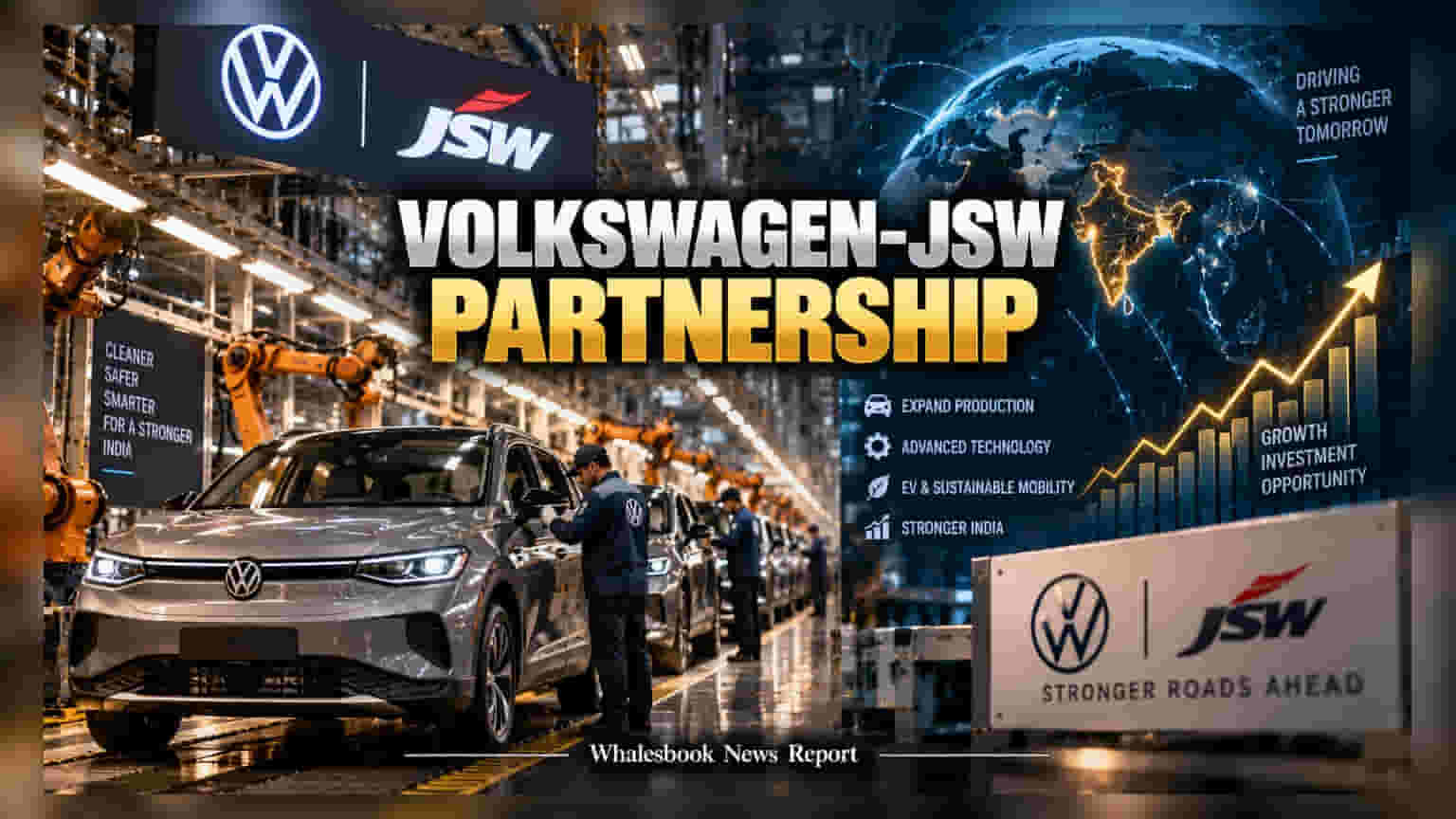
JSW Group will hold a majority 51% stake in a joint venture with Volkswagen Group, backed by an estimated ₹10,000 crore investment to manufacture vehicles in India. The collaboration aims to scale production of traditional and electric cars by leveraging existing manufacturing hubs. Investors should monitor the progress of negotiations as both parties work toward finalizing a binding agreement by December 2026.
JSW Group and Volkswagen Group have announced a significant partnership to reshape their automotive footprint in India. Under a recently signed memorandum of understanding, the companies plan to form a joint venture where JSW Group will hold a majority stake of 51%, while the German automaker will retain 49%. This collaboration is estimated to involve project investments exceeding ₹10,000 crore, aimed at boosting local production, research, and market competitiveness.
The venture intends to integrate the existing manufacturing facilities of Skoda Auto Volkswagen India, specifically the plants located in Chakan and Chhatrapati Sambhajinagar. These facilities currently hold a combined annual production capacity of 400,000 units. For JSW Group, this deal marks a major entry into the passenger vehicle segment, allowing the conglomerate to fast-track its automotive ambitions by leveraging established infrastructure and engineering standards rather than building from scratch. For Volkswagen, the partnership is a strategic move to secure a stronger foothold in the Indian market, where the company has faced intense pressure from high-volume competitors such as Maruti Suzuki, Hyundai, and Tata Motors.
While the partnership aims to accelerate the rollout of traditional, hybrid, and electric vehicles, investors should consider several important factors regarding the nature of this deal. The current memorandum is non-binding, meaning that the final terms, including the exact valuation, capital commitments, and governance structure, are still under negotiation. The timeline to reach a definitive, binding agreement is set for December 2026, and any delays or changes in terms during this period could influence market sentiment.
Additionally, the venture will need to navigate historical regulatory challenges. Reports have previously highlighted ongoing tax and customs duty disputes involving Indian authorities and the Volkswagen group. These liabilities can be a complex part of valuation negotiations and could impact the financial clarity of the venture. Furthermore, successfully merging two large corporate cultures and aligning complex supply chains remains a primary execution risk that shareholders should monitor.
The immediate focus for the market will be the progress of exclusive negotiations. The final benefit of this partnership will depend on the companies' ability to resolve valuation discussions and successfully execute the integration of operations. Investors should track future exchange filings for updates on the definitive contract, which will likely provide more granular details on the total capital expenditure and the timeline for launching new vehicle models.