

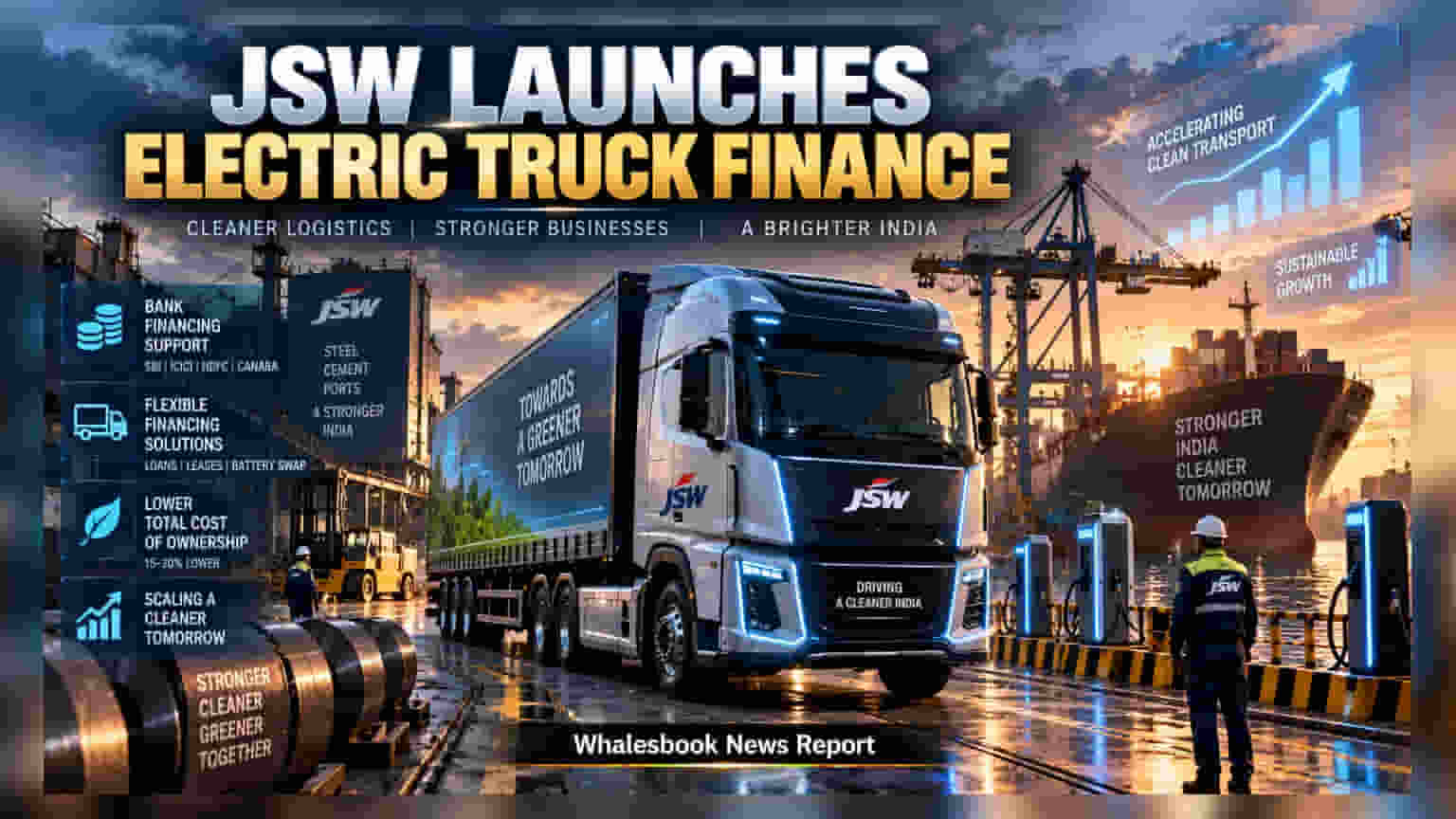
JSW Group is launching a dedicated financing unit to help buyers bridge the high price gap between diesel and electric trucks. Backed by major lenders like SBI and ICICI Bank, the company aims to use its own massive logistics network to kickstart production. Investors should monitor how effectively this captive demand model helps the firm compete against established commercial vehicle manufacturers in the electric segment.
JSW Group has launched a specialized financing arm to support the adoption of its electric trucks and buses, addressing the steep price difference between traditional diesel vehicles and their electric alternatives. Currently, a heavy-duty electric truck is significantly more expensive than a diesel equivalent, with prices reaching nearly ₹88 lakh compared to ₹25 lakh for diesel models. The company aims to overcome this barrier by focusing on the total cost of ownership, which it projects to be 15 to 20 percent lower than diesel models over the vehicle's lifespan.
To facilitate sales, the group has secured lending support from major Indian banks, including State Bank of India, ICICI Bank, HDFC Bank, and Canara Bank. These institutions have approved the company's electric vehicle products for financing, with standard loan structures similar to existing commercial vehicle norms, typically split at an 80:20 ratio. This institutional backing is a critical step for JSW as it attempts to enter a segment where adoption has historically been slowed by high initial capital requirements.
Captive demand serves as the core of the company's rollout strategy. JSW operates a large logistics network involving 17,000 trucks across its steel, cement, and ports businesses. By deploying vehicles within its own ecosystem, the company creates a controlled environment for operations, ensuring predictable routes and access to charging infrastructure. Management expects the electric vehicle unit, Greentech, to reach break-even when production volume hits 3,000 to 4,000 units, well below its maximum annual capacity of 15,000 units.
To manage the high cost of batteries, which are the most expensive part of an electric heavy vehicle, JSW is introducing flexible models like battery-as-a-service, wet leases, and battery-swapping technology. The company plans to prioritize battery-swapping for the first 100 vehicles on its captive routes. This allows the company to scale battery capacity based on specific range needs of up to 500 kilometers, making it easier to handle heavy-duty applications that were previously considered impractical for electrification.
While this captive network provides a clear path for initial volume, the company faces significant challenges in expanding beyond its own ecosystem. It enters a market where established players like Tata Motors and VE Commercial Vehicles already hold a strong presence. Investors should track how the company manages the execution risks related to charging infrastructure development and battery technology. The ultimate success of this strategy will depend on the firm's ability to prove the long-term reliability of its electric trucks under demanding operational conditions, beyond the protected environment of its own facilities.