

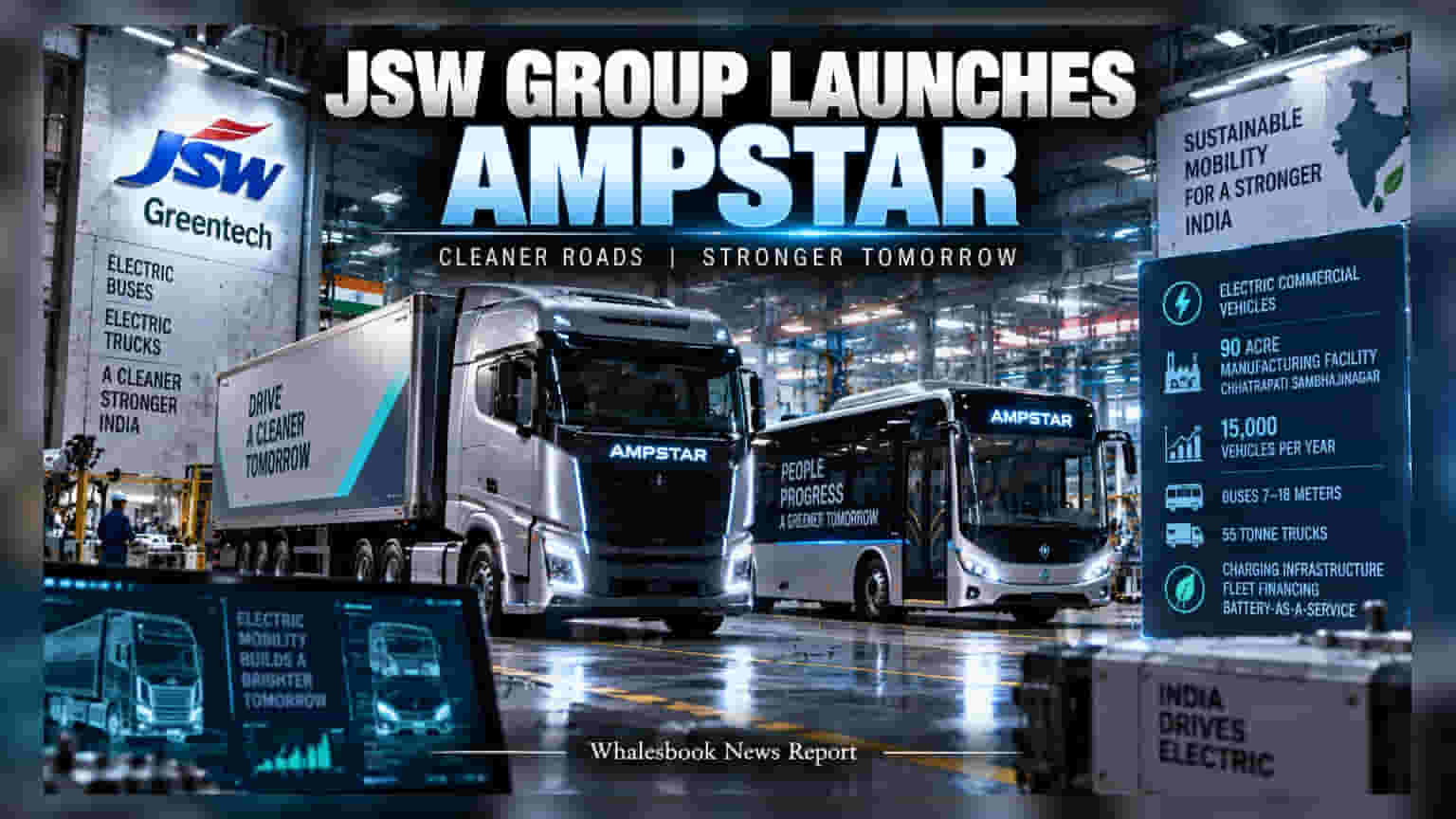
JSW Group has entered the electric commercial vehicle market with its new brand, Ampstar. The company will manufacture electric buses and heavy-duty trucks at a new 90-acre facility in Maharashtra with an annual capacity of 15,000 units. This move marks a major expansion into green mobility, aiming to compete in India's growing electric transport sector.
JSW Group is making a strategic entry into the electric commercial vehicle space with the launch of its new brand, Ampstar. Operated under JSW Greentech, the venture focuses on the production of electric buses and heavy-duty trucks. The company has established a dedicated 90-acre manufacturing facility in Chhatrapati Sambhajinagar, Maharashtra, which is designed to reach an annual production capacity of 15,000 vehicles.
This initiative marks a significant expansion for the JSW conglomerate, known primarily for its steel, energy, and infrastructure businesses. By entering the electric commercial vehicle segment, the group is looking to leverage its manufacturing expertise to capture demand for cleaner heavy transport in India. The product range will initially include electric buses measuring 7 to 18 meters, targeting sectors such as public city transit, staff transportation, and school logistics. For the heavy-duty truck segment, the company plans to introduce 55-tonne tractor-trailers, with intentions to expand into tippers and dumpers in the future.
To compete effectively, Ampstar is adopting a full-stack business model. This includes not only the manufacturing and sale of vehicles but also the development of supporting charging infrastructure and fleet financing solutions. By offering a battery-as-a-service program and flexible ownership models like leasing, the company aims to reduce the upfront cost burden for fleet operators, a common challenge in the adoption of electric commercial vehicles.
The commercial electric vehicle market in India is highly competitive, with established players like Tata Motors, Ashok Leyland, and Olectra Greentech already operating at significant scales. For JSW, the success of this new venture will depend heavily on its ability to ramp up manufacturing, secure large-scale orders, and maintain competitive pricing against these incumbents. The heavy-vehicle segment is capital-intensive, and the long gestation period for new manufacturing plants can put pressure on cash flow and profitability during the initial phases.
Investors may monitor the progress of this project through key indicators such as the timeline for production ramp-up, the company’s ability to secure significant orders from state transport undertakings or private logistics firms, and the impact of the initial capital spending on the group’s financial position. As the electric vehicle policy environment in India continues to evolve, the company's ability to navigate subsidy structures and build a reliable charging ecosystem will also be important factors for the business to watch.