

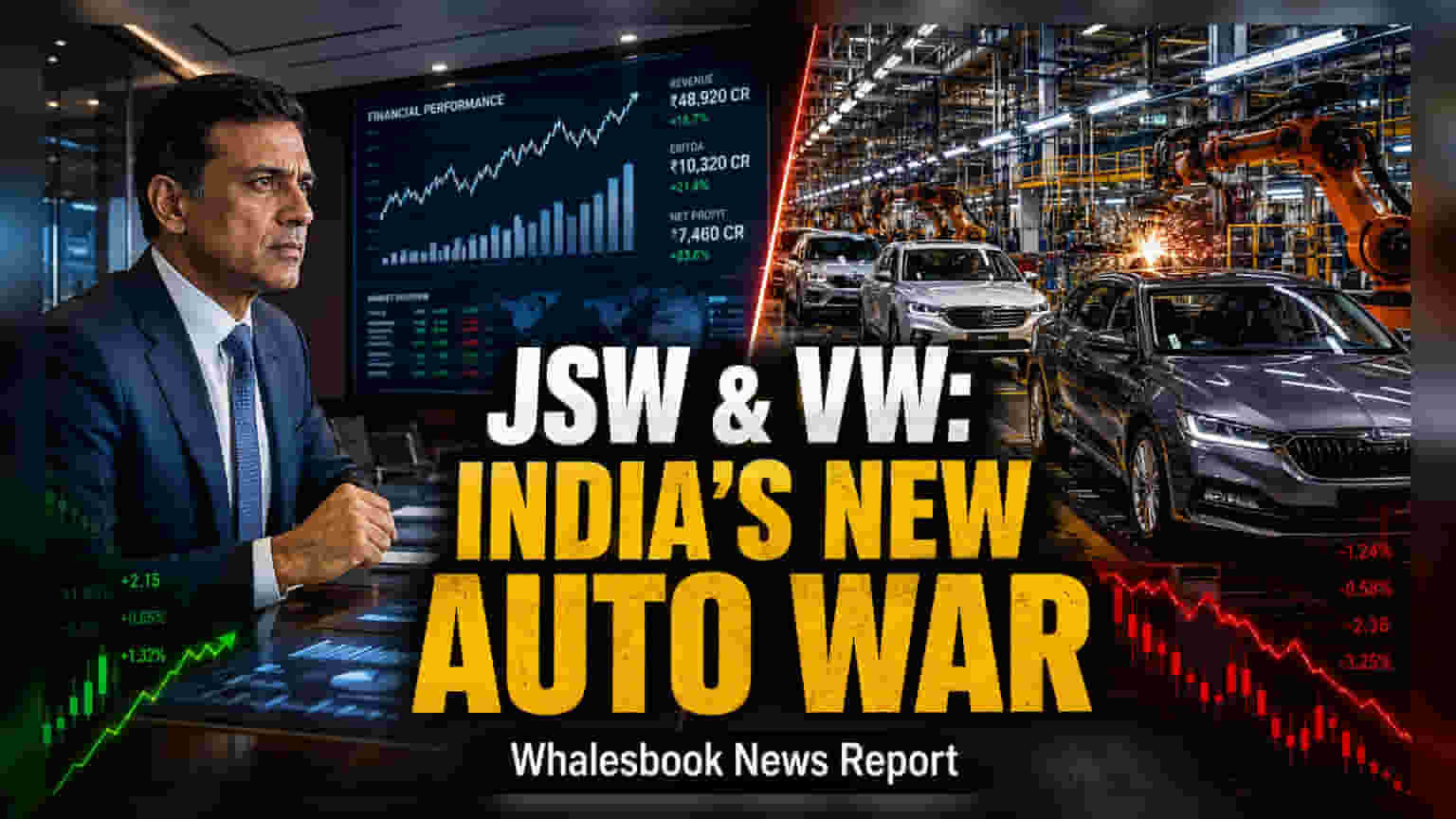
JSW Group is in advanced talks to form a standalone joint venture with Volkswagen Group’s Indian unit to drive mass-market vehicle operations. The potential deal would involve transferring key assets like the Chakan manufacturing plant to a new entity. Investors are watching for the final valuation and equity structure, with an agreement potentially expected by September 2026.
JSW Group and Volkswagen Group are moving toward a potential joint venture to manage the German automaker’s mass-market operations in India. The deal, if finalized, would create a new standalone entity where the Sajjan Jindal-led JSW Group would hold a majority stake. This move is designed to inject fresh capital and local operational expertise into Volkswagen and Skoda’s Indian business, which has been seeking to improve its competitive standing.
The alliance will specifically target mass-market vehicle portfolios. Volkswagen’s ultra-luxury brands, including Porsche, Lamborghini, Bentley, and Audi, are excluded from this proposed arrangement. By focusing on mass-market models, the companies aim to improve their market share in India’s highly competitive automotive sector. Under the terms currently under discussion, the new entity is expected to gain control of critical assets, including the Chakan manufacturing facility in Maharashtra, vehicle platforms, and existing sales and marketing networks.
For Volkswagen, this partnership is a strategic attempt to scale its local operations. Skoda Auto Volkswagen India (SAVWIPL) has historically struggled to achieve consistent, high-margin scale in the Indian market, often relying on significant financial support from its parent company to maintain operations. For instance, the entity reported a net profit of ₹139 crore for the 2026 financial year, a figure that was aided by parent-level capital infusions. Investors will likely monitor whether JSW’s local manufacturing expertise and capital can help the unit achieve more independent, self-sustaining profitability.
Despite the growth potential, the joint venture faces several hurdles. The Indian passenger vehicle market remains dominated by established incumbents such as Maruti Suzuki, Hyundai, and Tata Motors. Gaining market share will require not just capital, but also significant improvements in cost structure and distribution. Furthermore, integrating Volkswagen’s complex global technology and engineering standards with JSW’s operational model carries execution risks, such as potential delays or cost overruns during the transition.
The deal is not yet signed, and discussions regarding final valuation, future capital commitment, and the exact shareholding structure are ongoing. Both companies are reportedly aiming to reach a framework agreement or memorandum of understanding by September 2026. Following this, the process will move to detailed due diligence, where JSW will review SAVWIPL’s financial and operational records. The final terms of the equity split and the valuation of the assets transferred will be the primary monitorables for stakeholders in the coming months.