

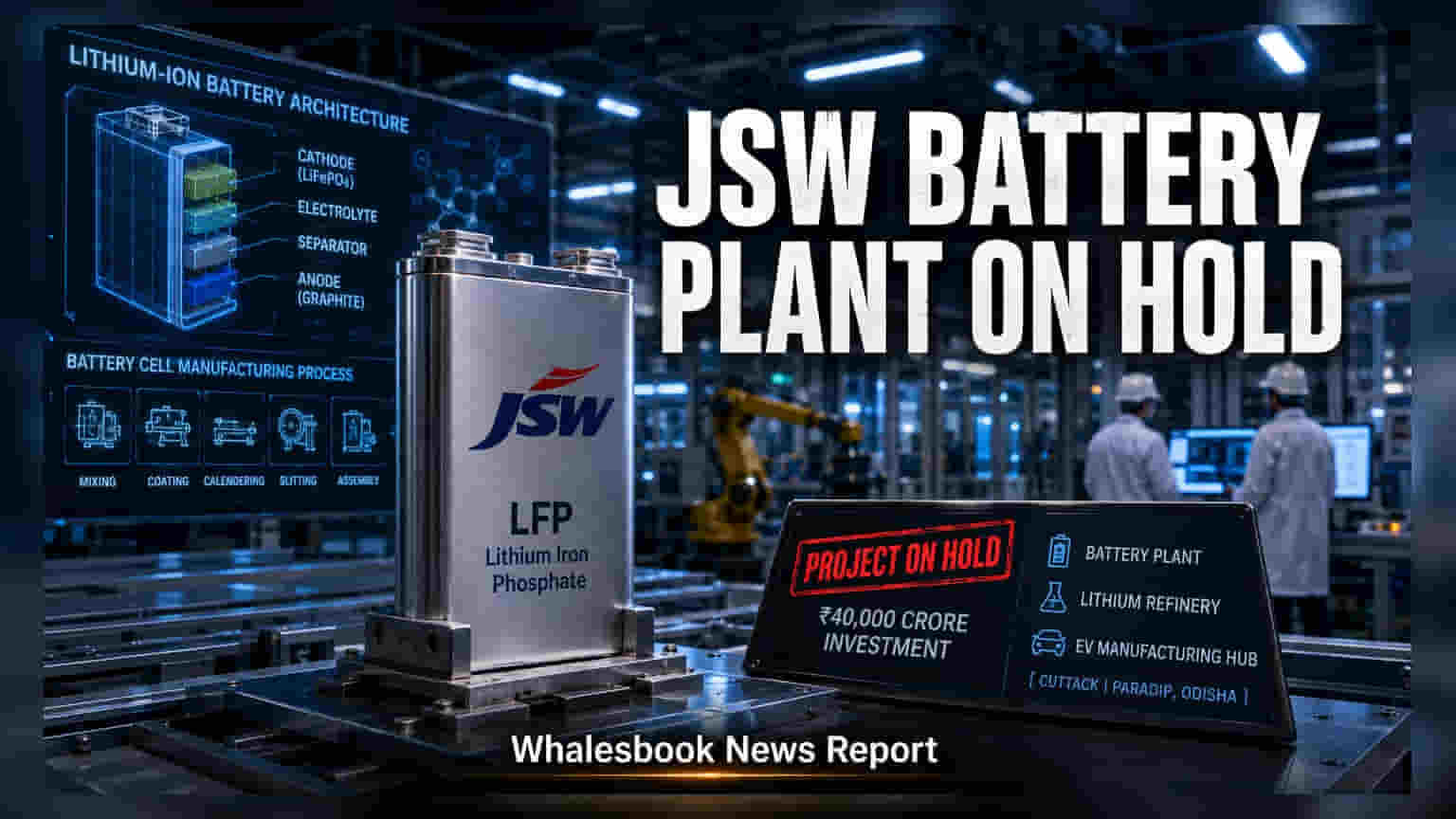
JSW Group remains committed to its ₹40,000 crore integrated electric vehicle and battery manufacturing project in Odisha. While the company is actively navigating industry-wide challenges regarding the sourcing of advanced lithium-ion cell technology and securing import clearances, it is moving forward with development. The project is a core part of the group's long-term strategy to build a self-reliant EV supply chain in India.
JSW Group is continuing with its expansive plans to establish an integrated electric vehicle (EV) and battery manufacturing hub in Odisha. Despite market speculation regarding the project's timeline, the conglomerate remains committed to the ₹40,000 crore investment committed through its memorandum of understanding. The project, which involves setting up a battery plant, lithium refinery, and other EV-related infrastructure in Cuttack and Paradip, is currently in the development phase.
Navigating Technology and Supply Chain Challenges
The primary hurdle for any large-scale battery project in India today is the access to advanced cell technology, specifically for Lithium Iron Phosphate (LFP) batteries. This technology is highly proprietary and is concentrated among a few global players, largely based in China. For JSW, the challenge is not a lack of intent, but rather the complexity of securing a long-term technology partnership that aligns with India’s localized manufacturing goals.
Furthermore, the Indian EV sector is currently navigating a strict regulatory environment regarding the import of safety-sensitive components. The process of obtaining government certifications for importing these parts—a necessary step for many new entrants—has led to industry-wide timelines for product launches being re-evaluated. This regulatory landscape is a significant factor for companies like JSW Motors, which is working to ensure that its future vehicle lineup meets domestic standards while maintaining global technology benchmarks.
Strategic Focus on Integrated Mobility
Unlike traditional automotive firms that focus primarily on assembly, JSW is attempting a fully integrated approach. By planning to manufacture battery cells, refine lithium, and produce copper—key components for EVs—the group aims to control a larger portion of its supply chain. This strategy is designed to stabilize long-term operational costs and reduce dependency on external suppliers once the facilities are operational.
This high level of integration requires massive capital spending and significant technical expertise. For investors, the execution of such a large-scale project is a critical factor. The ability of the group to balance this heavy capital requirement while managing the timelines of its partnership with SAIC Motor for the MG Motor brand will be a major monitorable. The project is not just an automotive play but a substantial addition to the group's industrial footprint.
What Investors Should Monitor
Moving forward, the primary areas to track regarding the Odisha project are the finalization of strategic technology partnerships and the progression of regulatory approvals for critical components. The company’s ability to secure these partnerships will determine the pace of the facility’s commissioning. Additionally, as the project moves from planning to on-ground construction, the focus will shift toward the group’s capital allocation and debt management, given the substantial investment required for an integrated EV ecosystem.