

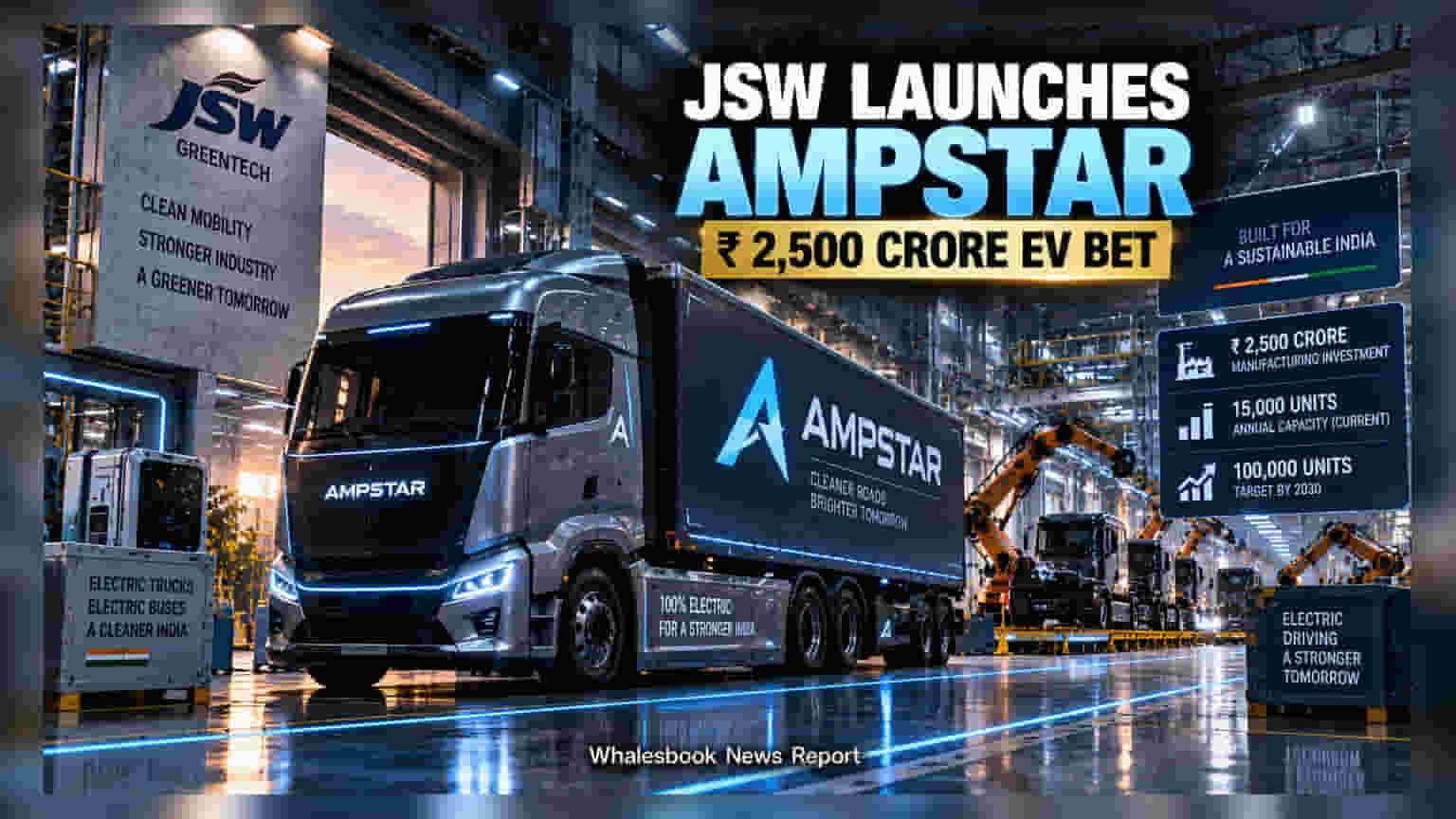
JSW Group is entering the electric commercial vehicle market with its new brand, AMPSTAR, after investing ₹2,500 crore in a Maharashtra facility. The company aims to sell 100,000 electric trucks and buses by 2030, challenging industry incumbents like Tata Motors, Mahindra & Mahindra, and Ashok Leyland as electric vehicle adoption in the sector grows.
JSW Group has officially marked its entry into the commercial vehicle sector with the launch of its new electric vehicle (EV) brand, AMPSTAR. The company, operating under its subsidiary JSW Greentech, has invested ₹2,500 crore in a manufacturing facility located in Chhatrapati Sambhajinagar, Maharashtra. This facility currently holds an annual production capacity of 15,000 units, with plans to scale production significantly over the next few years to reach an annual target of 100,000 electric trucks and buses by 2030.
The timing of this move aligns with a shift in the Indian commercial vehicle market, where electric vehicle adoption is gaining speed. Industry data shows that penetration of electric commercial vehicles has risen to 5.2% as of August 2026, compared to just 2.1% a year ago. This growth offers a potential opening for new entrants to challenge the existing market leaders.
Currently, the sector is heavily concentrated, with Tata Motors, Mahindra & Mahindra, and Ashok Leyland holding over 78% of retail sales. These established players benefit from vast, pan-India service and dealer networks, which are crucial for commercial vehicle operators who prioritize vehicle uptime and service availability. Breaking this dominance will be a significant task for JSW Greentech.
To compete effectively, JSW Greentech is adopting a different strategy compared to traditional manufacturers. The company plans to focus heavily on a business-to-business (B2B) model, intending to use the JSW Group’s own industrial footprint as a primary customer base. By leveraging the large-scale logistics and transportation requirements of the group's steel, cement, and energy businesses, the company aims to create a closed-loop system for its vehicles. This captive demand could provide an initial advantage in testing and scaling its fleet before it attempts to build a wider public dealer network.
Technology is another pillar of the company's strategy. Unlike some competitors that rely on external technology partnerships, JSW Greentech aims to retain control over core software and electronic architectures in-house. This approach is intended to allow for faster local adjustments to vehicle designs, potentially lowering long-term dependency on external suppliers.
For investors, the key monitorable will be the company’s ability to scale production while managing the substantial capital spending required for this expansion. The success of the venture will depend on how quickly it can build a reliable service network, which is the traditional hurdle for new commercial vehicle entrants. Furthermore, the company will face the challenge of competing against the deeply entrenched sales and service ecosystems of Tata, Mahindra, and Ashok Leyland. The progress of the Chhatrapati Sambhajinagar facility and the rollout of the AMPSTAR brand will be important indicators of the company’s execution capabilities in the coming quarters.