 Whalesbook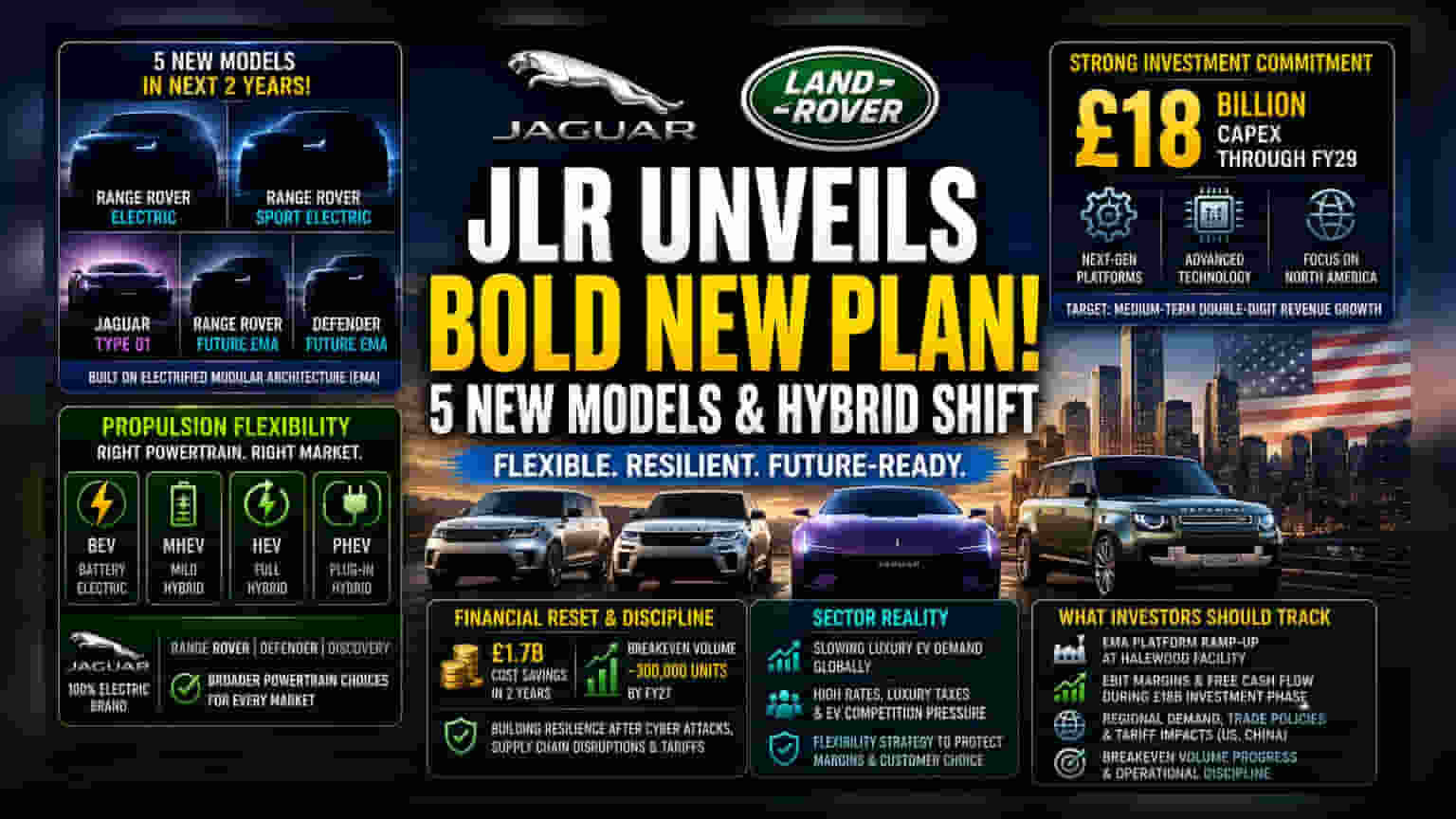


Jaguar Land Rover (JLR), a subsidiary of Tata Motors, has announced a new strategic roadmap involving the launch of five new vehicles over the next two years. In a significant shift from its previous 'electric-first' approach, the company is pivoting to 'propulsion flexibility,' allowing Range Rover, Defender, and Discovery models to offer hybrid and electric options to better manage uneven global luxury EV demand. The company has reaffirmed its £18 billion investment commitment through FY29, targeting double-digit revenue growth with a sharper focus on the North American market.
What Happened
Jaguar Land Rover (JLR), the luxury vehicle subsidiary of Tata Motors Passenger Vehicles, has unveiled a fresh strategic roadmap centered on product expansion and propulsion flexibility. The company plans to launch five new vehicle models over the next two years. These upcoming launches will feature the Range Rover Electric, Range Rover Sport Electric, and the new Jaguar Type 01, alongside future additions to the Range Rover and Defender brands built on JLR’s Electrified Modular Architecture (EMA).
Strategic Pivot: Propulsion Flexibility
The most significant change in JLR’s strategy is a move away from a purely electric-first approach toward "propulsion flexibility." While the company remains committed to the electric transition, it will now offer a broader mix of powertrain options—including mild-hybrid (MHEV), full-hybrid (HEV), and plug-in hybrid (PHEV)—across its Range Rover, Defender, and Discovery brands. This shift reflects a pragmatic response to the uneven adoption of electric vehicles globally. Jaguar, however, will remain an exclusively electric brand as part of its distinct repositioning strategy.
Why This Matters For Investors
For investors, this shift is a critical hedge against the slowing growth of global luxury EV demand. By offering hybrid alternatives, JLR aims to maintain volume and revenue resilience in markets where EV infrastructure or consumer appetite for pure battery-electric vehicles (BEV) has not matured as quickly as anticipated. The company has reaffirmed its £18 billion capital expenditure commitment through FY29, focusing on next-generation vehicle platforms and technology. The goal is to achieve medium-term double-digit revenue growth by leveraging its "House of Brands" approach and increasing its focus on North America, a region JLR identifies as a high-margin growth engine.
Financial Context and Challenges
The strategic pivot comes on the back of a volatile fiscal year for JLR, characterized by external headwinds such as cybersecurity incidents, supply chain disruptions, and shifting global trade tariffs. These factors created production gaps and impacted short-term profitability. JLR is now looking to improve financial resilience by targeting £1.7 billion in cost savings over the next two years and working toward reducing its breakeven volume to approximately 300,000 units by FY27. These measures are designed to ensure that the heavy capital investment in new technology does not disproportionately strain the balance sheet during this transition period.
Sector and Competitive Landscape
The luxury automotive sector is currently navigating a complex environment. High interest rates, luxury taxes in key markets like China, and aggressive competition from dedicated EV manufacturers have placed pressure on margins for legacy automakers. By opting for a flexible powertrain strategy, JLR joins a growing number of global premium manufacturers that are recalibrating their EV timelines to preserve margins and maintain customer choice. The success of this strategy will depend on the company's ability to successfully scale these new platforms while managing the rising costs associated with software-defined vehicle development and advanced production technologies.
What Investors Should Track
Going forward, the key monitorables will be the actual demand for these new electric and hybrid models in North America, as well as the progress on cost-saving targets. Investors may watch for:
- The successful commissioning and output levels of the EMA platform at the Halewood facility.
- Trends in JLR’s EBIT margins and free cash flow as the company navigates its £18 billion investment phase.
- Management commentary on regional demand, particularly any changes in trade policies or tariffs that could impact exports to major markets like the US and China.
- The breakeven volume progress to ensure the company remains operationally disciplined during its product offensive.