

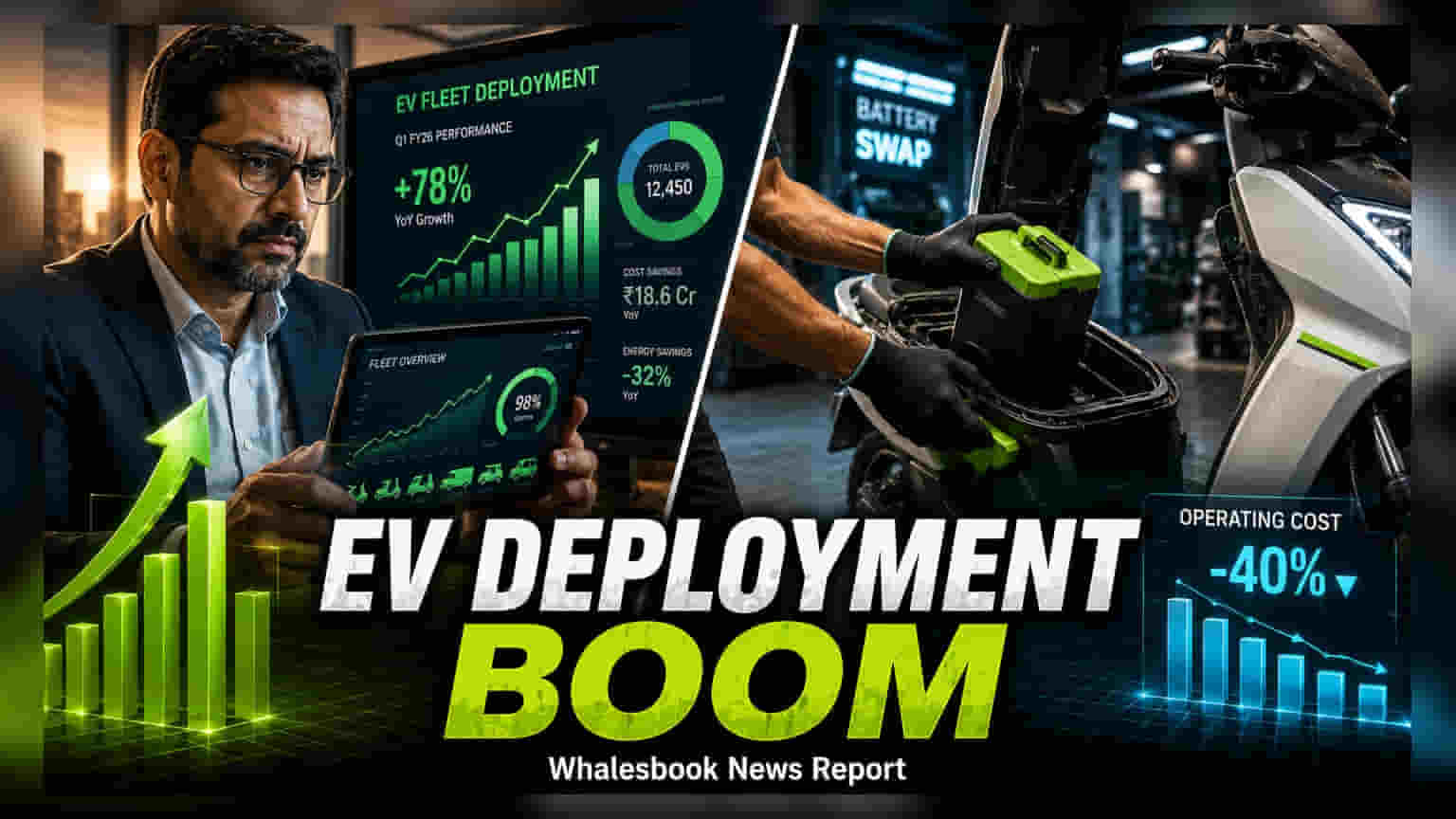
Indofast Energy and Hala Mobility have announced a partnership to deploy 1 lakh electric vehicles for last-mile delivery by March 2028. This move aims to increase productivity for gig workers by using battery swapping to reduce charging downtime.
Detailed Coverage
Indofast Energy, a joint venture between Indian Oil Corporation Ltd (IOCL) and Sun Mobility, has signed a partnership with Hala Mobility to scale up electric vehicle deployment. The agreement targets a fleet of 1,00,000 electric vehicles by March 2028, with 40,000 of these expected to be on the road by the end of the current financial year.
Scaling Battery Swapping for Logistics
The partnership focuses on addressing the core challenges of commercial electric mobility, namely charging time and range anxiety. By combining Indofast Energy’s battery swapping network with Hala Mobility’s fleet management services, the companies intend to provide a service model that minimizes downtime. For gig workers and last-mile delivery operators, who often rely on high daily usage, the ability to swap a battery in about two minutes serves as a major efficiency driver.
Operational Footprint and Financial Impact
Indofast Energy has already established a footprint of over 1,900 battery swap stations across 24 Indian cities. The collaboration builds on existing momentum, as the two entities have already deployed 15,000 vehicles over the past year. Current operations cover major urban centers including Delhi-NCR, Mumbai, Bengaluru, and Hyderabad, with upcoming expansion planned for Pune, Chennai, and Jaipur.
From an economic perspective, the model is targeted at reducing operating expenses for commercial users. According to the company, running an electric vehicle with swappable batteries can result in up to 40% lower running costs compared to traditional petrol-powered two-wheelers. For individuals in the gig economy covering 80 to 100 kilometers daily, these cost savings and the reduction in downtime are designed to directly increase net daily earnings.
Investor Context and Future Monitorables
For investors, this partnership represents a strategic effort by Indian Oil Corporation to secure a foothold in the energy transition space. As a joint venture, Indofast Energy helps the oil major diversify its traditional fuel retailing business into the growing electric mobility sector.
However, the long-term success of this deployment model depends on several factors. Investors should track the pace of infrastructure rollout, as the density of swap stations is critical to maintaining the promised zero-downtime model. Additionally, because the company relies on a high-volume, low-margin service model for last-mile logistics, the financial viability will depend on maintaining high utilization rates for the batteries and vehicles. The ability to manage the capital cost of the fleet and battery assets while maintaining profitability in a competitive logistics market remains a key area for long-term monitoring.