

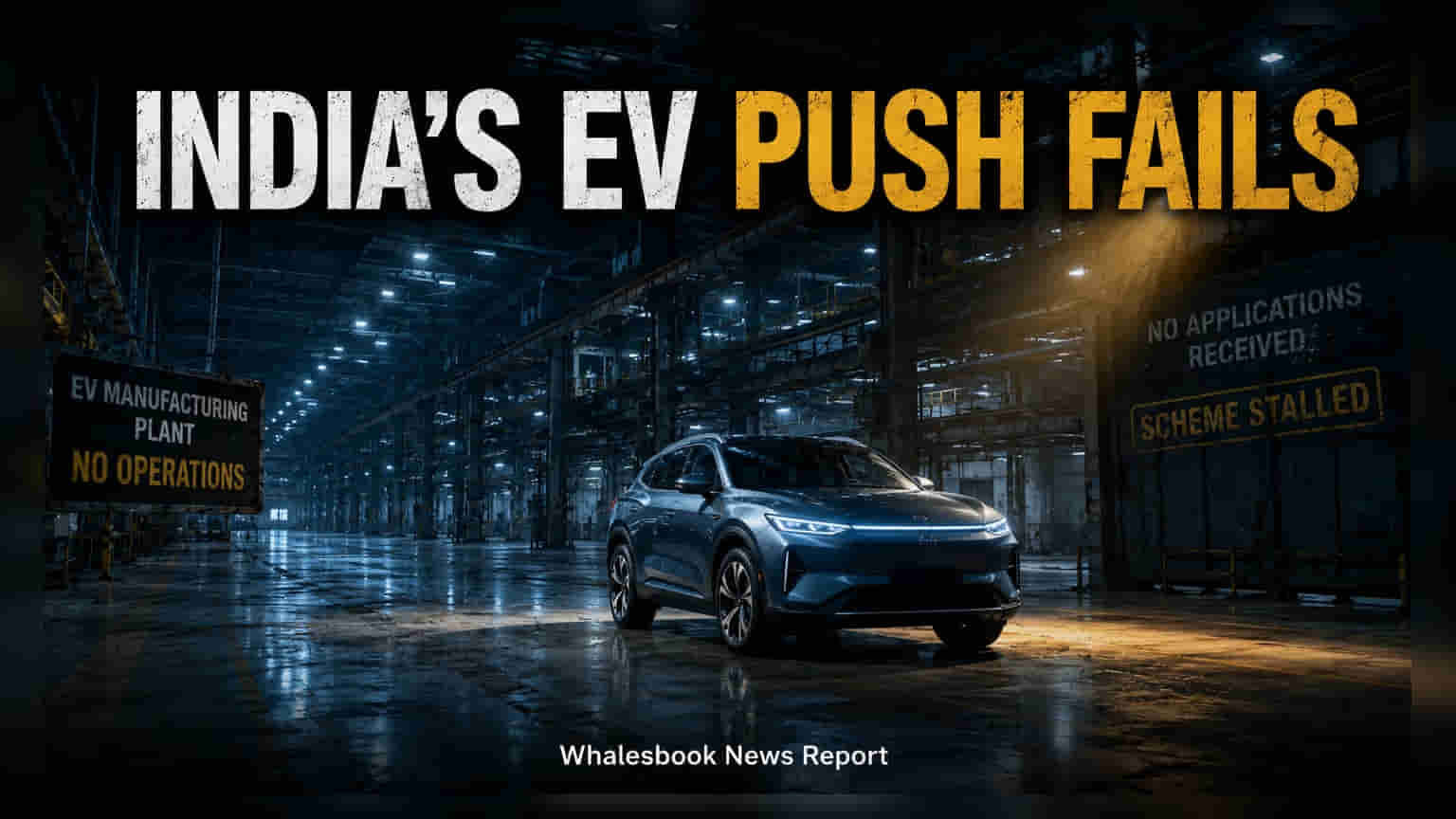
India’s major effort to draw global electric vehicle manufacturers has failed to attract any applications by the deadline. The government’s incentive scheme, which mandated high investment and strict local manufacturing, proved unattractive to major global players. This gap between policy expectations and industry strategy highlights the challenges in establishing India as an immediate manufacturing hub for high-end electric vehicles.
The Scheme to Promote Manufacturing of Electric Passenger Cars in India (SPMEPCI), launched by the Ministry of Heavy Industries, has stalled after failing to secure a single application by its October 2025 deadline. The program was designed to attract global electric vehicle (EV) manufacturers to build local production units by offering customs duty concessions. However, the lack of interest from global automakers suggests a misalignment between the government’s rigid policy requirements and the current economic strategy of major industry players.
High Entry Barriers Disappoint Global Players
At the heart of the scheme’s struggle were the stringent entry criteria. To qualify for the incentives, companies were required to commit a minimum investment of ₹4,150 crore—roughly $500 million. This high upfront capital expenditure (capex) had to be paired with strict local value addition targets: manufacturers were expected to reach 25% local sourcing within three years, rising to 50% by the fifth year. For many global automakers, these conditions were too demanding. Many companies already operate established, efficient global supply chains and preferred not to disrupt them by building new, costly production hubs in India, especially when import routes remain a more flexible option for entering the Indian market.
The Gap Between Policy and Industry Reality
Global automakers are currently navigating volatile demand for high-end electric vehicles and shifting consumer preferences. Committing to a large-scale manufacturing plant requires long-term visibility into market demand and cost structures. The scheme’s requirement to meet specific revenue targets of ₹5,000 crore by the fourth year, backed by the risk of penalties, added further uncertainty. Manufacturers essentially weighed the potential 15% reduction in import duties against the significant risk of tying up capital in a market where luxury or high-end EV demand is still developing.
Future Outlook for India’s EV Ambitions
While this specific incentive program has not succeeded, it does not represent the state of the entire Indian electric vehicle sector. The government continues to support EV adoption through other initiatives, such as the PM E-DRIVE scheme, which remains active and focuses on different aspects of the mobility ecosystem. The failure of the SPMEPCI scheme has prompted a review, with parliamentary feedback urging for a structural rethink of the incentive framework. Investors and industry observers will be watching to see if the Ministry of Heavy Industries chooses to relax these thresholds or modify the timelines in a revised policy to better align with the strategic needs of foreign investors.