

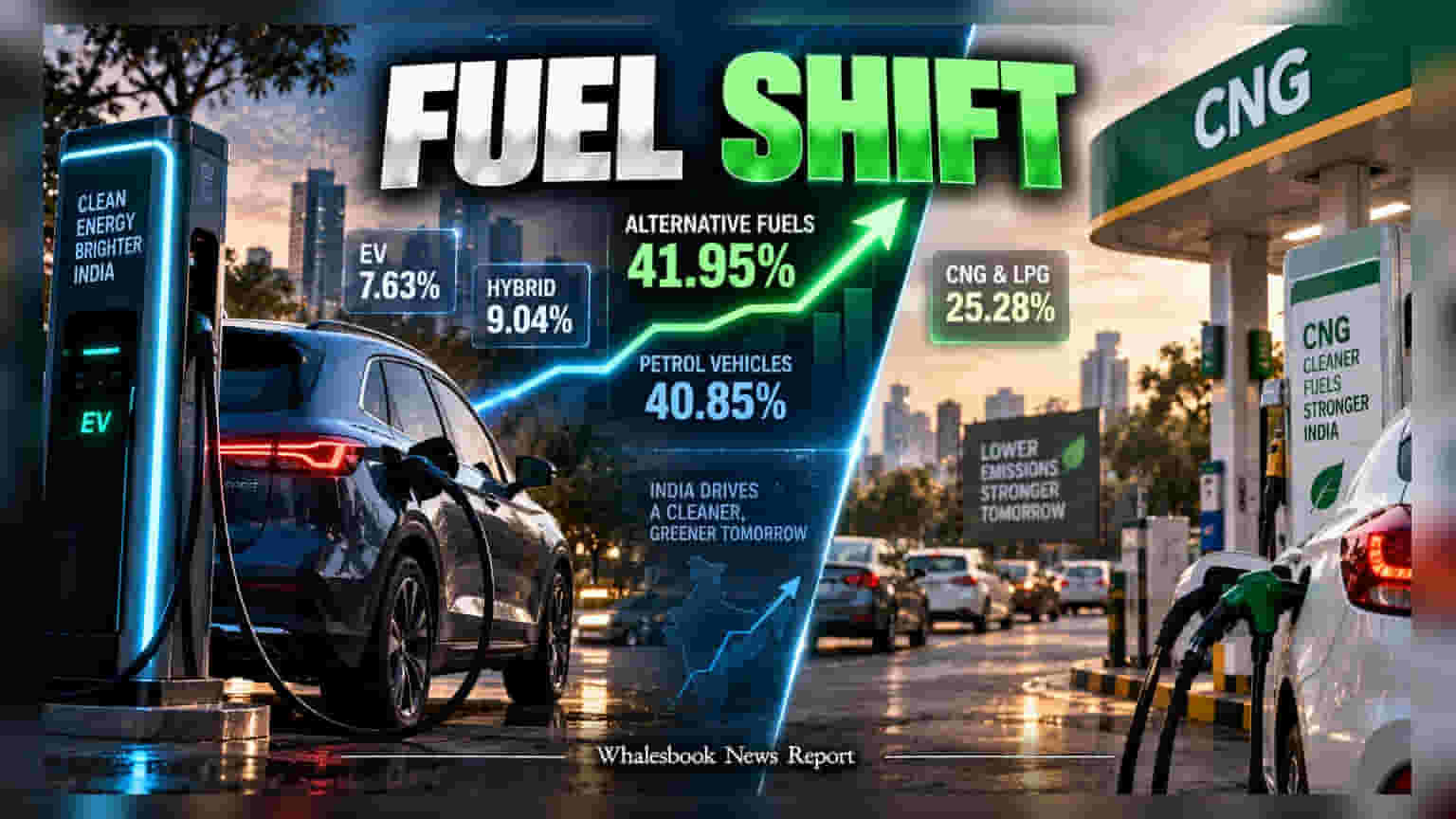
For the first time in India, the combined market share of CNG, hybrid, and electric passenger vehicles reached 41.95% in August 2026, surpassing petrol-powered cars at 40.85%. This shift is driven by rising fuel costs and consumer concerns regarding the rollout of E20 ethanol-blended fuel. Investors should track how automakers adjust their production mixes and profit margins in response to this change in consumer demand.
In a major structural shift for the Indian auto industry, cars running on alternative fuels have officially outsold traditional petrol-powered passenger vehicles for the first time. According to data from the Federation of Automobile Dealers Associations, alternative propulsion technologies—including compressed natural gas (CNG), hybrid systems, and electric vehicles (EVs)—captured 41.95% of the total retail market in August 2026. Traditional petrol vehicles, which have long dominated the segment, accounted for 40.85% of registrations.
This crossover signals a changing preference among Indian car buyers. The transition is largely attributed to the nationwide rollout of E20 fuel, which is a blend of 20% ethanol and 80% petrol. Many consumers are expressing apprehension regarding the potential impact of this fuel on engine longevity and mileage, leading them to seek alternatives that promise better reliability or lower running costs. Inflationary pressures on fuel prices have further accelerated this trend, pushing buyers toward more efficient options.
Breaking down the numbers, CNG and LPG configurations remain the most popular alternative choice, contributing 25.28% to the total retail sales. Hybrid vehicles followed with a 9.04% share, while electric vehicles accounted for 7.63%. Diesel-powered vehicles, which previously commanded a significant portion of the Indian market, saw their share fall to 17.21%, reflecting a long-term decline in the preference for diesel engines in passenger cars.
Total retail sales in August 2026 reached 402,398 units, a 16.14% increase compared to the same period last year. However, analysts advise looking beyond the surface-level volume growth. Much of this year-on-year increase is statistically amplified by a weak performance in August 2025, when many buyers held back purchases in anticipation of tax changes.
For investors and industry followers, this shift creates a complex environment for automakers. Companies that have invested heavily in diversifying their powertrains, particularly in hybrids and CNG-fitted models, may see different demand dynamics than those heavily reliant on standard petrol engines. Profit margins may also come under pressure as manufacturers adjust their product mix and manage the capital spending required for electric and hybrid transitions. Additionally, the reliance on gas supply for CNG or the availability of charging infrastructure for EVs remains a critical factor that could influence future sales sustainability.
The most important monitorable for the coming months will be how these fuel-mix trends perform during the peak festive season, which typically runs from September through November. Investors should also monitor management commentary from major automakers regarding their ability to scale production for these high-demand segments without compromising overall profitability.