 Whalesbook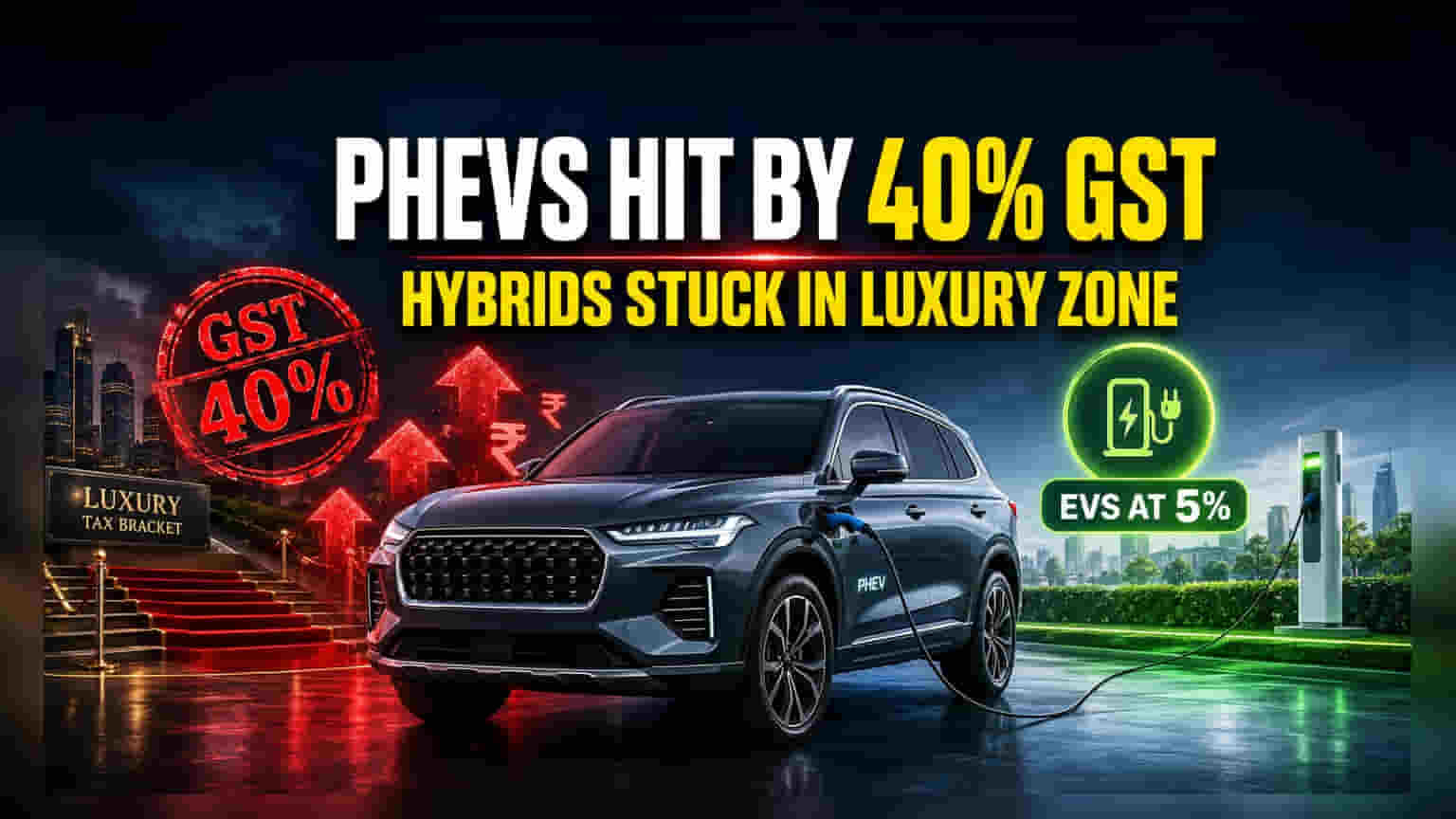


India's plug-in hybrid vehicle (PHEV) market is constrained by a 40% GST, far higher than the 5% rate for fully electric vehicles. This tax gap creates a ₹12 lakh price disadvantage, effectively pushing hybrid cars into the luxury segment. For investors, this means PHEVs remain a niche, premium-only product in India, limiting their potential to serve as a mass-market bridge technology unless government policy changes.
What Happened
The Indian market for plug-in hybrid electric vehicles (PHEVs) is currently facing a significant policy barrier. While fully electric vehicles (BEVs) enjoy a low Goods and Services Tax (GST) rate of 5%, plug-in hybrids are taxed at 40%. This massive difference is creating a roadblock for the adoption of hybrid technology, which is often seen globally as a transition solution for consumers who are not yet ready to switch to a fully electric car due to range anxiety or charging infrastructure concerns.
The Pricing Disadvantage
The core issue for investors and consumers alike is the direct impact of this tax structure on vehicle pricing. A vehicle that might be priced as a mass-premium offering—typically in the ₹25–30 lakh range—is pushed into the ₹40–50 lakh bracket once the 40% tax is applied. For an average car with an ex-factory price of ₹35 lakh, the tax difference between a BEV and a PHEV can be as high as ₹12 lakh. This effectively kills any chance of these vehicles being affordable for the middle-class segment, forcing manufacturers to position them as luxury products for affluent buyers.
Why Automakers Are Focusing on Luxury
Automakers such as BYD, JSW Motors, and JSW MG Motor are preparing to introduce new plug-in hybrid models in India. The business logic behind this move is clear: PHEVs are designed to run on battery power for daily city commutes, with an internal combustion engine serving as a range extender for longer trips. This makes them highly practical for the current state of India's charging infrastructure.
However, because the tax structure makes them expensive, companies are forced to pack these vehicles with high-end features and technology to justify the luxury price tag. Models like the BYD Seal U DM-i or the upcoming JSW Jetour T2 and MG Starlight 560 are being positioned against established premium SUVs like the Toyota Fortuner or the Skoda Kodiaq. Manufacturers are essentially accepting that their hybrid offerings will remain low-volume, high-margin products rather than mass-market vehicles.
The Policy Stance on Decarbonization
The Indian government has consistently prioritized pure battery electric vehicles as the long-term solution for decarbonization. Because PHEVs still utilize an internal combustion engine, they do not receive the same incentives as BEVs. While the recent GST 2.0 reforms simplified tax calculations and reduced some burdens for larger vehicles by removing the compensation cess, the fundamental tax gap between hybrids and BEVs remains unchanged. There is little indication that policymakers are willing to extend the 5% tax benefit to technologies that still rely on fossil fuels, even if they are more efficient than traditional petrol cars.
How Investors May Read This
For investors, the key takeaway is that the 'hybrid bridge' will likely remain a premium-only story in India for the foreseeable future. The potential for these companies to capture a large share of the mass market is severely limited by current tax policy. Investors should watch whether the government eventually creates a distinct tax slab for long-range PHEVs, or if companies decide to abandon their hybrid-first strategy in India in favor of a full push toward pure BEVs. Until such a shift occurs, the revenue growth from the hybrid segment will likely be confined to the premium SUV category, which operates on different sales volumes and margins compared to the mass-market passenger vehicle sector.
What Investors Should Track
Investors should monitor company announcements regarding new model launches to see if they are diversifying their product mix back toward pure EVs to avoid the 40% tax trap. Additionally, any updates from the government regarding changes to the GST framework for hybrid technologies will be a critical trigger. Lastly, tracking the sales performance of upcoming high-end hybrids in the luxury SUV space will reveal whether Indian consumers are willing to pay the premium prices that current tax policy necessitates.