 Whalesbook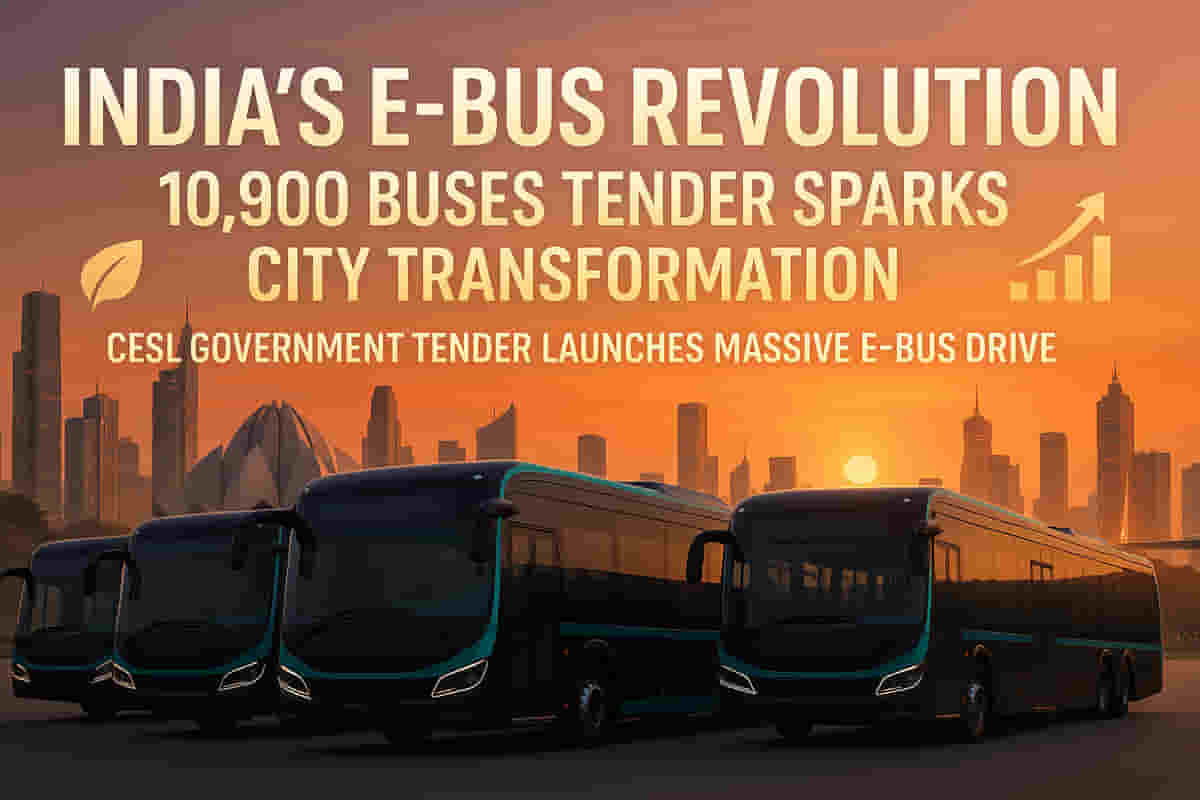
Convergence Energy Services Ltd (CESL), a government-backed entity, has announced a significant milestone in India's electric mobility journey. The company has successfully attracted 16 bids for its ambitious tender to procure 10,900 electric buses. This initiative is a key component of the central government's PM E-Drive scheme, designed to accelerate the adoption of electric buses for public transport across the nation.
The tender, described as the "biggest ever" for e-buses, saw participation from major manufacturers such as Tata Motors, JBM Auto, and Volvo Eicher Commercial Vehicles, alongside operators like Greencell Mobility and Evey Trans. These buses are slated for deployment in major metropolitan areas including Bengaluru (4,500 units), Delhi (2,800 units), Hyderabad (2,000 units), Ahmedabad (1,000 units), and Surat (600 units).
The tender operates on a Gross Cost Contract (GCC) model, where bus manufacturers retain ownership of the buses and state transport agencies pay a per-kilometre fee for their operation. The central government is supporting this initiative by allocating ₹4,391 crore, covering approximately 40% of the procurement costs, with incentives ranging from 20-35% per bus.
This tender is crucial as it represents the first phase of deploying over 14,000 e-buses under the PM E-Drive scheme. It aims to significantly reduce vehicular emissions, cut fuel import dependence, and boost the electric vehicle ecosystem in India. Price discovery for the per-kilometre fee is expected within four weeks after bid evaluation.
Impact:
This development is highly positive for the Indian electric vehicle sector, especially for bus manufacturers and related component suppliers. It signals strong government commitment and growing industry confidence in electric mobility. The increased deployment of e-buses will lead to cleaner air in cities and potentially boost the stock performance of participating companies.
Rating: 8/10
Difficult Terms Explained:
Convergence Energy Services Ltd (CESL): A subsidiary of Energy Efficiency Services Ltd (EESL), a government entity focused on promoting energy efficiency and electric mobility.
PM E-Drive Scheme: A government scheme by the Ministry of Heavy Industries to promote manufacturing and adoption of electric vehicles in India.
Gross Cost Contract (GCC) Model: A public transport procurement model where the operator (often the bus manufacturer) owns the vehicle and manages its operation, while the transport authority pays a fixed rate per kilometre operated.
Price Discovery: The process of determining the fair market price or rate for a good or service through bidding or negotiation.
Vehicular Emissions: Pollutants released into the atmosphere by vehicles, contributing to air pollution and climate change.