

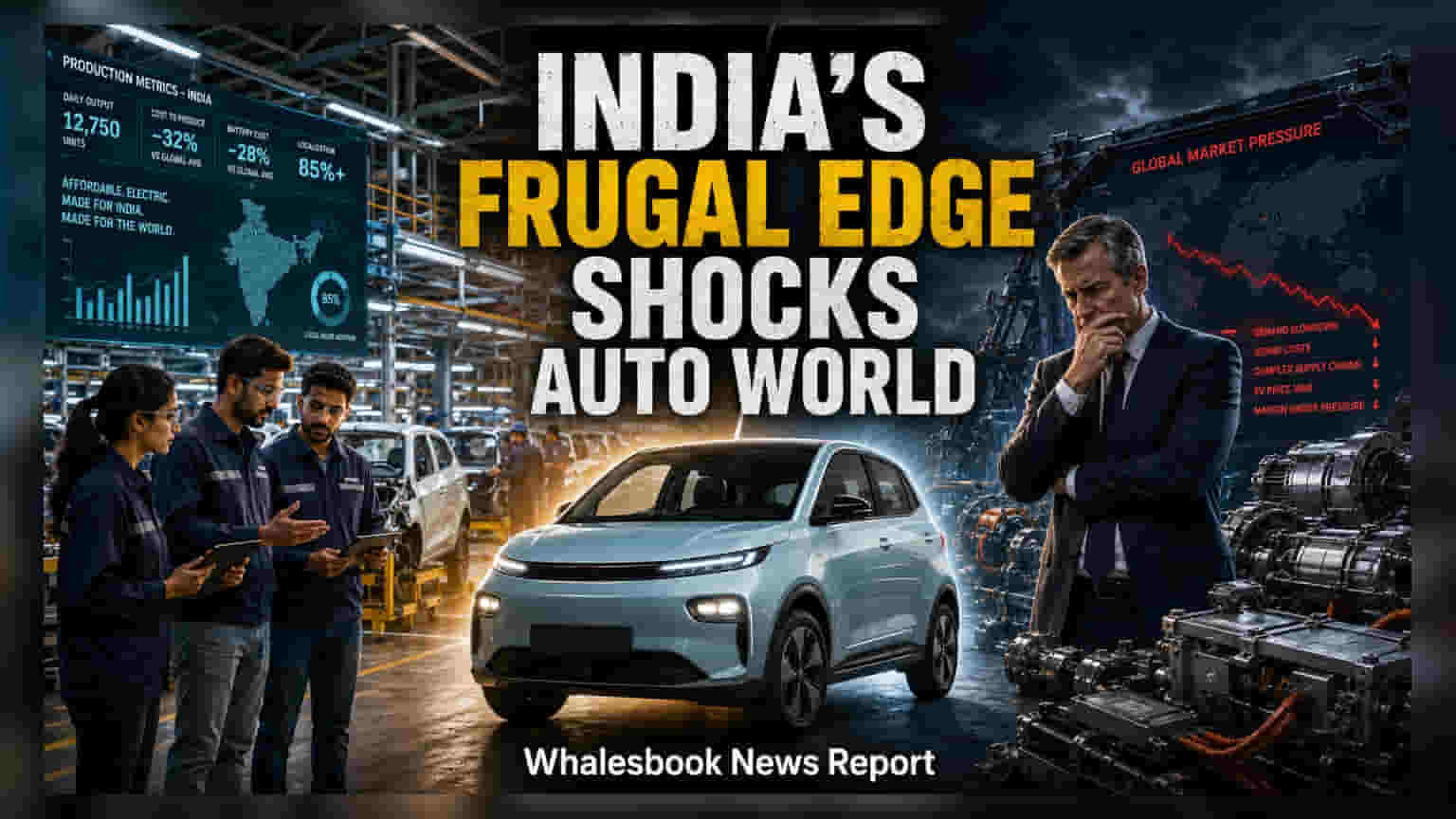
Indian companies are gaining a competitive advantage by focusing on 'frugal engineering'—a strategy of maximizing value while keeping costs low. This approach is transforming sectors like electric vehicles and space technology, offering a lean alternative to global models. Investors should monitor how this strategy balances immediate cost efficiencies with the need for long-term technological innovation.
The concept of 'frugal engineering' is rapidly evolving from a local necessity into a strategic advantage for Indian manufacturing. Unlike traditional models that often focus on high-performance features, the Indian approach emphasizes intelligent design and capital efficiency. This strategy, which maximizes value for every rupee spent, is attracting global attention as companies seek to deliver sustainable products that remain affordable for mass-market consumers.
In the automotive sector, this trend is clearly visible in the transition to electric vehicles. While many global manufacturers are launching premium EVs with heavy batteries and high horsepower, Indian automakers are prioritizing practical solutions. Tata Motors, for example, has successfully introduced electric models that serve everyday commuting needs at competitive price points. This focus on affordability, supported by battery subscription models and efficient vehicle design, helps these companies capture a broader customer base compared to brands that target only the premium segment.
This trend is not limited to cars. The Indian space sector has also leveraged this philosophy to achieve global recognition. The Indian Space Research Organisation (ISRO) demonstrated this during its Mars mission, Mangalyaan, by achieving complex objectives at a fraction of the cost incurred by international peers. By focusing on essential technology and mission-critical specifications rather than excessive redundancy, Indian engineers have proven that budget constraints can lead to more creative and effective problem-solving.
However, for investors, this strategy requires a balanced view. While a lean approach can improve margins and widen market reach, there are risks associated with an over-reliance on cost-reduction. If companies prioritize savings over long-term research and development, they risk falling behind as global technology standards evolve. Furthermore, there is the execution risk in cross-cultural business integrations. For instance, as firms like Tata Motors engage in global expansion—such as their work with the Iveco business integration—successfully blending a frugal manufacturing culture with established international operational styles remains a key challenge.
Global competition also remains a significant factor. Major international players, particularly those in the EV space, are scaling up with immense capital. To maintain their edge, Indian companies must ensure that their 'frugal' designs do not compromise on quality or safety standards. The International Council on Clean Transportation has highlighted that Indian EV manufacturers are currently leading in energy efficiency relative to vehicle weight, but maintaining this leadership will require continuous innovation.
Moving forward, investors should watch how these companies manage their spending. Key monitorables include the balance between capital allocated to cost-cutting versus investments in new technology and R&D. Additionally, tracking the success of Indian companies in export markets will provide clues on whether this frugal model can truly compete against global giants on their own turf.