

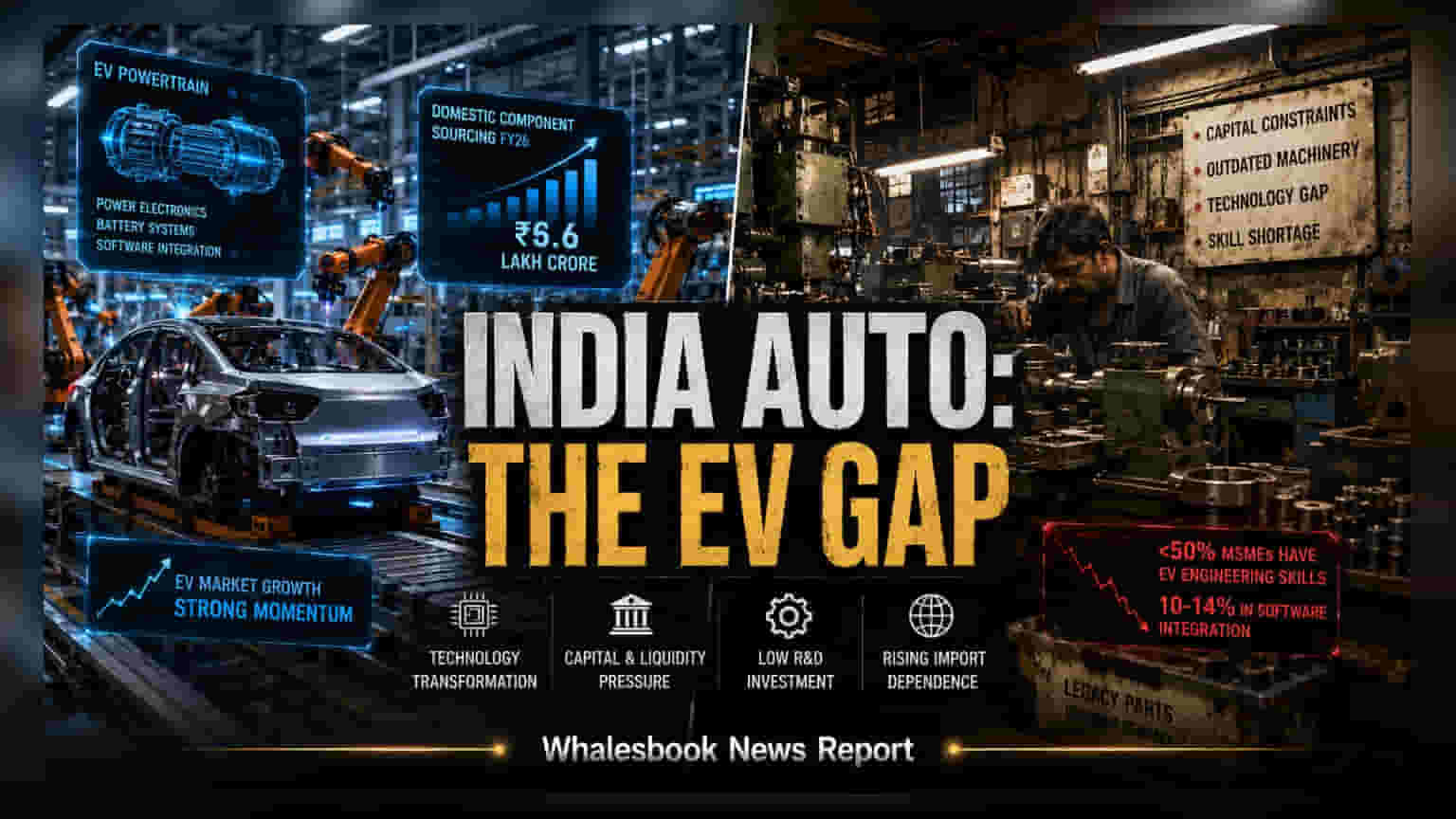
India's rapid move to electric vehicles is creating a capability gap for small auto parts suppliers. With import reliance on China reaching 36% in FY26, many MSMEs are struggling to pivot from traditional engine parts to high-tech EV components. Investors should track which suppliers can fund the necessary R&D for this transition, as financial stress and skill shortages pose long-term risks.
The transition to electric vehicles (EVs) in India is exposing a critical weakness in the automotive supply chain. While domestic original equipment manufacturers (OEMs) reported a healthy jump in domestic component sourcing to Rs 6.6 lakh crore in FY26, the underlying manufacturing base—dominated by micro, small, and medium enterprises (MSMEs)—is struggling to adapt. The shift from mechanical engine parts to software-driven EV technology is proving difficult for smaller players who lack the capital and technical expertise to transform their production lines.
The Technological Capability Gap
The fundamental problem is that modern EVs rely on power electronics, battery management, and software integration rather than the traditional metal-casting processes that defined the internal combustion engine era. Data indicates that fewer than 50% of MSME suppliers currently have the engineering skills required for modern vehicle production. The gap is even wider in advanced software integration, with only 10% to 14% of these firms reporting the necessary proficiency. This lack of specialized expertise creates a reliance on imports, as manufacturers are forced to source high-tech components from abroad to meet OEM requirements. As of FY26, China's share of India's auto component imports has climbed to 36%, up from 29% in FY25, highlighting the difficulty of achieving true self-reliance at the supplier level.
Financial and Operational Pressure
Beyond technical challenges, financial health remains a significant hurdle. Many smaller suppliers are managing liquidity issues, with inventory cycles extending up to 60 days in some cases. This high working capital demand leaves little room for the research and development (R&D) spending needed to innovate. Estimates suggest that only about 10% of MSME suppliers have the financial strength to consistently invest in the tech upgrades required for the EV shift. Without this investment, these firms face the risk of becoming obsolete as the industry moves toward high-value, tech-heavy vehicle architecture.
Policy and Investor Monitorables
The government has responded with stricter localization norms, including new requirements for electric traction motors and key components that took effect on September 1, 2026, under the PM E-DRIVE scheme. While these policies aim to force domestic production, they also increase the compliance burden on companies that are already struggling financially.
For investors, the key monitorable is not just the growth of the EV sector, but the financial resilience of the supply chain. Companies that are heavily dependent on traditional legacy parts and have not secured partnerships or capital for EV-related tech may face margin pressure and falling demand. When analyzing auto component stocks, investors should track which players are successfully diversifying into EV-relevant products, their R&D spend as a percentage of revenue, and whether their balance sheets can support the capital spending needed to stay competitive in an evolving market.