 Whalesbook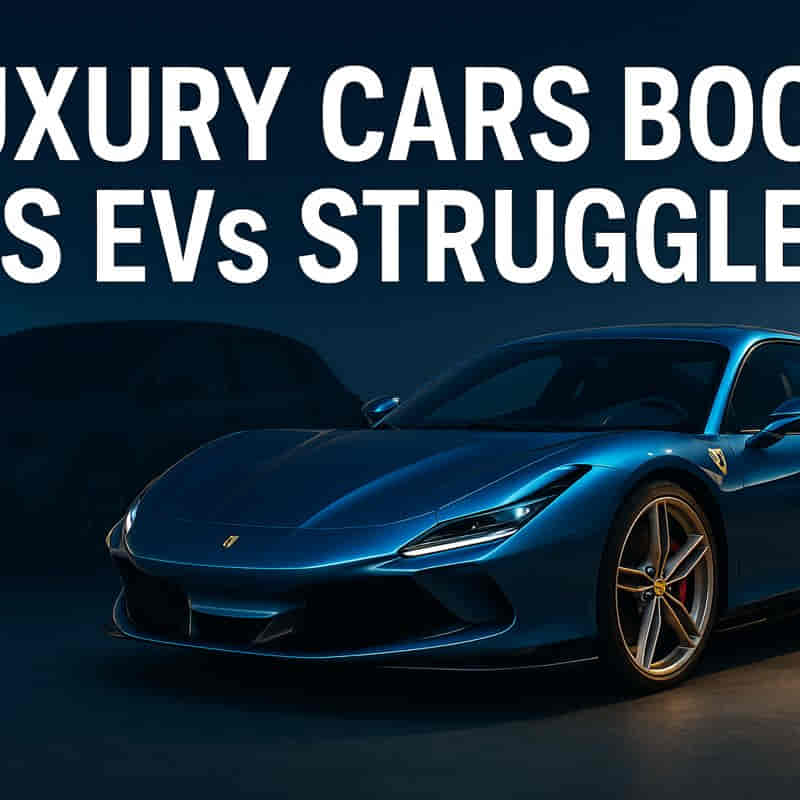
The Year of the Supercar?
The automotive landscape in 2025 presents a stark dichotomy. Demand for supercars and ultra-luxury vehicles is experiencing an unprecedented surge, with brands like Ferrari reporting order books filled well into 2027. This phenomenon occurs even as many legacy automakers grapple with slow electric vehicle (EV) sales and intense competition, particularly from Chinese manufacturers. The enduring appeal of high-performance internal combustion engine (ICE) cars, especially those offering customization and manual transmissions, continues to drive record prices in the luxury segment.
The Core Issue
Wealthy consumers are demonstrating a strong appetite for luxury vehicles, pushing the average new car price in the US above $50,000. These buyers often favor the visceral experience of manual transmissions powered by traditional engines, coupled with personalized designs that reflect their individual tastes. This trend has created a thriving market for brands capable of delivering exclusivity and performance.
In contrast, the global adoption of EVs has not kept pace with earlier expectations. Automakers like Audi, Ford, General Motors, and Volvo are facing a slowdown in EV sales. Several factors contribute to this, including fierce competition from well-crafted and affordably priced EVs from Chinese companies, the gradual elimination of government rebates and subsidies that previously boosted sales, and increased public debate surrounding EV technology.
Financial Implications
Porsche AG has endured a particularly challenging period. The company reported its first quarterly loss as a listed entity, incurring a significant €3.1 billion ($3.6 billion) hit. This financial setback is attributed to weaker-than-expected sales in China and limited demand for its electric Taycan and Macan models. Consequently, Porsche shares had fallen 33% in the preceding 12 months, leading to its removal from Germany's benchmark stock index.
Tesla Inc. also experienced a substantial downturn in 2025, marked by sharp declines in global sales and profits. The company has seen its market share erode in the US and is currently facing numerous lawsuits related to vehicle safety issues. Furthermore, backlash against its CEO, Elon Musk, has become more visible, with some owners expressing dissatisfaction.
Ferrari N.V., however, continues to defy these trends. The Italian luxury sports car maker maintains impressive profit margins and has a fully booked order portfolio extending to 2027. This resilience is partly due to its strategic decision to limit its exposure to the Chinese market, which accounts for less than 10% of its total sales, and its cautious approach to electrification.
Market Reaction
Porsche's financial difficulties and revised outlooks led to its ejection from the DAX index, signaling investor concern. The market has reacted negatively to its underperformance in key areas, particularly its EV offerings.
Tesla's stock performance and valuation have been impacted by its reduced sales and profitability. Public sentiment has also been affected by ongoing legal challenges and public criticism directed at its leadership.
Ferrari's consistent financial strength has solidified its market position, placing it ahead of rivals like Aston Martin, which recently had to adjust its delivery targets downwards.
Official Statements and Responses
In response to its performance, Porsche AG announced leadership changes. Chief Executive Officer Oliver Blume is set to step down from leading Porsche AG, with Michael Leiters assuming the CEO role on January 1, allowing Blume to focus solely on heading Volkswagen Group.
Ferrari executives indicated a need to adjust earnings expectations in October but remained confident in the brand's long-term prospects. They revised their electrification targets, now expecting only 20% of new Ferraris sold by 2030 to be electric, a reduction from the previous 40% goal.
Future Outlook
The trend of high-end luxury sports cars is projected to continue unabated into 2026 and beyond. Companies like Audi and Cadillac are strategically preparing to enter Formula One racing in 2026. This move is intended to bolster brand image, foster technological innovation, and capitalize on F1's growing mainstream popularity, especially in the United States.
Ferrari's deliberate pace in adopting electrification is expected to help protect its brand's residual values. With a loyal customer base and anticipation for new models, the brand appears poised for sustained success.
Impact
The automotive sector's divergence between booming luxury ICE vehicles and struggling EV markets creates distinct investment opportunities and risks. Investors may favor companies with strong brand loyalty in high-margin segments and those managing their transition to electrification strategically. Those heavily reliant on mass-market EVs or facing legacy challenges will likely encounter continued headwinds.
Impact Rating: 7/10
Difficult Terms Explained
- Supercar: A high-performance, expensive sports car designed for speed and luxury.
- Internal Combustion Engine (ICE): A type of engine that burns fuel internally (like gasoline or diesel) to produce power.
- EV (Electric Vehicle): A vehicle that runs on electric power, typically stored in batteries.
- Tariffs: Taxes imposed on imported goods, increasing their cost.
- Market Share: The portion of a total market that a specific company controls.
- Supply Chain: The network of all the companies, people, activities, information, and resources involved in moving a product or service from supplier to customer.
- Rebates and Subsidies: Financial incentives provided by governments or companies to encourage the purchase of certain products, like EVs.
- Residual Values: The estimated resale value of an asset (like a car) after a certain period.
- Electrification: The process of transitioning vehicles from reliance on fossil fuels to electric power.
- Benchmark Stock Index: A stock market index that represents a particular market or a segment of it, used as a standard to compare investment performance (e.g., Germany's DAX).
- Quarterly Loss: A financial loss incurred by a company during a specific three-month accounting period.